What Is Inversion? Thinking Backward to Avoid Mistakes
6 min read≈ 1,350 words3 questions · up to 3 points
What this is about
Ask yourself how to succeed at something, and the answers are often vague. One change to the question makes the answers concrete and quick to find. You learn that change, how to use it step by step on a real plan, where a famous quote about it really comes from, and when the method stops helping.
In a nutshell· skip ahead
Inversion means solving a problem backward. Instead of asking how to reach a goal, you ask what would make you fail for certain. Then you turn each answer into a rule and avoid those causes. The method works because the causes of failure are often easier to name than the causes of success. Charlie Munger made it famous.
Suppose you have a history exam in six weeks and you want a good grade. Ask yourself how to get one, and the answers are vague: work hard, stay focused, be organised. Now ask a different question: what would I have to do to fail for certain? This time the answers come quickly, and each one is concrete. Why does the second question work so much better than the first?
What is inversion?
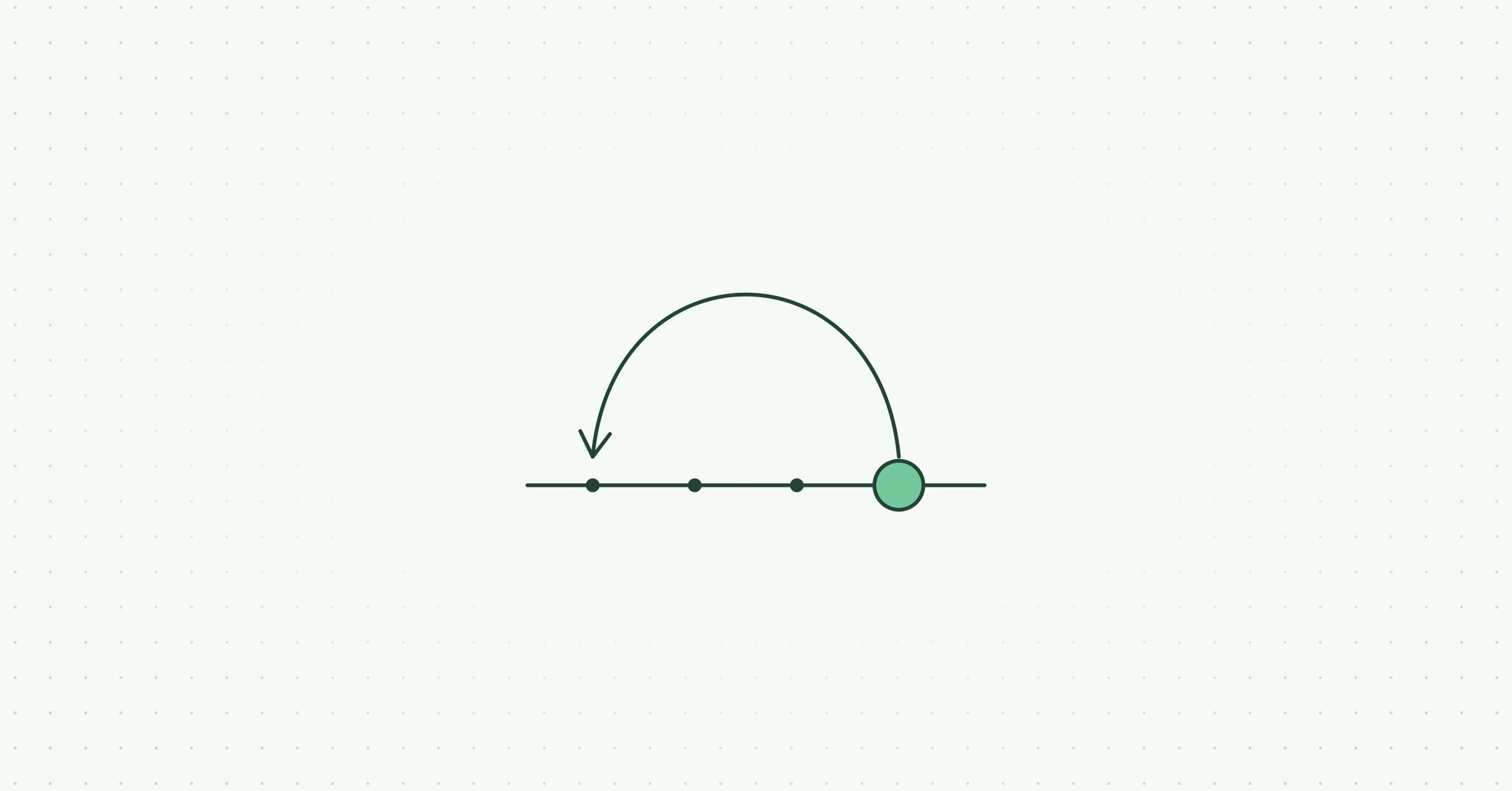
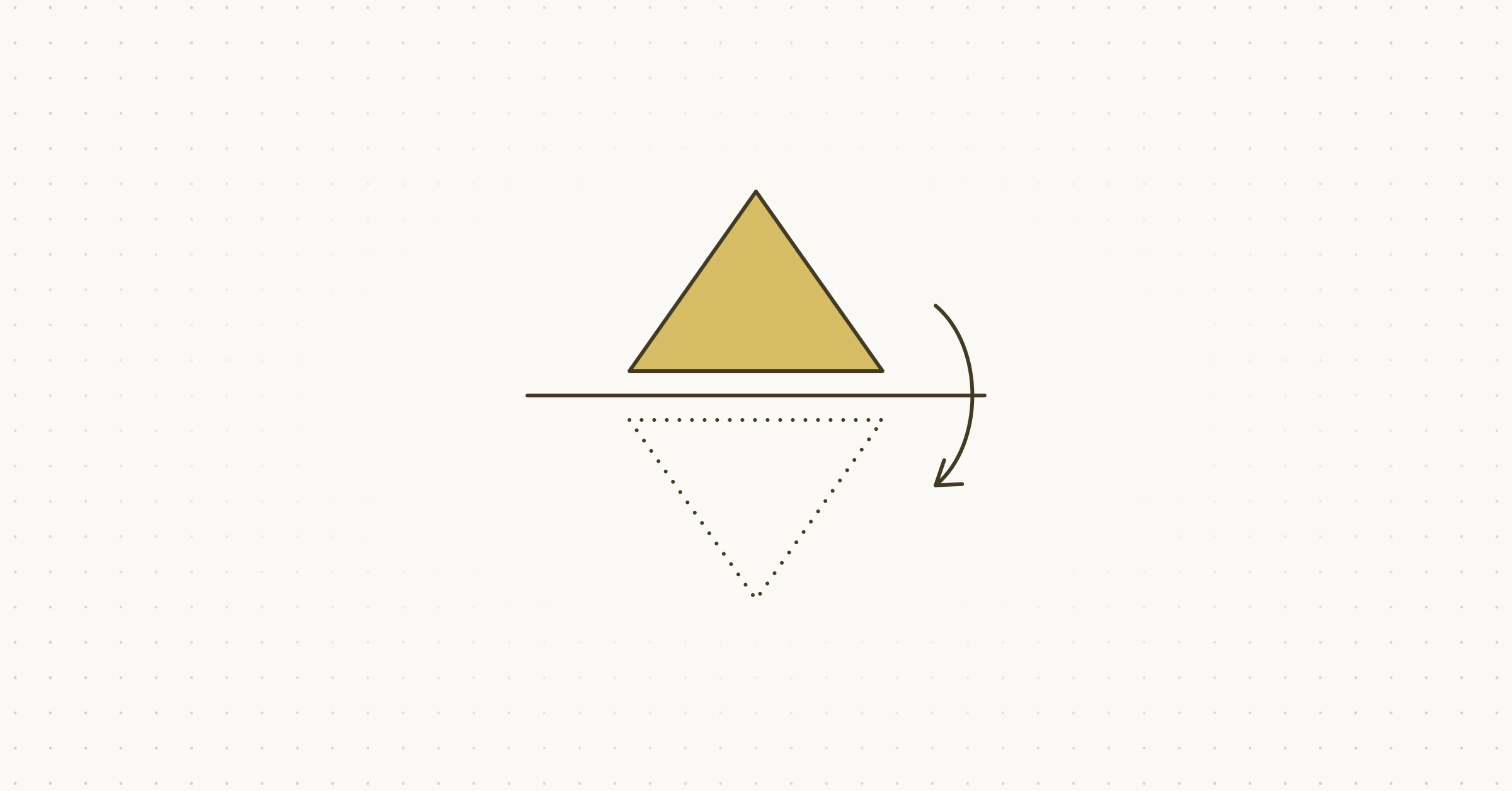
Inversion is a way of thinking in which you turn a problem around. Instead of asking how to reach a goal, you ask what would make you miss it. Then you turn each answer back into a rule and avoid those causes. What remains is often a clearer plan than the one you started with.
The idea is best known through Charlie Munger, the long-time business partner of the investor Warren Buffett. In a speech in 1986, he praised the habit of solving hard problems backward. He credited it to the German mathematician Carl Jacobi, who is said to have told his students “Invert, always invert.”
Why should a backward question help? There are two reasons.
The first reason is that failure is easier to describe than success. A good result usually has many causes, and most of them are hard to name. A bad result often has a few clear causes. Most people can list them at once.
The second reason is that planning makes us hopeful. When we plan, we tend to imagine the plan working. The backward question asks us to look for problems, and so we find them.
How does inversion work on a real problem?
Let us take the history exam and go through the method step by step.
- State the goal. “I want a good grade in the history exam in six weeks.”
- Turn it around. “What would make sure that I fail?”
- List the answers honestly. Start studying the weekend before the exam. Only reread my notes and never test myself. Skip the practice exam the teacher offers. Study with my phone on the desk. Sleep four hours the night before.
- Turn each answer into a rule. Start this week. Answer old exam questions without looking at the notes. Take the practice exam. Put the phone in another room. Go to bed at the normal time before the exam.
- Start with the biggest risk. Ask which failure is most likely for you. If you always start late, the first rule matters most.
Now compare the two questions. The forward question produced “work hard”, which you cannot check. The backward question produced five actions, and you can check each one every day. You did not need a brilliant idea. You only needed to remove the most common ways to fail.
Notice also what inversion did not do. It did not tell you which chapters will be in the exam. That still needs a forward plan. Inversion removed the obvious mistakes so that the forward plan has a fair chance.
What inversion teaches you
Before you ask “How do I succeed?”, ask “What would make this fail for certain?” Avoiding a few clear mistakes often matters more than finding one clever move.
The same question works in many parts of life.
- Money. Instead of asking how to become rich, ask how people usually lose money. Common answers are debt with high interest, putting all savings into one bet, and selling in a panic when prices fall. Each answer is a rule you can follow from today.
- Friendships. Ask how you could make sure that a friend stops trusting you. You would break promises, share their secrets and only call when you need something. Munger used a version of this list in his speech. One of his ways to a miserable life was to be unreliable and not do what you have agreed to do.
- Projects at school or work. The psychologist Gary Klein described a method called the premortem. Before a project starts, the team imagines that it has already failed. Each person then writes down why it failed. The team can then fix those problems while there is still time.
Mathematicians use the same move all the time. A classic puzzle shows how. Water lilies on a pond double their area every day, and on day 30 they cover the whole pond. On which day did they cover half of it? Working forward from day 1 is hard. Working backward is easy. One day before the pond is full, it was half full, so the answer is day 29.
A proof by contradiction uses inversion as well. To prove that a statement is true, you assume that it is false and show that this leads to something impossible.
Is inversion just pessimism?
Many people think inversion means expecting the worst. In fact, it keeps the goal fully in place. The student still wants a good grade. Thinking about failure is a step in the plan, not a forecast. A pessimist says “this will fail”. A person who inverts asks “how could this fail?” and then works to prevent it.
A second misunderstanding is that inversion means doing the opposite of what everyone else does. That is a different idea, often called contrarian thinking. Inversion turns around your own question. It says nothing about following or opposing the crowd.
Where does inversion stop working?
The method has three limits.
The first limit is the most important. Avoiding failure is not the same as succeeding. A student who avoids all five mistakes can still get a poor grade if they study the wrong topics. Some goals need a positive idea that no list of mistakes can give you. A new invention, a good story or a scientific discovery does not appear just because you avoided errors.
The second limit is that the list of possible failures has no natural end. If you keep adding to it, you can become too careful to act at all. The fix is to rank the list and deal with the two or three most likely and most harmful causes.
The third limit concerns the evidence. Inversion is a rule of thumb from experienced people, not a theory that scientists have tested as a general method. Judge it the way you judge any tool: by whether it improves your plans in practice.
Learn more
Inversion has no single inventor. The rule is usually credited to Carl Jacobi, a German mathematician who lived from 1804 to 1851 and taught at the University of Königsberg. In German it is quoted as “Man muss immer umkehren”, which means roughly “one must always turn around”. But nobody has found these words in Jacobi’s own writings. The earliest known source is an address by the American mathematician Edward Van Vleck, printed in 1916. He wrote only that Jacobi “is said to have” taught it.
Munger made the idea famous in his 1986 speech to the Harvard School, a private school in Los Angeles. He built the speech on an earlier talk by the television host Johnny Carson about how to make your life miserable. Munger also praised Charles Darwin for a similar habit. Darwin paid most attention to the evidence that could prove his own theories wrong.
The speech itself is the best next step. It is short, funny and full of examples. It also contains the line most often quoted as Munger’s own. The line is “I wish I knew where I was going to die, and then I’d never go there.” Munger told it as the saying of a simple country man, not as his own words.
Inversion looks forward to prevent mistakes. Its partner looks back after an event to learn from what went wrong. That method is explained in What Is an After-Action Review?. Why our forward plans are so often too hopeful is one of the topics of “Thinking, Fast and Slow” by Daniel Kahneman: Summary and Review.
Quiz
3 questions · up to 3 points
Open a question and pick one answer. Only your first answer counts: +1 if it is right, −1 if it is wrong.
You have listed the ways a plan could fail. What is the next step in inversion?
Show answer
Turn each way to fail into a rule that avoids it. The backward question only collects information. The plan improves when each cause of failure becomes a rule, such as "start this week".
You run a small online shop and want customers to come back. Which question uses inversion?
Show answer
What would make a customer leave and never order again? This asks for the opposite of the goal. The answers, like slow delivery or rude replies, become rules to avoid.
A friend says inversion is just negative thinking. What is the best reply?
Show answer
It keeps the goal and uses the ways to fail as information for the plan. You still aim for success. Thinking about failure is a step in planning, not a prediction that you will fail.
Your points are saved only in this browser for now. Accounts that keep them for good are on the way.
Continue learning: What Is an After-Action Review? →The takeaway
Inversion means solving a problem backward by asking what would make you fail for certain and then avoiding those causes. For an exam, it turns a vague wish like "work hard" into concrete rules, such as starting early and testing yourself. Avoiding mistakes is not the same as succeeding, so inversion works best next to a plan for what to do. Before an important project, write down how it could fail and act first on the most likely cause.
References
- How to Guarantee a Life of Misery. Charlie Munger, Farnam Street, 1986
The full text of Munger's 1986 speech to the Harvard School, with his remarks on Jacobi, Carson and Darwin.
- Performing a Project Premortem. Gary Klein, Harvard Business Review, 2007
The premortem: a team imagines that its project has already failed and lists the reasons.
- Carl Gustav Jacob Jacobi. MacTutor History of Mathematics, University of St Andrews
A biography of the mathematician to whom the rule "invert, always invert" is usually credited.