"Same as Ever" by Morgan Housel: Summary and Review


9 min read≈ 1,900 words5 questions · up to 5 points
What this is about
Experts failed to foresee the pandemic and many other turning points, yet people keep making forecasts. Morgan Housel suggests a different question for anyone who plans for the future. You learn his main ideas about risk, expectations, stories and slow progress, where the book is thin, and how it compares with The Psychology of Money.
The book in three sentences· skip ahead
Housel argues that the future is impossible to predict in detail, because history depends on small events that nobody sees coming. What does not change is human behavior: greed, fear, envy, the love of a good story and the habit of growing careless in calm times. If you plan around these constant patterns and leave room for error, you are ready for a future you cannot know.
Same as Ever: A Guide to What Never Changes
- Author
- Morgan Housel
- Published
- 2023
- Publisher
- Harriman House
- Length
- 224 pages
- Best for
- Readers who want short, clear lessons about risk and human behavior that apply to money, work and life.
Every year, experts publish forecasts for the year ahead, and every few years they miss the event that matters most. Morgan Housel, a partner at the venture capital firm Collaborative Fund and the author of The Psychology of Money, thinks we ask the wrong question. Instead of asking what will change, he asks what will stay the same. Same as Ever answers in short chapters, most of them built around one story. This review explains the book’s main ideas, what it does well and where it is thin.
What kind of book this is
Same as Ever came out in 2023. The publisher describes it as 24 short stories about what never changes. Each chapter makes one point about human behavior with one or two stories from history, business or sport. You can read the chapters in any order. Several of them grew out of posts on Housel’s blog.
The book is not about money only, though money appears often. Its subject is how people react to risk, luck, success and bad news. Housel’s claim is that these reactions are the most stable thing we know about the future.
You cannot predict events, but you can predict behavior
The book’s central idea is simple. Nobody can say what will happen next year. But you can be quite sure how people will react to whatever happens. They will be greedy in good times and afraid in bad times. They will envy their neighbors. They will believe a good story over a dry fact.
Housel borrows a question from Jeff Bezos, the founder of Amazon. Bezos said it was more useful to ask what will not change in the next ten years. His answer was that customers will always want low prices and fast delivery, so he could build on those wishes for decades. Housel applies the same idea to human nature. He says that he has no idea what the stock market will do, but he is sure that greed and fear will not change.
Small events shape history, and the biggest risk is what nobody sees
Why are events so hard to predict? Housel’s first answer is that history turns on small accidents. A meeting that almost did not happen, or a decision made in a few minutes, can change the course of decades. Each event also causes other events that nobody could foresee.
His second answer is about risk. The risks people talk about are usually not the ones that hurt them. A risk in the news gets attention, and people prepare for it. The real damage comes from surprises. Housel points out that the forecasts of the magazine The Economist for 2020 and 2022 did not mention the pandemic or Russia’s invasion of Ukraine. These were the two biggest events of those years.
Housel adds a point about rare events. Imagine a flood that has a one percent chance of happening in any year. That sounds safe. But there are many different kinds of rare events, and each has its own small chance. Taken together, the chance that at least one of them happens this year is high. So something “unlikely” happens almost every year.
What should you do with this? Housel’s answer is to prepare instead of predict. Keep more savings than you think you need. Borrow less than you could. Leave room for error, because the surprise will come even if you cannot name it.
Happiness depends on expectations, and envy sets them
Housel then turns from risk to happiness. People judge their lives less by what they have than by what they expected to have. If results rise but expectations rise faster, people feel worse.
His example is the oil businessman John D. Rockefeller, one of the richest people in history. Rockefeller had no antibiotics, no sunscreen and no painkillers like the ones in any pharmacy today. An ordinary worker now has things he could not buy. Yet few people feel richer than Rockefeller.
The reason is envy. People compare themselves with the people around them, not with the past. Housel cites Charlie Munger, Warren Buffett’s longtime partner, who said that the world is driven by envy more than by greed.
The practical lesson is to watch your expectations as closely as your results. A raise that comes with a much more expensive lifestyle may leave you no happier.
People prefer certainty and a good story to accuracy
Housel argues that people want clear answers more than correct ones. A forecaster who says “there will be a recession” sounds stronger than one who says “there is a 60 percent chance of a recession”. The second statement is more honest, but it is less satisfying. So the confident voice usually gets more attention.
The same is true of stories. The physicist Stephen Hawking was told that every equation in A Brief History of Time would cut its sales in half. A good story beats a good statistic, because people remember stories. Housel’s own example of this rule is Yuval Noah Harari’s Sapiens. In his view, Harari did not discover new facts. He told known facts better than anyone before him. That is why the book sold so well, and you can read our review of it in “Sapiens” by Yuval Noah Harari: Summary and Review.
Housel does not say stories are bad. He says the best story wins, whether or not it is true. Knowing this helps you check your own beliefs. Ask whether you believe something because the evidence is good or because the story is.
Calm periods lead to crazy ones
One of the strongest chapters, “Calm Plants the Seeds of Crazy”, applies an idea from the economist Hyman Minsky. Minsky argued that financial stability is itself unstable. When an economy is calm for a long time, people forget what a crisis feels like. They borrow more and take bigger risks. Those risks then cause the next crisis.
Housel draws a broad lesson from this. Danger cannot be removed for good, because a long absence of danger makes people careless. The same thing happens to companies that become too comfortable, and to people who stop worrying after a run of success. Charles Mackay described such cycles of calm and mania in the 19th century. His book is reviewed in “Extraordinary Popular Delusions and the Madness of Crowds” by Charles Mackay: Summary and Review.
Hard times drive progress, and good things pushed too far turn bad
Housel then argues that crises often produce the biggest advances. He points out that the 1930s, the decade of the Great Depression, were one of the most productive decades in American history. Companies had to find cheaper and better ways of working. He also describes how the pressure of the Second World War sped up medical research, including the mass production of antibiotics.
The other side of this idea is that good things can go too far. Most things that work have a natural limit. Some ambition is good, and too much becomes destructive. Some efficiency is good, and too much leaves no room for error. Housel’s point is that every strength has a price, and the price grows when the strength is pushed to the extreme.
Bad news comes fast, while progress comes slowly
This may be the most useful idea in the book. Housel calls the chapter “Overnight Tragedies and Long-Term Miracles”. Bad news usually arrives at once: a crash, an attack, a bankruptcy. Good news usually builds up slowly, through small gains that compound year after year. Nobody reports on one more year of slightly better medicine.
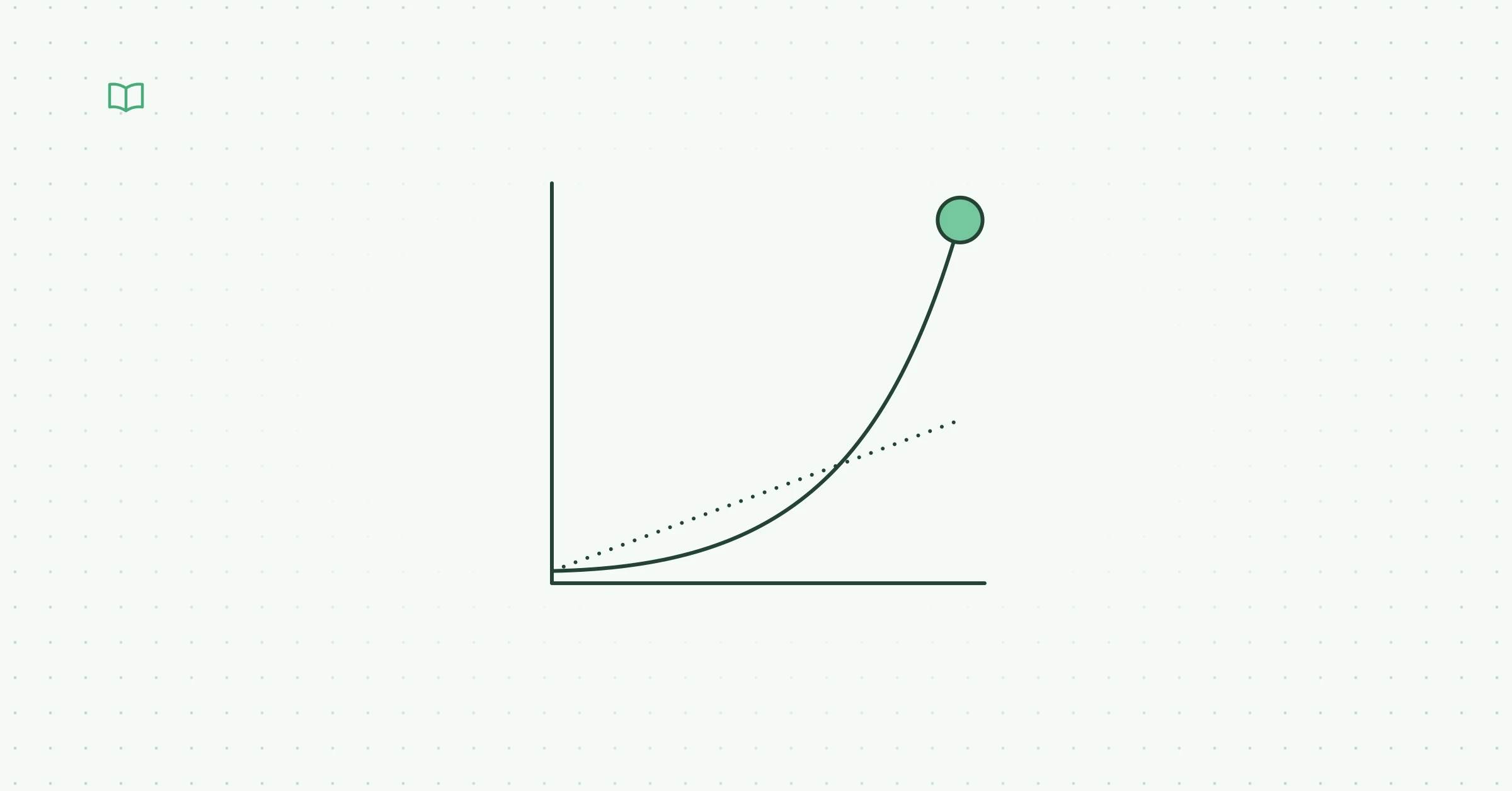
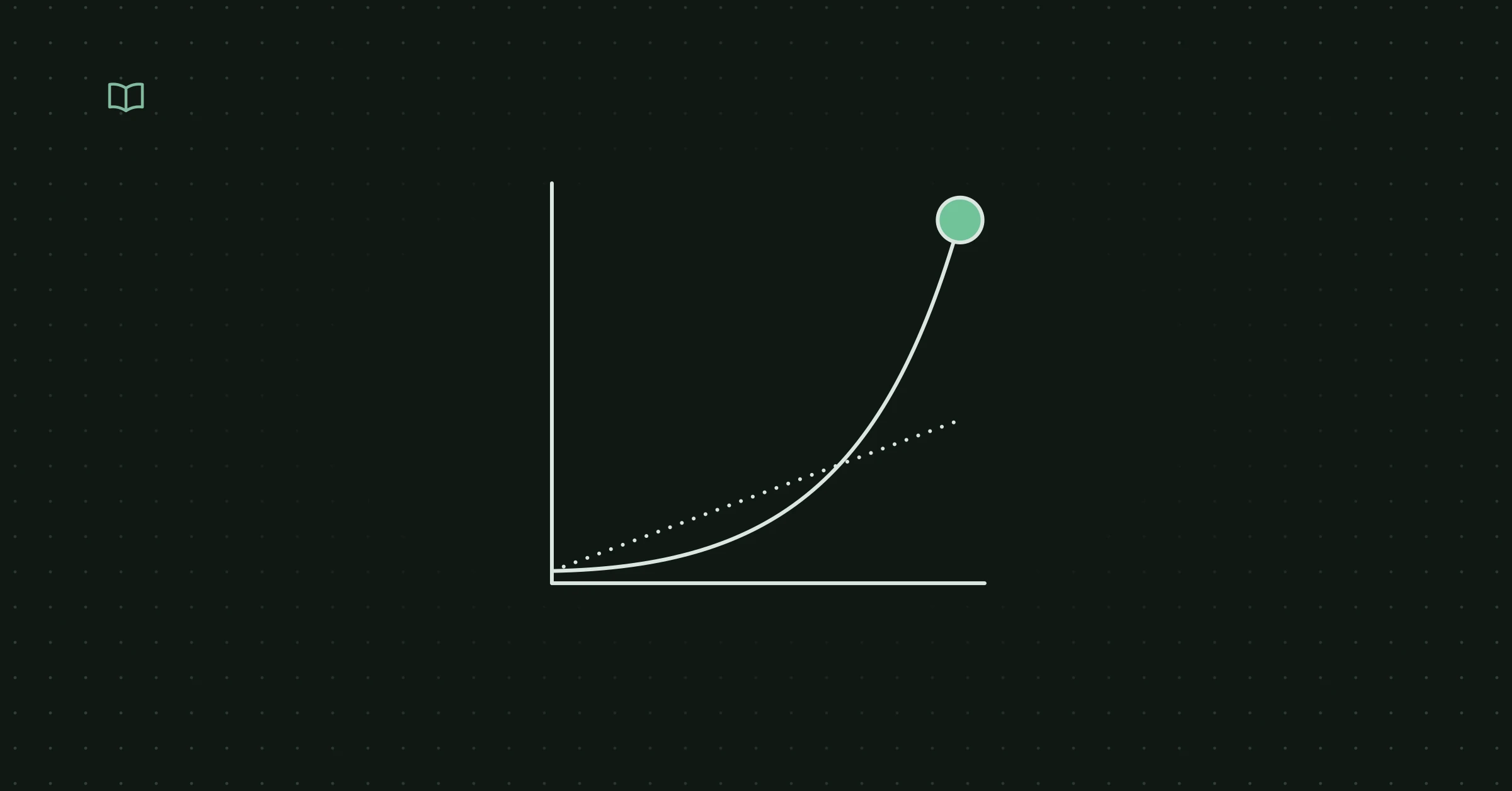
So people overestimate how often things go wrong and underestimate how much things improve. Housel uses compounding to show why. Growth of only 1.4 percent a year sounds small. But it doubles an economy in about fifty years.
The greatest shortcoming of the human race is our inability to understand the exponential function.
From this Housel draws his advice for money and life. Be an optimist about the long run and a pessimist about the short run. In practice, this means saving and avoiding debt as if trouble will come soon, while investing and planning as if things will improve over decades. People who hold only one of these views end up either bitter or broke.
Incentives and experience shape what people believe
The last group of chapters explains why people disagree so strongly. Housel names two forces. The first is incentives. People can believe almost anything if their income or status depends on it. The second is experience.
People who lived through the Great Depression stayed careful with money for the rest of their lives. The shock was over, but their careful habits stayed. Many arguments, Housel suggests, are not real disagreements. They are people with different experiences talking past each other.
He ends with a plea for simple truths. Most of personal finance, for example, comes down to spending less than you earn and being patient. Complex advice sells better, because it sounds more expert. But advice is not better just because it is difficult.
How it differs from other books on risk and behavior
Same as Ever has three close neighbors.
- Housel’s own The Psychology of Money makes many of the same points, but only about money. Same as Ever applies them to history, work and life. If you have read the first book, much here will feel familiar. Our review is “The Psychology of Money” by Morgan Housel: Summary and Review.
- Nassim Nicholas Taleb’s The Black Swan makes the argument about unseen risk with much more depth and much more anger. It is harder to read and more rigorous.
- Daniel Kahneman’s Thinking, Fast and Slow explains, with experiments, why people prefer stories and certainty. Housel gives the lessons. Kahneman gives the evidence.
What Housel adds is clear, friendly writing. He takes ideas from economics and psychology and makes them easy to remember, with stories that take two minutes to read.
Where it falls short
The book has three weaknesses. The first is evidence. Each chapter depends on one or two stories, and stories can be chosen to fit any lesson. Housel does not test his rules, and he rarely shows cases where they fail. A reader should treat them as useful habits of thought, not as proven laws.
The second is range. One reviewer in The Federalist noted that Housel almost never draws on anything written before 1950. For a book about what never changes, that is a narrow base. Philosophers and religious writers made many of the same points thousands of years ago.
The third is structure. The chapters began as separate essays, and the book does not build an argument from start to finish. Some readers will enjoy this. Others will find that the ideas start to blur together after a while.
Which format to choose
The book is short and works in any format. The audiobook suits it well, because each chapter is a single story with no charts. The print or ebook version is better if you want to mark passages and come back to them. Read one or two chapters at a time. The lessons are simple, and they work best when you have time to apply each one to your own decisions.
Quiz
5 questions · up to 5 points
Open a question and pick one answer. Only your first answer counts: +1 if it is right, −1 if it is wrong.
What is the main question Housel wants you to ask about the future?
Show answer
What will stay the same, whatever happens? Housel argues that events are unpredictable but human behavior is stable, so it is a better basis for plans.
According to Housel, which risks do the most damage?
Show answer
The ones nobody sees coming, because nobody prepares for them. A known risk is usually priced in and planned for. A surprise finds people without savings or room for error.
What does Housel take from the economist Hyman Minsky?
Show answer
Long calm periods make people take more risks, which sets up the next crisis. Stability makes people forget danger. They borrow and speculate more, so calm itself prepares the next crash.
Why, according to Housel, does progress feel rare even when it is happening?
Show answer
Good news usually builds up slowly, while bad news arrives all at once. A crash happens in a day and gets attention. Progress compounds over years, so nobody notices a single day of it.
Who gets the most from Same as Ever, according to this review?
Show answer
Readers who want sound habits for thinking about risk, not a tested theory. The review praises the clear lessons but notes that short stories are not the same as evidence.
Your points are saved only in this browser for now. Accounts that keep them for good are on the way.
Continue learning: "The Psychology of Money" by Morgan Housel: Summary and Review →The takeaway
Same as Ever argues that you cannot predict events, but you can rely on how people behave, because greed, fear, envy and the love of good stories never change. Housel shows that the biggest risks are the ones nobody sees, that calm periods lead to risky ones, and that bad news comes fast while progress comes slowly. The book is built from short stories rather than evidence. Use it to plan with room for error instead of trusting forecasts.
Should you read it?
Read it if
- You liked The Psychology of Money and want its ideas applied beyond money.
- You want a calm way to think about forecasts, crises and bad news.
- You prefer short chapters you can read one at a time.
Skip it if
- You want a concrete investment method or financial plan.
- You want claims backed by data and sources rather than stories.
- You know Housel's blog well; many chapters grew out of it.
As an Amazon Associate, mentua.org earns from qualifying purchases. It costs you nothing and never shapes the verdict.
References
- Morgan Housel's new book might be the same as ever, but common sense never changes. Ben Christenson, The Federalist, 2023
A friendly review that criticizes the book's narrow choice of sources.