"The Psychology of Money" by Morgan Housel: Summary and Review
9 min read≈ 1,950 words5 questions · up to 5 points
What this is about
Why does a janitor die with millions while a top finance executive goes bankrupt? You learn the main ideas of Morgan Housel's bestseller about money and behavior, from luck and compounding to saving and room for error. You also learn where the book is thin and who gets the most from it.
The book in three sentences· skip ahead
Housel argues that doing well with money depends less on knowledge and intelligence than on behavior. In short chapters he shows how personal history, luck, envy and impatience shape money decisions. His advice is modest: save without a special reason, keep room for error, stay invested for a long time, and use money to control your own time.
The Psychology of Money
- Author
- Morgan Housel
- Published
- 2020
- Publisher
- Harriman House
- Length
- 256 pages
- Best for
- Readers who want to think more calmly about saving, spending and investing, without formulas.
Ronald Read worked as a gas station attendant and a janitor in Vermont. When he died in 2014, at the age of 92, he left about $8 million. He had not inherited it, and he had not won a lottery. He had saved what he could and bought shares in large companies, and he kept them for decades. Morgan Housel opens The Psychology of Money with Read’s story and with a second one.
Richard Fuscone was a Harvard-educated executive at the bank Merrill Lynch. He retired early and spent and borrowed heavily. Later he went bankrupt. Housel asks how a janitor can do better with money than a finance expert. His answer is the book’s thesis. Doing well with money depends less on what you know than on how you behave.
A book of short stories about money
The book appeared in 2020. Housel is a former financial columnist and a partner at the investment firm Collaborative Fund. The book grew out of a long essay that he published on the firm’s blog in 2018. The publisher calls it “19 short stories”. Each chapter is a few pages long and makes one point. A final chapter describes how Housel manages his own money.
The publisher reports that the book has sold more than 10 million copies. Part of the reason is the form. You can read a chapter in ten minutes, and each one stands alone. This review groups the chapters into seven ideas.
No one is crazy: your history shapes your views
Housel’s first idea is that people’s money decisions make sense once you know their history. Someone who grew up during high inflation sees money differently from someone who grew up in a long stock market boom. Each of them has seen only a tiny part of what has happened in the world. Yet that small part shapes most of what they believe about how money works.
This chapter explains why arguments about money are so hard to settle. Two people can look at the same facts and draw opposite conclusions, and neither is stupid. Housel does not ask you to give up your views. He asks you to remember where they come from.
Luck and risk decide more than we admit
The second idea is that results depend on luck and risk as well as on effort. Housel tells the story of Bill Gates. In the late 1960s, Gates went to one of the very few high schools in the world that had a computer. Without that school, Gates himself has said, there would have been no Microsoft. Gates’s best friend at the school, Kent Evans, was just as gifted. He died in a mountaineering accident before he finished school.
Housel treats luck and risk as two sides of the same thing. Both are forces outside your control, and they work in opposite directions. The lesson is practical. Be careful when you praise the very rich or blame the very poor. Look at broad patterns instead of single extreme cases, because extreme cases contain the most luck.
Enough is a goal that many people never set
The chapter “Never Enough” adds a warning. Housel argues that the hardest financial skill is to stop moving the goal. People who already have plenty often risk it to get more, because they compare themselves with people who have even more. That comparison has no end, because there is always someone richer.
Housel’s answer is to decide what “enough” means for you. He also names things that are never worth risking for more money. Among them are your reputation, your freedom, your family and the people who love you. Housel describes rich people who went to prison for financial crimes.
These cases fit the pattern. They did not need the money. They wanted more than the people around them had. Knowing when you have enough does not mean you stop working or investing. It means you stop taking risks that could cost you what you already have.
Compounding needs time more than talent
The third idea is about compounding: growth that builds on earlier growth, as when interest earns interest. Housel’s main example is Warren Buffett, one of the most successful investors in history. In an interview, Housel said that about 97 percent of Buffett’s wealth came after his 65th birthday.
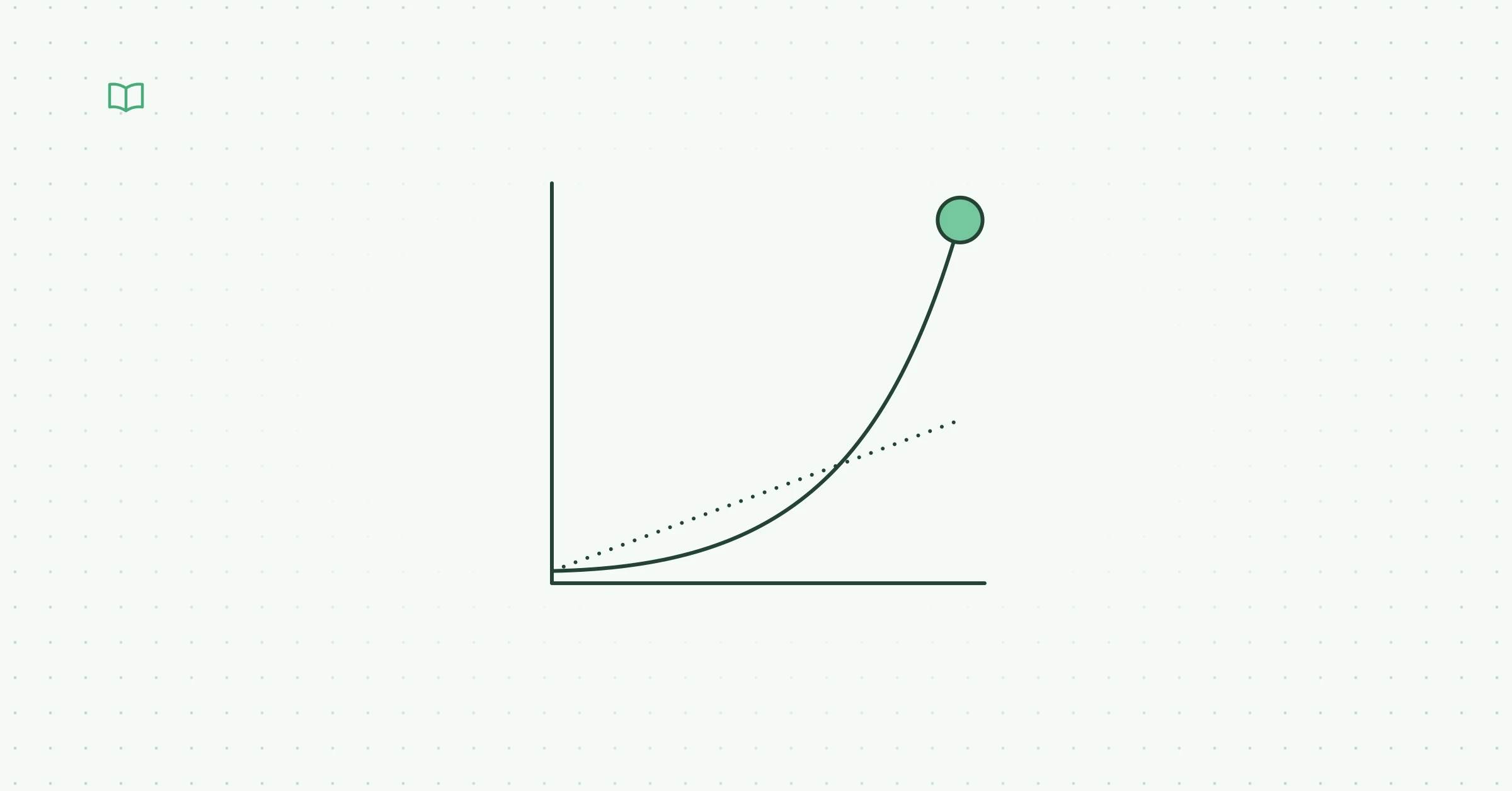
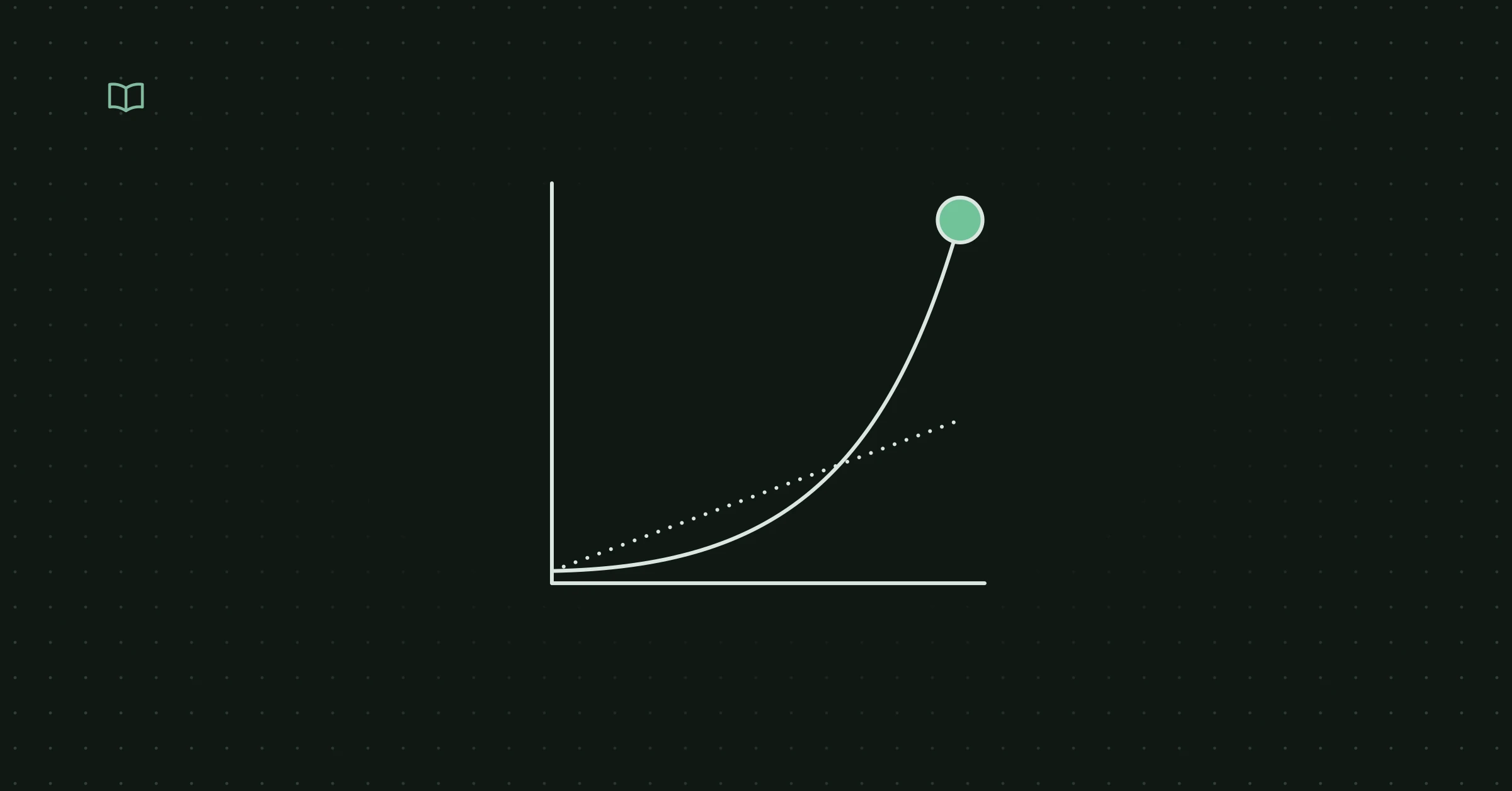
Buffett was a very good investor. But Housel points out that other investors earned higher returns each year. What made Buffett different was time. He started as a child and was still investing in his nineties. Compounding grows slowly at first and very fast later, and our minds are bad at imagining that kind of growth. The lesson is that staying in the game for a long time often matters more than finding the best investment.
Getting wealthy and staying wealthy need different skills
The fourth idea follows from the third. If compounding needs time, the most important rule is to survive. Getting money requires optimism and risk. Keeping money requires the opposite. It requires humility, and some fear that what you have can be lost.
Housel turns this into a principle he calls room for error. Plan for things to go worse than you expect. Keep savings you do not need. Avoid debt that could force you to sell at the worst moment. A plan that works well on average but ruins you in a bad year is a bad plan.
Housel adds a related point about tails: rare events that produce most of the results. A few investments, a few companies or a few decisions make up most of the gains. This means you can be wrong often and still do well, as long as no single mistake destroys you.
Money’s greatest value is control over your time
The fifth idea is the one many readers remember best. Housel argues that the most valuable thing money can buy is the ability to decide what you do with your days. He says it in one line, which is among the key quotes below: controlling your time is the highest dividend money pays.
Two chapters explain why buying things gives less than people expect. In the “man in the car paradox”, Housel notes that when you see someone in an expensive car, you rarely admire the driver. You imagine yourself in the car. Other people react to your car the same way. So spending to impress others mostly fails.
The chapter “Wealth Is What You Don’t See” makes the point sharper. A big house shows money that was spent. Real wealth is the money that was not spent and is still invested. Nobody can see it from the outside. That is why Ronald Read could be rich without anyone knowing.
Save, and be reasonable rather than rational
The sixth idea is about saving. Housel argues that your savings rate is more under your control than your income or your returns. You do not need a special reason to save. Savings give you choices and protect you from surprises, and that is reason enough. He also argues that you can save more by wanting less, because spending beyond a point mostly shows ego.
Housel then makes a point that sounds odd from a finance writer. He says it is better to be reasonable than rational. A rational plan gives the best result on paper. A reasonable plan is one you can keep through bad times. A portfolio that you will sell in panic during a crash is worse than a simpler one you can hold. In his final chapter, Housel says that his own family paid off their house early. A spreadsheet would call that a mistake, but it lets them sleep well.
The price of returns is uncertainty
The seventh idea collects several later chapters. In “Nothing’s Free”, Housel argues that the high long-term returns of stocks have a price. The price is not paid in money. It is paid in fear, doubt and sudden drops in value. People who treat a market fall as a punishment try to avoid it and often sell at the worst time. People who treat it as the normal cost of long-term returns can stay invested.
Other chapters add warnings.
People play different games. A day trader and a person saving for retirement should not copy each other. Pessimism sounds smarter than optimism, but progress usually happens slowly while setbacks happen fast. And people believe stories that they want to be true, especially when information is incomplete. In the last chapter Housel describes his own approach. He saves a large part of his income and keeps plenty of cash. He invests mostly in low-cost index funds, which buy all the shares in a market.
How it differs from other money books
Most personal finance books give a method. Housel gives an attitude. Three neighbors show the difference.
- Robert Kiyosaki’s Rich Dad Poor Dad also says that school knowledge does not make people rich. But Kiyosaki pushes readers toward debt and bold investments. Housel says nearly the opposite: avoid ruin and keep room for error. The review “Rich Dad Poor Dad” by Robert Kiyosaki: Summary and Review shows the contrast in detail.
- Thomas Stanley and William Danko’s The Millionaire Next Door (1996) makes the “wealth you don’t see” argument with survey data about real millionaires. Housel makes it with stories.
- Housel’s own Same as Ever (2023) turns from money to human behavior in general. It asks which things never change. “Same as Ever” by Morgan Housel: Summary and Review covers it.
The book’s psychology draws on research by people such as Daniel Kahneman. But Housel rarely cites studies. If you want the science behind ideas like loss aversion, read “Thinking, Fast and Slow” by Daniel Kahneman: Summary and Review.
Where it falls short: stories instead of evidence
The book has three weaknesses. The first is its method. Housel argues with stories, and stories prove little. Ronald Read is a striking case, but for every patient saver who became rich there were others who saved and did not. Housel warns against learning from extreme cases in his chapter on luck, and then uses extreme cases himself.
The second weakness is its view of history. Much of the advice depends on the long rise of the American stock market. In other countries and other periods, staying invested for decades did not always pay off so well. Housel mentions uncertainty often, but he rarely asks what would happen if the next fifty years look different.
The third weakness is what the book leaves out. It gives almost no concrete advice on how much to save, how to choose funds or how to deal with debt. This is a choice, not an accident. But readers who want to act will need a second, more practical book. Some readers also find the advice obvious once it is stated. Save, be patient and do not show off. The book’s value lies less in new facts than in the calm way it repeats old ones.
Which format to choose
The book works well in every format. The chapters are short and contain no charts that you need to see, so the audiobook loses nothing. Print or ebook is better if you want to mark passages and come back to them.
Read one or two chapters at a time. Each makes one point, and they lose force when you read many in a row. If you have read Housel’s blog, start with the chapters you do not know. Good choices are “Room for Error”, “Reasonable > Rational” and the final chapter about his own money.
Quiz
5 questions · up to 5 points
Open a question and pick one answer. Only your first answer counts: +1 if it is right, −1 if it is wrong.
Why, according to Housel, do people make money decisions that look crazy to others?
Show answer
Their own limited experience makes those choices sensible to them. This is the book's first chapter. What you lived through shapes how you think money works, far more than what happened to others.
What does Housel take as the main lesson of Warren Buffett's fortune?
Show answer
Most of it came after his mid-60s. Housel says about 97 percent of Buffett's wealth came after his 65th birthday. Time did most of the work.
What does Housel mean by 'wealth is what you don't see'?
Show answer
Wealth is money that was not spent. A car or a house shows money that was spent. Real wealth is the savings and investments behind it, which nobody sees.
You could earn more by putting all your savings into stocks, but a crash would force you to sell. What would Housel advise?
Show answer
Keep a cash reserve, even if it lowers your expected return. This combines two chapters: 'Room for Error' and 'Reasonable > Rational'. A plan you can keep through bad times beats one that is optimal only on paper.
According to this review, who will get the least from the book?
Show answer
A reader who wants a concrete, step-by-step investment method. The book is about behavior and gives almost no method. Its practical advice fits on one page.
Your points are saved only in this browser for now. Accounts that keep them for good are on the way.
Continue learning: "Same as Ever" by Morgan Housel: Summary and Review →The takeaway
The Psychology of Money by Morgan Housel argues that success with money depends more on behavior than on knowledge or intelligence. It shows that personal history shapes how people see money, that luck is always present, and that compounding needs time, so saving and room for error matter most. The book tells stories rather than proving claims and gives no investment method. Its practical lesson is to save, avoid ruin and stay invested long enough for time to work.
Key quotes
“Controlling your time is the highest dividend money pays.”
Should you read it?
Read it if
- You think that doing well with money is mainly a question of knowledge or intelligence.
- You are early in your working life and want a sensible attitude to saving and investing.
- You like short chapters built around stories, which you can read one at a time.
Skip it if
- You want a concrete investment method or a budgeting system.
- You already know Housel's blog essays; much of the book repeats them.
As an Amazon Associate, mentua.org earns from qualifying purchases. It costs you nothing and never shapes the verdict.
References
- The Psychology of Money (original essay). Morgan Housel, Collaborative Fund, 2018
The long essay from which the book grew, with many of its ideas in short form.
- The Psychology of Money (publisher's page). Harriman House
Edition details and the publisher's description.