"The Crowd" by Gustave Le Bon: Summary and Review

9 min read≈ 2,080 words5 questions · up to 5 points
What this is about
A French doctor claimed in 1895 that a person changes into someone else the moment they join a crowd. You learn how Gustave Le Bon explained this change, which methods he said leaders use to control crowds, and why his book became a handbook for propagandists. You also learn what modern research on crowds has found.
The book in three sentences· skip ahead
Le Bon argues that people in a crowd lose their individual judgment and form a single collective mind that acts on emotion, not reason. He explains this with anonymity, contagion and a state like hypnosis, and he shows how leaders steer crowds through simple claims, repetition and personal prestige. The book describes methods of persuasion that still work, but its theory of the mindless crowd has been largely rejected by modern research.
The Crowd: A Study of the Popular Mind
- Author
- Gustave Le Bon
- Published
- 1895
- Publisher
- T. Fisher Unwin (first English edition, 1896)
- Best for
- Readers who want to understand where the idea of the irrational mob comes from and how propaganda works.
Gustave Le Bon claimed that a person who joins a crowd becomes someone else. A calm and educated individual, he wrote, turns into a creature of instinct as soon as they are part of a crowd. He published this claim in Paris in 1895, in a book called Psychologie des foules. The English translation appeared a year later under the title The Crowd: A Study of the Popular Mind. In some languages the title is translated as “Psychology of the Masses”.
Le Bon’s books were reprinted many times during his life and translated into about a dozen languages. This one was also read by people who wanted to control crowds, not only to understand them.
Who wrote it, and why it mattered
Le Bon (1841 to 1931) was not a university professor. He trained in medicine and then wrote popular books on many subjects, from anthropology to physics. He wrote The Crowd because he believed that ordinary people were gaining political power in Europe. He feared what they would do with it, and he tried to give this fear a scientific form.
The book has three parts. The first describes the “mind” of crowds. The second explains how crowds form their opinions and how leaders influence them. The third sorts crowds into types, such as juries, voters and parliaments. This review follows the main ideas in order of their weight in the book, starting with the claim that frames everything else.
We are entering “the era of crowds”
Le Bon opens with a claim about history. The old beliefs of Europe, religious and political, are breaking down, he says. At the same time, science and industry have changed how people live. In this gap, one new power is rising: the power of crowds. Le Bon writes that the coming age “will in truth be the ERA OF CROWDS”.
This claim explains the tone of the whole book. Le Bon is not neutral. He believes that civilisations have always been built by a small educated elite and destroyed by masses. “Crowds are only powerful for destruction,” he writes in the introduction. The book is partly a warning to that elite and partly a manual for it. If crowds will rule, the elite must learn how to lead them.
A crowd forms one “collective mind”
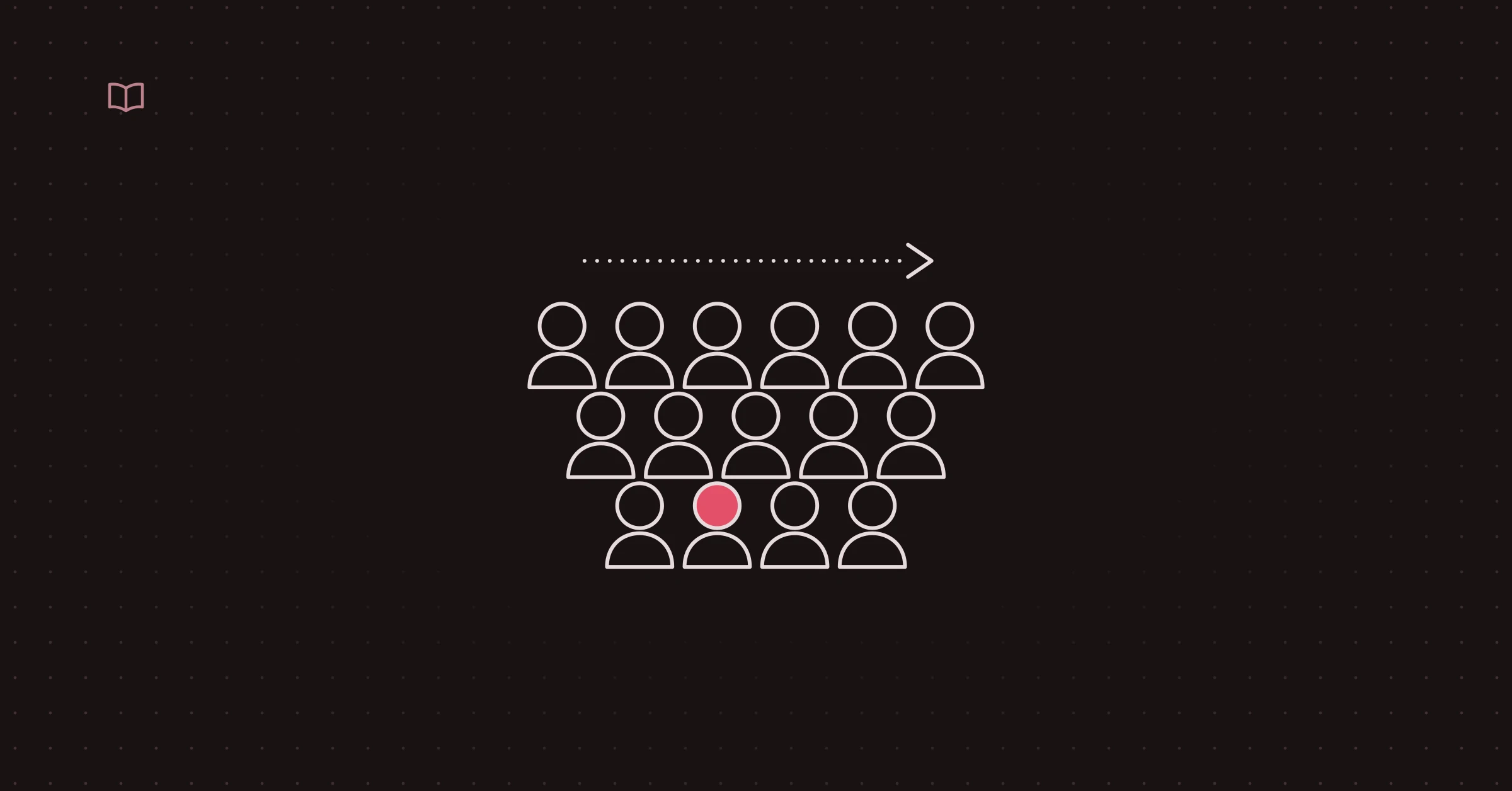
The central idea of the book is what Le Bon calls the psychological crowd. Not every group of people is a crowd in his sense. A thousand people who happen to be in the same square are just a gathering. A psychological crowd forms when the feelings and ideas of all members turn in the same direction and their individual personalities fade.
Le Bon calls this the “law of the mental unity of crowds”. The crowd, he says, becomes a single being with a collective mind. This mind is not the average of its members. It has new qualities that none of the members had alone. A psychological crowd does not even need to meet in one place. Thousands of people in different places can form one, for example during a great national event that stirs strong emotions in all of them.
Anonymity, contagion and suggestion change the individual
Le Bon gives three causes for this change.
- Numbers and anonymity. In a crowd, a person feels powerful because there are so many others. The crowd is anonymous, so nobody feels responsible. Instincts that a person would control when alone are now let loose.
- Contagion. Every feeling and every act spreads through the crowd from one person to the next, like an infection. Le Bon admits that this is easy to observe but hard to explain.
- Suggestibility. This is the most important cause for Le Bon. He compares a person in a crowd to a hypnotised patient who obeys the hypnotist. The person loses conscious control and follows any suggestion that reaches the crowd.
From these causes Le Bon draws his most famous conclusion.
Moreover, by the mere fact that he forms part of an organised crowd, a man descends several rungs in the ladder of civilisation.
In plain words: being in a crowd makes a person less civilised. Le Bon adds that this works in both directions. A crowd can be more cruel than its members, but it can also be more heroic. Soldiers who die for their country and believers who die for their faith are, for him, also acting as a crowd. What decides the direction is the suggestion the crowd receives.
Crowds think in images, not arguments
If crowds do not reason, how do they think? Le Bon’s answer is that they think in images. One image calls up another, with no logical link between them. A crowd cannot tell the difference between what it imagines and what is real.
He gives an example of a “collective hallucination”. The crew of a French warship, the Belle Poule, was searching the sea for a lost ship. A sailor on watch reported a raft full of shipwrecked men. Officers and sailors all saw it. A boat went out to rescue them, and its crew even heard voices. When they arrived, they found only some branches with leaves, drifting from the coast. One person’s mistake had spread to everyone through suggestion.
Le Bon also stresses the power of words. Vague words such as “democracy”, “liberty” or “equality” move crowds more than precise ones, he argues. Their power comes from the images they call up, not from their meaning. This is one of the most perceptive parts of the book, and it explains why political slogans are often so vague.
Crowds lower intelligence and raise emotion
Le Bon draws a sharp line between thinking and feeling. In thinking, he says, the crowd is always worse than the individual. When people combine in a crowd, only their ordinary qualities add up. Le Bon puts it bluntly: in crowds “it is stupidity and not mother-wit that is accumulated”. “Mother-wit” is an old English word for common sense.
In feeling, the crowd is more extreme than the individual. It is impulsive, changeable, easily excited and intolerant. It respects strength and despises weakness. It wants simple ideas and strong leaders. Le Bon applies this not only to street crowds but also to juries and parliaments. He argues that a jury will sometimes give a verdict that each juror alone would reject.
Leaders rule crowds through affirmation, repetition, contagion and prestige
The most influential part of the book explains how leaders control crowds. Le Bon names three methods for planting an idea in a crowd’s mind.
- Affirmation. State the claim in short, firm words, without proof. The shorter and less argued a claim is, the stronger it works on a crowd.
- Repetition. Repeat the claim, if possible in the same words, until people accept it as true. Le Bon points to advertising. If you read a thousand times that one brand of chocolate is the best, he writes, you end up believing it.
- Contagion. Once enough people believe the claim, it spreads by itself from person to person.
Above these methods stands prestige, which Le Bon calls the source of all authority. Prestige is a kind of spell that a person, an idea or a work has over our minds. It stops us from judging it critically. Le Bon separates prestige that comes from a position, such as a uniform or a title, from personal prestige, such as Napoleon’s. Prestige depends on success, he notes. When a leader fails, the crowd that admired him can turn against him very quickly. Open discussion also wears prestige away, more slowly but surely.
These chapters read like a handbook for propagandists, and they were used as one. The French encyclopedia Larousse places the book at the start of the debate that led to the modern study of propaganda. Many writers have also claimed that the dictators of the 20th century learned from it. How directly they did so is debated among historians.
Juries, voters and parliaments are crowds too
The last part of the book applies the theory to institutions. Le Bon discusses criminal juries, voters at elections and members of parliament. In each case he finds the same features: suggestibility, the power of words and the influence of leaders.
This part is the weakest. A jury that discusses a case for hours, or a parliament with fixed rules, is very different from a crowd in the street. Critics have pointed out that Le Bon stretches the word “crowd” until it covers almost any group of people.
How it differs from other books about crowds
Three neighbours help to place the book.
- Charles Mackay’s Extraordinary Popular Delusions and the Madness of Crowds (1841) collects stories of bubbles, witch hunts and fads but offers no theory. Le Bon offers the theory that Mackay lacked. The review “Extraordinary Popular Delusions and the Madness of Crowds” by Charles Mackay: Summary and Review shows how many of Mackay’s stories have been questioned.
- Sigmund Freud’s Group Psychology and the Analysis of the Ego (1921) discusses Le Bon at length. Freud took Le Bon’s stress on unconscious mental life seriously. But he did not accept that people in a crowd lose all judgment. For Freud, people join and stay in groups because they have a deep need to belong.
- The research on the wisdom of the crowd describes the opposite case. When people judge independently, the average of their guesses is often very accurate. The Idea What Is the Wisdom of the Crowd? explains the conditions for this. Both effects can be real. Galton’s crowd guessed in secret, while Le Bon’s crowd saw and heard each other.
Le Bon’s distinct quality is his confidence. He writes short, bold chapters full of claims and historical examples, especially from the French Revolution and the time of Napoleon. This makes the book easy to read and easy to quote, and it is one reason why it spread so far.
Where it falls short
The book has four serious weaknesses.
The first is evidence. Le Bon did no studies. His proof consists of anecdotes and historical examples chosen to fit the theory. He compared crowds to hypnosis and claimed that the spinal cord takes over from the brain. Both ideas come from the medicine of the 1890s and are long outdated.
The second weakness is the theory itself. Modern crowd researchers, such as Stephen Reicher, Clifford Stott and John Drury, have studied real riots, protests, football crowds and emergencies.
These researchers find that people in crowds do not lose their minds. Instead, they act according to a shared group identity, the sense of “we” that the members feel. Even riots usually show patterns. People choose their targets according to what their group believes. As Drury points out, the idea of the mindless mob has a practical danger. It suggests that crowds must be controlled by force instead of being reasoned with.
The third weakness is prejudice. Le Bon’s theory depends on ideas about “race” that were common in his time and are false. He also writes that crowds are “everywhere distinguished by feminine characteristics”, and he means this as an insult. These are not side remarks. They show how much of the book is an educated man’s fear of the masses dressed as science.
The fourth weakness is the stretched concept already mentioned. A theory that explains street mobs, juries and parliaments with the same mechanism explains none of them well.
Which edition to read
The English translation of 1896 is in the public domain and free online, for example at Project Gutenberg. Its translator is not named, and its Victorian English is formal but readable. Modern reprints mostly use the same translation. If you read French, the original Psychologie des foules is direct and easy to follow.
Read Book II on opinions and leaders most carefully, because it contains the parts that are still useful. Read Book I for its historical influence, and skim Book III. The book works as an audiobook too, because its chapters are short and its claims are simple. Whatever format you choose, read a modern account of crowd research next to it, such as John Drury’s essays. This way you learn what Le Bon saw correctly about persuasion without adopting his picture of the mindless crowd.
Quiz
5 questions · up to 5 points
Open a question and pick one answer. Only your first answer counts: +1 if it is right, −1 if it is wrong.
What does Le Bon mean by a "psychological crowd"?
Show answer
A group whose members lose their individual personality and share one collective mind. Le Bon calls this the "law of the mental unity of crowds". For him, a crowd in this sense acts like a single being.
Which three causes does Le Bon give for the special behaviour of people in a crowd?
Show answer
A feeling of power through numbers and anonymity, contagion, and suggestibility. These are the three causes in Book I, chapter 1. Le Bon calls suggestibility the most important one.
According to Le Bon, how do leaders plant an idea firmly in the mind of a crowd?
Show answer
Through short claims without proof, repeated often until they spread. Le Bon says that a claim works best when it offers no proof and is repeated in the same words.
What do crowd researchers such as Stephen Reicher and John Drury say about Le Bon's theory?
Show answer
People in crowds keep thinking and act on shared group identities. Social identity research finds that crowd members keep thinking. Their behaviour follows the beliefs and norms of the group they identify with.
How does this review suggest reading The Crowd today?
Show answer
As a guide to propaganda methods, read next to modern crowd research. The chapters on leaders and persuasion are the most useful part. The theory of the mindless crowd is outdated.
Your points are saved only in this browser for now. Accounts that keep them for good are on the way.
Continue learning: "Extraordinary Popular Delusions and the Madness of Crowds" by Charles Mackay: Summary and Review →The takeaway
Gustave Le Bon's book "The Crowd" (1895) argues that people in a crowd form one collective mind that acts on emotion, not reason. He blames anonymity, contagion and a state like hypnosis, and he says that leaders win crowds with simple claims, repetition and prestige. Modern research rejects the mindless crowd and finds that people in crowds act on shared group identities. Read the book to recognise propaganda methods, not as science, and note its racist and sexist claims.
Key quotes
“Moreover, by the mere fact that he forms part of an organised crowd, a man descends several rungs in the ladder of civilisation.”
“Affirmation pure and simple, kept free of all reasoning and all proof, is one of the surest means of making an idea enter the mind of crowds.”
Should you read it?
Read it if
- You want to recognise the methods of persuasion that politicians and advertisers still use: short claims, repetition and prestige.
- You are interested in the history of ideas behind propaganda, mass politics and Freud's work on groups.
- You want to read the classic text that modern crowd researchers argue against.
Skip it if
- You want a scientific account of how real crowds behave; read modern research on crowds and social identity instead.
- Claims about race and about women that are openly racist and sexist would make the book unbearable for you.
- You want practical advice for leading a team or a group.
As an Amazon Associate, mentua.org earns from qualifying purchases. It costs you nothing and never shapes the verdict.
Ideas from this book
References
- The Crowd: A Study of the Popular Mind. Gustave Le Bon, Project Gutenberg
The full English translation of 1896, free to read online.
- Being in a crowd doesn't make you part of a mindless mob. John Drury, Psyche
A crowd psychologist explains why modern research rejects Le Bon's idea of the mindless mob.
- Psychologie des foules. Encyclopédie Larousse
A short French encyclopedia entry on the book, its influence on propaganda research and early criticism by Freud and Tarde.