What Is the Wisdom of the Crowd?
7 min read≈ 1,630 words3 questions · up to 3 points
What this is about
About 800 people at an English livestock fair guessed the weight of an ox, and most of them were far off. You learn why the average of their guesses was still almost exactly right and which three conditions a group needs for this. You also learn why the same group can fail badly when people copy each other.
In a nutshell· skip ahead
The wisdom of the crowd is the finding that the average of many independent guesses is often more accurate than most of the single guesses. It works because individual errors point in different directions and cancel out. It fails when people share the same bias or copy each other, because then their errors add up instead.
In 1906, about 800 people at a livestock fair in the west of England paid sixpence each to guess the weight of an ox. Some of them were butchers and farmers. Their guesses were spread over hundreds of pounds, and most of them were wrong. Yet the middle of all the guesses landed almost exactly on the true weight. How can many wrong guesses together be nearly right? And why do groups of people at other times make the same terrible mistake together?
Why can the average of many guesses beat the people who made them?
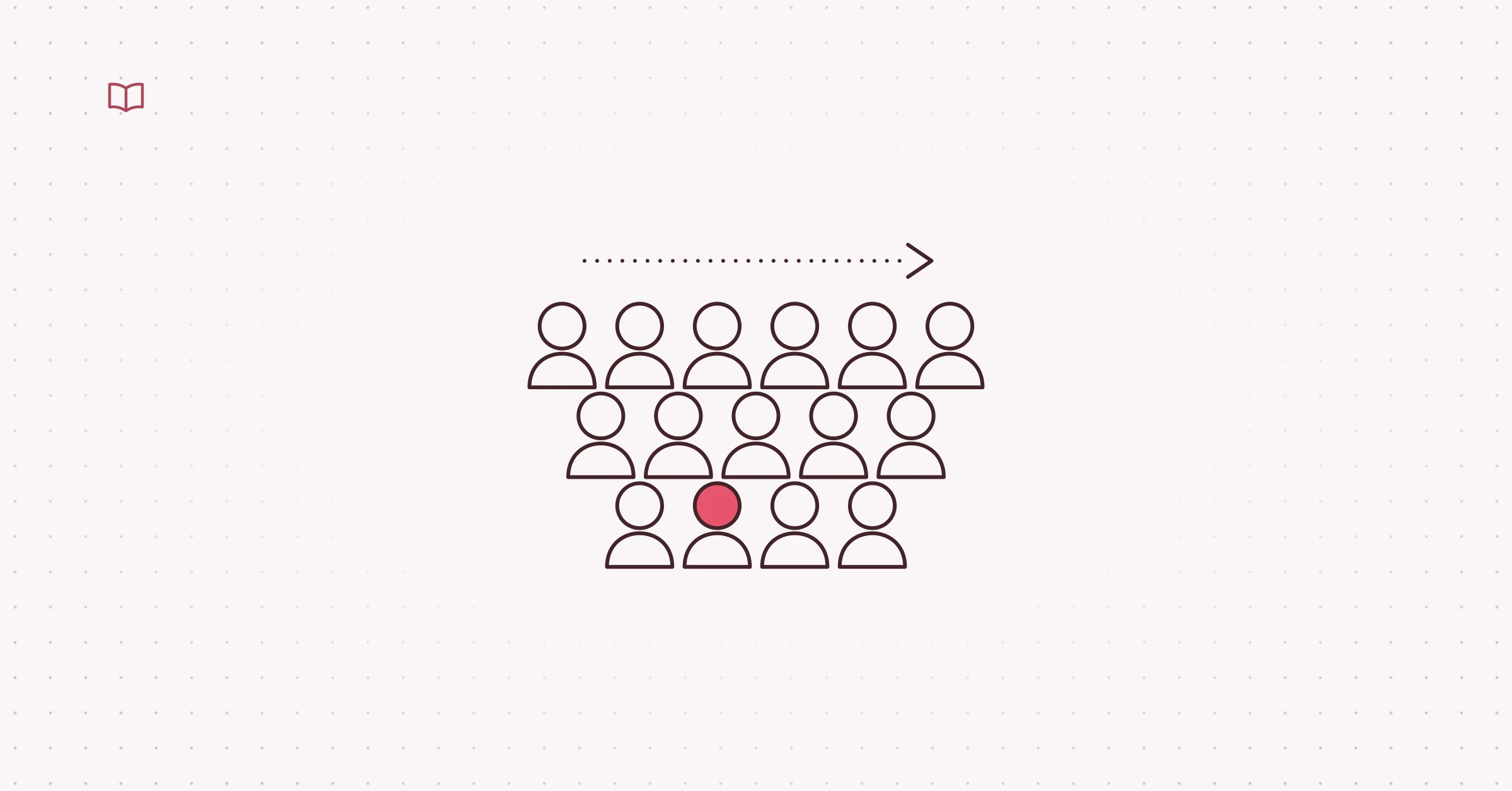
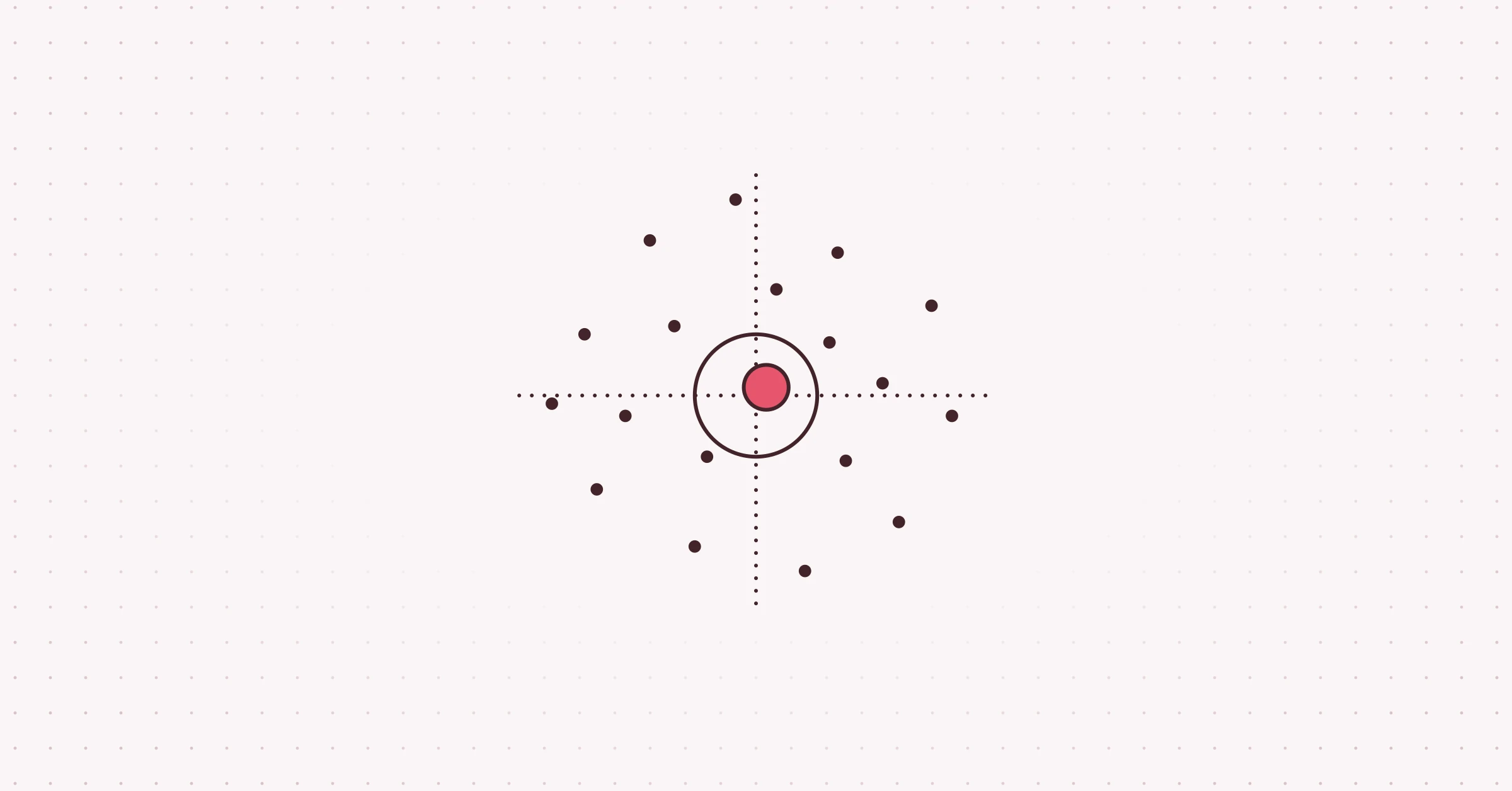
This effect is called the wisdom of the crowd. It means that the average of many independent guesses is often more accurate than most of the single guesses. The reason is that every guess contains an error, and the errors point in different directions. When you average the guesses, the errors cancel each other out.
The ox at the fair is the classic case. The scientist Francis Galton described it in the journal Nature in March 1907. We can follow it in four steps.
- The contest. Visitors bought a card for sixpence. On it they wrote how much the ox would weigh after it was slaughtered and “dressed”. This means the weight of the meat after the other parts had been removed. The best guesses won prizes.
- The data. Galton borrowed the cards after the fair. He removed 13 cards that he could not read. That left 787 guesses.
- The middle guess. Galton sorted the guesses and took the one in the middle, the median: half of the guesses were higher and half were lower. The median was 1,207 pounds. Galton reported the weight of the dressed ox as 1,198 pounds, about 543 kilograms. The crowd was 9 pounds too high, less than 1 percent.
- The average. Two weeks later, a reader wrote to Nature and asked for the ordinary average, the mean. Galton calculated it: 1,197 pounds. In 2014 the economist Kenneth Wallis checked Galton’s papers. He found that the organiser of the fair had reported the weight as exactly 1,197 pounds. So the mean of the crowd was not almost right. It was exactly right.
This result is, I think, more creditable to the trustworthiness of a democratic judgment than might have been expected.
“Creditable to the trustworthiness” means that the result speaks well for how far you can trust the judgment of ordinary people.
Why does this work? Think of every guess as the true weight plus an error.
Imagine only three visitors. One guesses 1,050 pounds, which is 147 too low. One guesses 1,300 pounds, which is 103 too high. One guesses 1,240 pounds, which is 43 too high. On average, each of them is about 98 pounds wrong. But the average of their three guesses is about 1,197 pounds. The large error downwards and the two errors upwards cancel out.
Mathematicians have turned this into an exact rule, often called the diversity prediction theorem after the social scientist Scott Page. It measures errors as squares, so that large errors count more. The rule says that the error of the crowd’s average equals the average error of the individuals minus the diversity of their guesses. Diversity here means how far the guesses lie from each other. Two things follow. First, the crowd’s average is never less accurate than the average member of the crowd. Second, it becomes much better when the guesses are spread out and their errors point in different directions.
What does a crowd need to be wise?
The ox contest worked because it met three conditions. The journalist James Surowiecki made these conditions widely known in his book The Wisdom of Crowds (2004). He also names a fourth one, decentralisation, which means that people use their own local knowledge.
- Independence. Each visitor wrote a guess on a card alone. Nobody saw the other cards. So nobody copied another person’s error.
- Diversity. The guessers looked at the ox in different ways. A butcher, a farmer and a curious visitor make different kinds of mistakes. Different mistakes are what cancel out.
- Aggregation. Somebody has to combine the guesses in a fair way. Galton did this with the median and later with the mean. Without this step, 787 cards are only 787 opinions.
A similar rule exists for yes-or-no questions. In 1785 the French mathematician Condorcet studied how often a group that votes by majority finds the right answer. His jury theorem says this. Imagine that each voter is right more often than not, and that the voters decide independently. Then a bigger group is more likely to reach the right majority.
The surprising part is the other side of the rule. If each voter is right less than half the time, a bigger group becomes more and more certain to be wrong. Adding people only helps when each person has at least some real knowledge.
What the wisdom of the crowd teaches you
The main lesson is about the order of things. Collect people’s judgments separately first, and let them talk only after that. Ask yourself: are these opinions really independent, or did they come from one source?
- Estimates at work or school. Before a team discusses how long a project will take, let everyone write down a number alone. Then look at the average. If the most senior person speaks first, everyone’s number moves towards that person’s number, and their errors no longer cancel out.
- Asking friends for advice. If you ask three friends whether you should take a job, ask each of them separately. Do not tell the second friend what the first one said. Otherwise you get one opinion three times.
- Ratings and reviews. Online ratings look like a crowd, but people often read the earlier reviews before they write their own. Many star ratings are therefore less independent than they seem.
- News and markets. A price on a market combines the views of many buyers and sellers. It is often a good estimate. But when buyers start to buy only because others are buying, the price stops being an average of independent views.
Professional forecasters use the same logic. In economics, averaging the forecasts of several models or experts is called forecast combination. Wallis describes Galton’s ox contest as an early example of this method.
When does a crowd turn into a herd?
Many people believe that a bigger crowd is always smarter. This is wrong. The wisdom of the crowd depends on the conditions above, and the most fragile one is independence.
A famous experiment shows this. In 2011, Jan Lorenz and colleagues asked 144 students at the ETH Zurich, a Swiss university, six questions with numbers as answers. One question was the length of the border between Switzerland and Italy. The students answered each question five times and earned money for accurate answers.
In some rounds they saw nothing about the others’ answers. In other rounds they saw the others’ estimates before they guessed again. When they saw the others, their guesses moved closer together. But the group did not become more accurate. At the same time, the students felt more confident. The crowd lost its diversity and gained only a false feeling of certainty.
The second danger is shared bias. If most people make the same mistake, averaging cannot remove it. Errors cancel out only when they point in different directions. When everybody is wrong in the same way, the average is wrong in that way too.
The third danger is herding. People copy each other, and each copy makes the next one more likely. History offers many examples of this kind of failure, and two classic books try to describe it.
The first book is Charles Mackay’s collection of financial manias and witch hunts. Our review is “Extraordinary Popular Delusions and the Madness of Crowds” by Charles Mackay: Summary and Review. Be careful with its most famous story, the Dutch tulip mania of 1637. Modern historians think Mackay greatly exaggerated it.
The second book is Gustave Le Bon’s theory that people in a crowd lose their ability to think. Our review is “The Crowd” by Gustave Le Bon: Summary and Review. Le Bon held the opposite view to Galton. He wrote that in crowds “it is stupidity and not mother-wit that is accumulated”.
So who is right, Galton or Le Bon? Both describe something real, but under different conditions. Galton’s visitors judged alone and wrote their guesses down in secret. Le Bon’s crowds were people who saw, heard and copied each other.
The strongest objection to the wisdom of the crowd follows from this. In real life, people are almost never fully independent. They read the same news and talk to the same people. So the clean result from the fair is a best case, not a typical case.
Learn more
The wisdom of the crowd has no single inventor. Francis Galton gave it its most famous example in 1907, when he was 85 years old. But Condorcet had already worked on the mathematics of majority voting in 1785. In 2004, James Surowiecki made the effect widely known under its modern name and listed its conditions. Scott Page later made the link between diversity and accuracy mathematically exact.
For the dark side of crowds, read the two reviews linked above. They show what happens when independence breaks down. For the individual biases that make many people err in the same direction, read “Thinking, Fast and Slow” by Daniel Kahneman: Summary and Review. The best book on the effect itself is still The Wisdom of Crowds (Affiliate Link) by James Surowiecki. It explains where crowds succeed and where they fail.
Quiz
3 questions · up to 3 points
Open a question and pick one answer. Only your first answer counts: +1 if it is right, −1 if it is wrong.
What did Francis Galton find when he studied the guesses at the ox-weighing contest?
Show answer
The middle guess was within 1 percent of the true weight, though most guesses were far off. The median was 1,207 pounds against a reported 1,198, and the mean later turned out to be almost exactly right. Most individuals were much further off.
Your team must estimate how many weeks a project will take. Which method uses the wisdom of the crowd best?
Show answer
Everyone writes down an estimate alone, and then the team looks at the average. Private estimates stay independent, so different errors can cancel out when you average them.
In a 2011 experiment, students could see the others' estimates before they guessed again. What happened?
Show answer
Their estimates moved closer together and they felt surer, but the crowd was not more accurate. Seeing the others reduced the diversity of the guesses. The errors no longer cancelled out, while confidence still went up.
Your points are saved only in this browser for now. Accounts that keep them for good are on the way.
Continue learning: "Extraordinary Popular Delusions and the Madness of Crowds" by Charles Mackay: Summary and Review →The takeaway
The wisdom of the crowd means that the average of many independent guesses is often more accurate than most single guesses, because errors in different directions cancel out. At a fair in 1906, the mean of 787 guesses matched the weight of an ox almost exactly. The effect needs independent people, different views and a fair way to combine them, and it breaks down when people copy each other or share one bias. So collect opinions separately before a group discusses them.
References
- Revisiting Francis Galton's Forecasting Competition. Kenneth F. Wallis, Statistical Science 29 (3), via arXiv, 2014
Rechecks Galton's 1907 ox data in his archive and shows that the mean of the guesses matched the ox's weight.
- How Social Influence Can Undermine the Wisdom of Crowd Effect. Jan Lorenz, Heiko Rauhut, Frank Schweitzer and Dirk Helbing, Proceedings of the National Academy of Sciences, 2011
The full paper of the Zurich experiment in which seeing other people's estimates made a group more confident but not more accurate.
- Jury Theorems. Franz Dietrich and Kai Spiekermann, Stanford Encyclopedia of Philosophy, 2021
A careful explanation of Condorcet's jury theorem, its conditions, and why it fails when votes depend on each other.