"Algorithms to Live By" by Brian Christian and Tom Griffiths: Summary and Review


10 min read≈ 2,290 words5 questions · up to 5 points
What this is about
What can a computer teach you about finding a flat, choosing a restaurant or clearing your desk? You learn the main ideas of this book in the order of its argument, from the 37% rule to computational kindness, how it differs from other books on decisions, and which of its claims go too far. At the end you know whether to read it, and in which format.
The book in three sentences· skip ahead
Algorithms to Live By argues that many everyday problems, such as when to stop searching, how much to try new things or what to forget, have the same structure as problems that computer scientists have studied for decades. The authors take eleven of these problems, explain the best known solutions in plain words and turn them into rules for daily life. Their larger claim is that human mistakes often show how hard a problem is, not how weak the human mind is.
Algorithms to Live By: The Computer Science of Human Decisions
- Author
- Brian Christian and Tom Griffiths
- Published
- 2016
- Publisher
- William Collins (paperback, 2017)
- Length
- 368 pages
- Audiobook
- 11h 50m, read by Brian Christian
- Best for
- Curious readers who make many choices under time pressure and want to see how computer scientists think about the same problems.
Imagine you are looking for a flat in a city where every good one is gone within hours, so you must say yes or no on the spot. When should you stop looking and sign? Brian Christian and Tom Griffiths open their book with this problem, and they give a precise answer: spend the first 37% of your search only looking, then take the first flat that is better than everything you have seen. Algorithms to Live By (2016) applies the same kind of reasoning to ten more everyday problems, and it became a bestseller that MIT Technology Review named one of the best books of its year.
What kind of book this is
Christian is a writer who studied computer science and philosophy, and Griffiths is a cognitive scientist who taught at the University of California, Berkeley and now teaches at Princeton. They define an algorithm in the introduction as “a finite sequence of steps used to solve a problem”, which means that a recipe or a knitting pattern is an algorithm too. Each of the eleven chapters takes one class of problems, tells how computer scientists solved it, and asks what the solution means for people. The authors interviewed about a hundred researchers, and more than fifty pages of notes give the details.
Behind the practical advice lies a larger claim: when people make mistakes, the reason is often that the problem is hard, and not that the human mind is weak.
Life is full of problems that are, quite simply, hard.
This review follows the order of the book. The first two chapters are the best known, and the later ones show how widely the method can be used.
Know when to stop looking (“optimal stopping”)
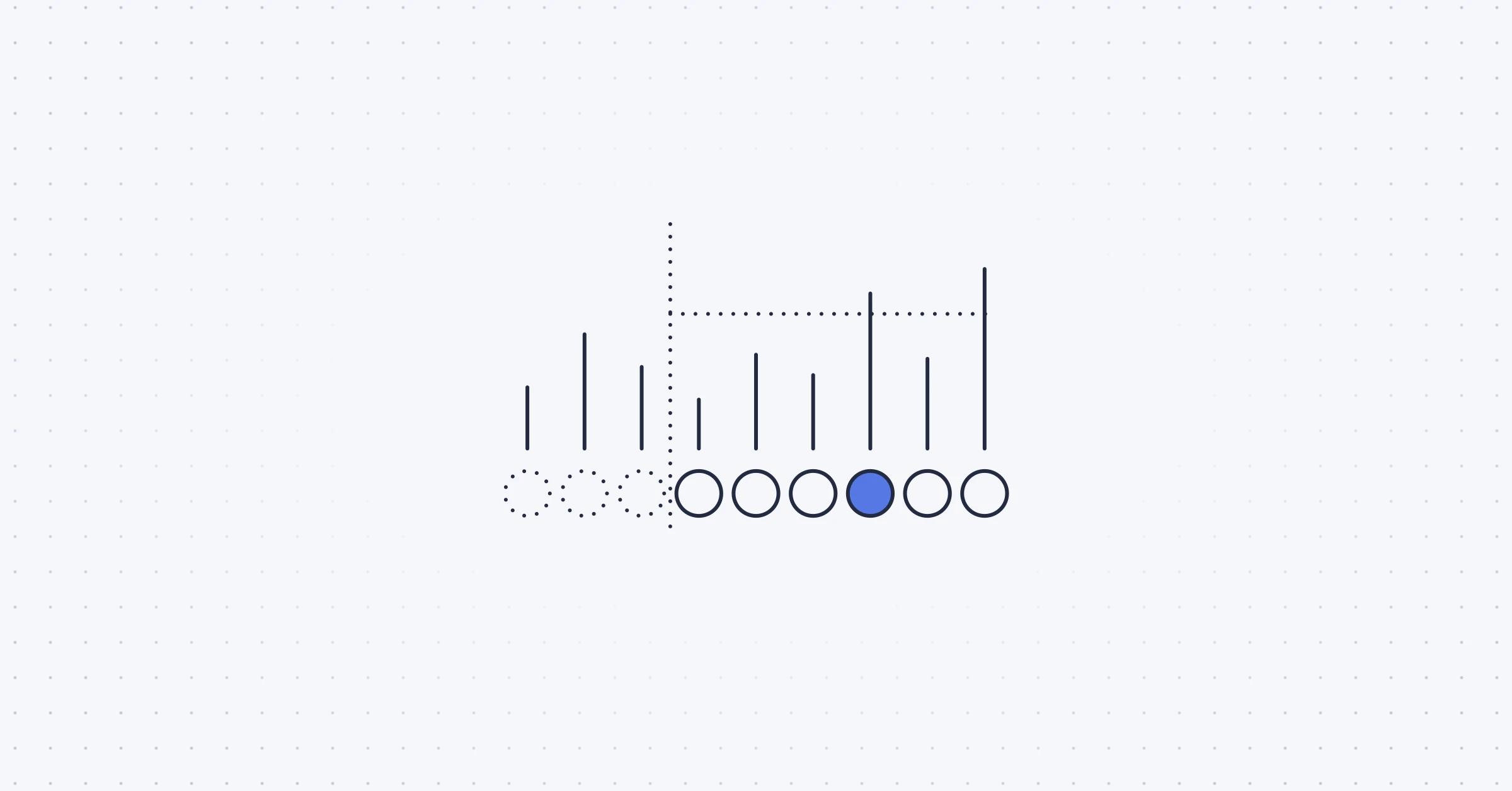
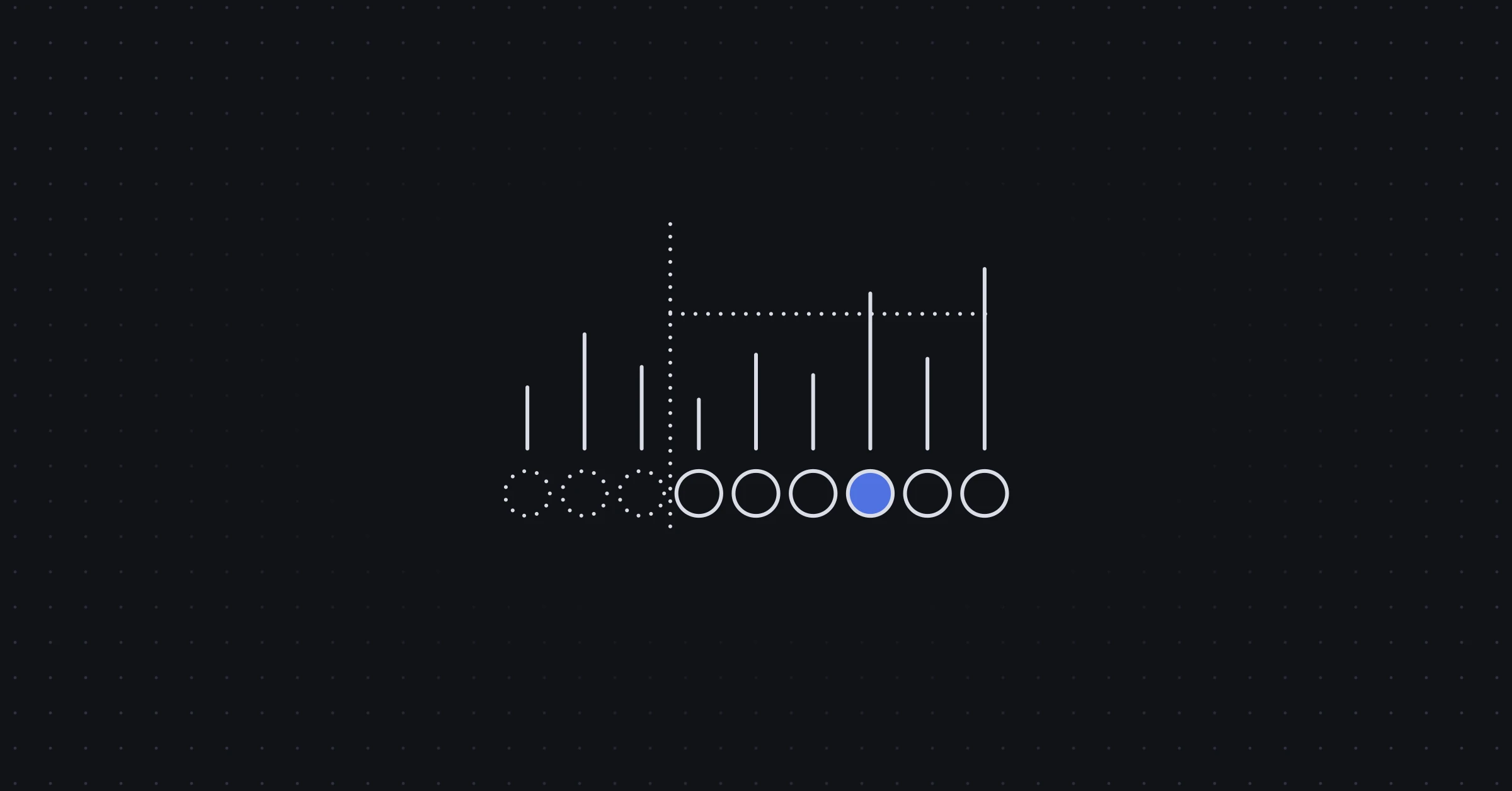
The first chapter argues that many searches have a best stopping point, and it calls the study of such problems optimal stopping. The classic case is the secretary problem: you see candidates one at a time, you must accept or reject each one at once, and you want the very best. The solution has two phases, which the authors describe as looking and leaping. You reject the first 37% of candidates, only to learn what good looks like, and then you take the first one who beats all of them. With this rule you find the best candidate about 37% of the time, which is the best any strategy can do under these conditions.
The chapter then shows how the answer changes when the conditions change. If you can sometimes go back to someone you rejected, you should look for longer. If you can measure quality on a scale, and not only compare candidates with each other, your chance of getting the best rises to about 58%. The authors apply the rule to flats, parking and dating, and they tell the story of Michael Trick, a professor at Carnegie Mellon University, who used it in his own search for a partner. What Is the Secretary Problem? explains the mathematics.
Balance new options against known favourites (“explore/exploit”)
The second chapter, “The Latest vs. the Greatest”, deals with the choice between trying something new and enjoying something you already know is good. Computer scientists call this the explore/exploit trade-off, and they study it with the “multi-armed bandit”, a gambler facing several slot machines with unknown payouts. A new machine gives information, while the best known machine gives a safe reward.
The key insight is that the value of exploring depends on how much time you have left. A newcomer in a city should try many restaurants, because there is time to enjoy any good one she finds. Someone leaving next week should go back to her favourite. The chapter presents the Gittins index, developed by John Gittins in the 1970s for the company Unilever, and the “upper confidence bound” methods, which treat each option as being as good as it could reasonably be. Both lead to the same advice: be optimistic about what you do not know yet.
The authors use this idea to explain the course of a life. Babies try everything, because their whole lives lie ahead. Older people narrow their circle to a few close friends, and the authors argue that this is a sensible response to a shorter future, not a loss of curiosity.
Order and memory have costs (“sorting” and “caching”)
Chapters 3 and 4 ask how much order is worth. Sorting a collection takes work, and the work grows faster than the size of the collection. So the sorting chapter asks whether you should sort at all. Its answer is that sorting is only worth the effort when you will later search the collection, so when you are not sure, a little mess is the better mistake.
The caching chapter starts with how computers decide which data to keep in their small, fast memory. The common rule is called Least Recently Used: when space runs out, throw away the item you have not used for the longest time. The authors apply it to wardrobes and to the filing system of the Japanese economist Yukio Noguchi, who always put a used file back at the front. They go further and defend the pile of papers on a desk.
What might appear to others to be an unorganized mess is, in fact, a self-organizing mess.
The same logic, the authors argue, explains human memory. The mind keeps easily available what it has used recently, because that is what it will most likely need next. When an older person struggles to find a name, part of the reason is the size of the store, because there is more to search.
Decide what you are scheduling for (“scheduling”)
The scheduling chapter, “First Things First”, starts from a simple point: before you can find the best order for your tasks, you must decide what “best” means. To keep your worst delay short, do the task with the earliest deadline first. To have as few late tasks as possible, use Moore’s algorithm, which drops the longest task as soon as something is going to be late. If you want to reduce the total time that tasks spend waiting, do the shortest ones first. And if you just have to get everything done, the order does not matter at all.
The chapter also explains thrashing, a problem the computer scientist Peter Denning studied in the early days of computers shared by many users. A computer that switches between too many tasks spends all its time switching and does almost no real work. People do the same when they try to keep too many things in mind, and the authors’ advice is to accept a worse order in exchange for less switching.
Let your expectations shape your predictions (“Bayes’s rule”)
Chapter 6 is about predicting the future from very little data, and it uses Bayes’s rule, which says how to combine what you expected before with what you have just seen. The authors start with the eighteenth-century mathematician Pierre-Simon Laplace. If something has worked every time in a few tries, Laplace’s rule tells you to add one to the successes and two to the tries, which gives a sensible estimate even after one test.
When you know almost nothing, the Copernican principle helps: assume you are seeing a thing in the middle of its life. In 1969 the astrophysicist J. Richard Gott used this idea at the Berlin Wall, which was then eight years old, and gave even odds that it would stand for between about three and 24 more years. It fell twenty years later.
The chapter then shows that different kinds of things need different rules. For things that cluster around an average, such as human lifespans, you predict close to the average. For things with no typical size, such as the earnings of films, you multiply what you have seen so far. In a 2006 study with Joshua Tenenbaum, Griffiths found that ordinary people’s guesses about such things fit these rules well. For the rule itself, read Bayes’ Theorem, Explained.
Thinking more can make decisions worse (“overfitting”)
The chapter “When to Think Less” brings an idea from statistics and machine learning into daily life. Overfitting happens when a model fits past data so closely that it also copies its accidents, and therefore predicts new cases badly. The authors show it with data on happiness after marriage: a model with one factor misses details, but a model with nine factors bends wildly and predicts nonsense about the future.
The lesson for people is that more analysis is not always better, especially when the data is thin. Computer scientists fight overfitting by giving models a penalty for complexity, called regularization, or by stopping the training early. The authors find the same idea in Charles Darwin’s list of reasons for and against marriage, which he stopped when the page was full. The link to Occam’s razor, the rule that you should prefer the simpler explanation, is close.
When problems are too hard, relax them or use chance (“relaxation” and “randomness”)
Chapters 8 and 9 deal with problems that no computer can solve exactly in any reasonable time. The first answer is relaxation: you solve an easier version of the problem, for example by ignoring one of its constraints, and use that answer as a guide to the real one.
The second answer is chance. The mathematician Stanislaw Ulam estimated his chances of winning at solitaire by playing many games instead of calculating them, and such random sampling is now a standard method. “Simulated annealing”, developed by Scott Kirkpatrick and colleagues at IBM, adds randomness to a search and then slowly reduces it, so that the search does not get stuck on a poor answer. For people, the advice is to try something at random when you are stuck.
Other people change the problem (“networking” and “game theory”)
The last two chapters add other people. The networking chapter explains how the internet works without central control: every packet that arrives is confirmed by a small reply, and senders slow down when replies stop coming. The authors connect this to a study by Jackson Tolins and Jean Fox Tree, in which storytellers told their stories less well when listeners did not give the usual small signs such as “uh huh”.
The game theory chapter explains why people acting in their own interest can produce results that are bad for everyone, and how good rules can fix this. The Vickrey auction is one example: the highest bidder wins but pays the second-highest bid, so everyone’s best move is to bid honestly.
The book ends with a principle the authors call computational kindness: design your requests so that they take less mental work for the other person. “Are you free on Tuesday at 10:30?” is kinder than “When are you free?”, because the first question is easy to answer and the second hands the whole scheduling problem to the other person.
How it differs from other books on decisions
Algorithms to Live By sits between psychology books about human error and popular books about computing. Three neighbours show its place.
- Daniel Kahneman’s Thinking, Fast and Slow (2011) describes the many ways human judgment goes wrong. Christian and Griffiths tell a more generous story: many of our “errors” are reasonable answers to problems that are hard even for computers. Read our review of Kahneman’s book to see the other side.
- John MacCormick’s Nine Algorithms That Changed the Future (2012) explains how search engines, compression and encryption work. It is about what computers do, while Algorithms to Live By asks what their methods mean for people.
- Gerd Gigerenzer’s Gut Feelings (2007) argues that simple rules often beat careful analysis. The overfitting chapter reaches a similar conclusion from the side of statistics.
What makes the book different is that every chapter starts from a real result in computer science and only then turns to life. The advice is therefore precise about its conditions, at least in principle.
Where it falls short
The book has two weaknesses. The first is that some of its rules depend on assumptions that real life rarely meets. In a long review, the New York University computer scientist Ernest Davis praised most chapters but criticised three. The 37% rule assumes that you can only compare candidates, that you care only about getting the very best, and that the other side has no choice, and dating breaks all three assumptions.
Davis also argued that a sorted shelf usually beats a pile, and that some examples in the overfitting chapter, such as our liking for sugar, are really a different statistical problem. The book mentions some of these limits, but often only in a later section or an endnote, after the strong rule has already made its impression.
The second weakness is the book’s view of the human mind. Griffiths belongs to a school of cognitive science that sees human thinking as close to the best possible under real limits. This view is attractive, and it corrects the long list of biases in other books, but it can explain too much. When forgetting, messiness and stubbornness all turn out to be rational, the reader should ask what behaviour would count as a real mistake.
Which format to choose
The paperback or ebook is the best choice for most readers. Its charts, small calculations and notes on the mathematics are easier to follow on the page. The unabridged audiobook, read by Brian Christian himself, lasts almost twelve hours, and reviewers praised its clear narration. It suits the stories and the first two chapters, but the harder chapters are worth a second reading on paper. The chapters stand mostly on their own, so you can start with the first two and choose the rest by interest.
Quiz
5 questions · up to 5 points
Open a question and pick one answer. Only your first answer counts: +1 if it is right, −1 if it is wrong.
You have one month to find a flat and must decide on each one when you see it. What does the 37% rule in the book tell you to do?
Show answer
Look without committing for about the first 11 days, then take the first flat that is better than all you have seen. This is the solution to the 'optimal stopping' problem that opens the book: first set a standard, then leap at the first option that beats it.
According to the book, when should you try new restaurants more, and when should you return to your favourites?
Show answer
Explore when you have a lot of time left to enjoy what you find, and exploit your favourites when your time is running out. The value of new information depends on how long you can use it. That is why the authors say a newcomer should explore and someone about to leave should not.
How does the book explain why older people sometimes take longer to remember a name?
Show answer
They store far more memories, so finding one item takes longer, like a search in a very large memory store. The caching chapter treats memory as a store organised by recent use and argues that slower recall is partly a sign of how much a person knows. Critics think this goes too far.
What is 'overfitting', the idea behind the chapter 'When to Think Less'?
Show answer
A model that fits past data too closely, including its accidents, and therefore predicts new cases badly. Adding more factors can make a model match the old data better and the future worse. The authors draw the lesson that thinking longer is not always better.
What does this review suggest about using the rules in the book?
Show answer
Check whether your problem really has the structure the rule assumes before you follow it. The review argues that some rules, such as the 37% rule for dating, depend on assumptions that real life rarely meets.
Your points are saved only in this browser for now. Accounts that keep them for good are on the way.
Continue learning: What Is the Secretary Problem? →The takeaway
Algorithms to Live By by Brian Christian and Tom Griffiths treats everyday decisions as computing problems, starting with 'optimal stopping' and its 37% rule for when to stop searching. Its other main ideas are the trade-off between exploring new options and using known ones, the value of forgetting, and 'overfitting', the danger of thinking too much. Its weakness is that some rules depend on assumptions real life rarely meets. Read it for the ways of thinking, and before you use a rule, check that your problem has the same structure.
Key quotes
“They don't need a therapist; they need an algorithm.”
“Living by the wisdom of computer science doesn't sound so bad after all. And unlike most advice, it's backed up by proofs.”
Should you read it?
Read it if
- You want to understand ideas such as optimal stopping, the explore/exploit trade-off and overfitting without reading formulas.
- You like books that move between history, interviews and practical advice, and you do not mind some hard pages.
- You are tired of books that call people irrational and want a more generous account of human judgment.
Skip it if
- You want a self-help book with clear steps; many rules here hold only under narrow conditions, and you must check them yourself.
- You already know algorithms and probability well; much of the technical content will be familiar.
- You want a book about the social effects of algorithms, such as data collection or bias; this book is about decisions, not about technology companies.
As an Amazon Associate, mentua.org earns from qualifying purchases. It costs you nothing and never shapes the verdict.
Ideas from this book
- Secretary problemThe secretary problem is a puzzle about choosing the best of many options that you see one at a time and cannot go back to. The best strategy is to look at the first 37 percent without choosing. Then take the first option better than all of those. This finds the very best about 37 percent of the time.
- Bayes' theoremBayes' theorem is a rule for updating a belief when new evidence arrives. You start with how common the thing was before the evidence. Then you weigh how much more often the evidence appears when the thing is true than when it is false. A rare condition stays fairly unlikely even after a good test is positive.
References
- Algorithms to Live By: excerpt. Brian Christian and Tom Griffiths
The full introduction of the book, published by the authors on the book's website.
- Algorithms and Everyday Life. Ernest Davis, New York University, 2016
A detailed review by a computer scientist who praises most chapters and criticises those on optimal stopping, caching and overfitting.
- Brian Christian on the computer science of human decisions. 80,000 Hours podcast
A long interview in which Christian explains many of the book's ideas, with the maths behind them.