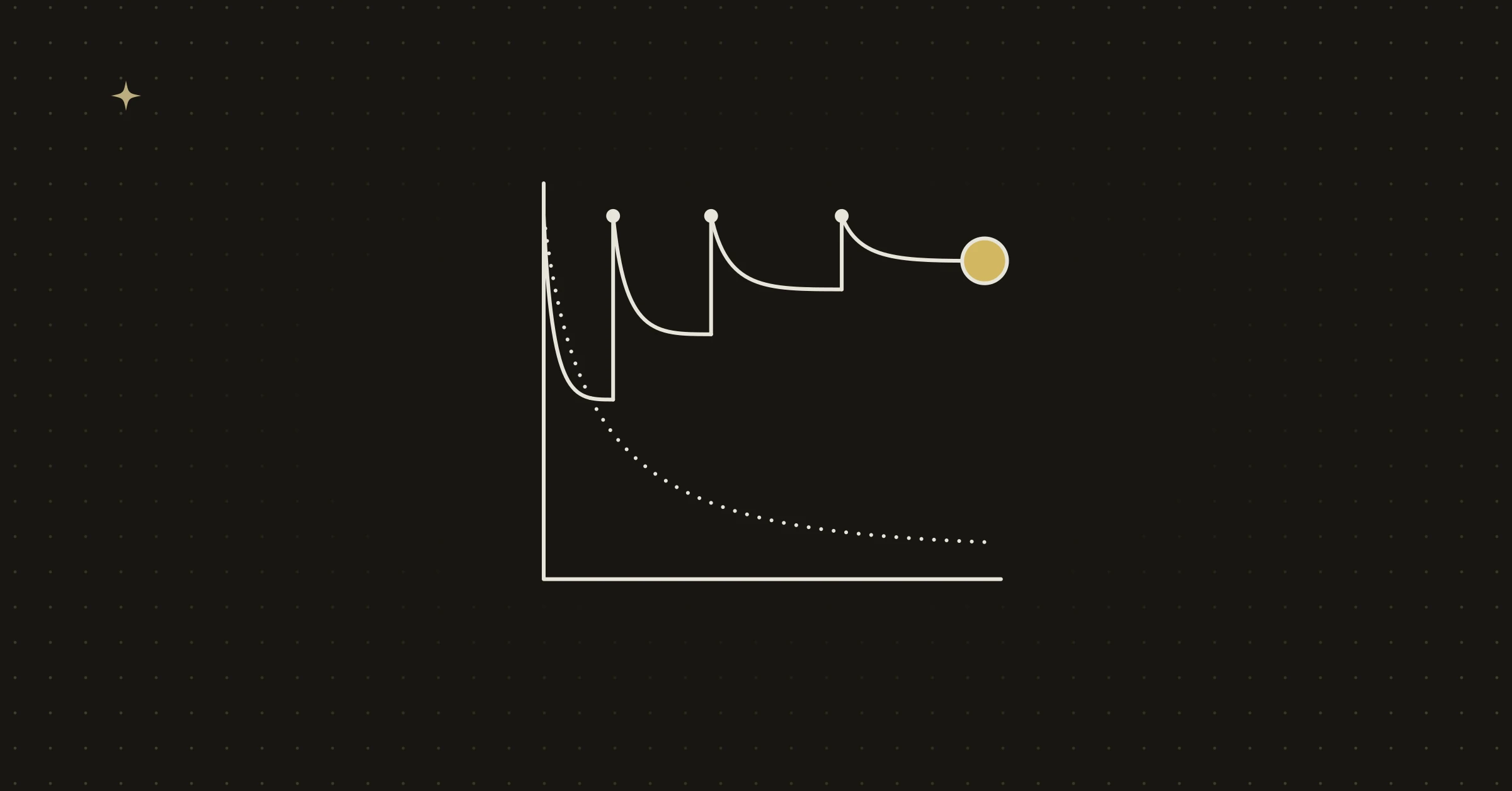
What Is Spaced Repetition?
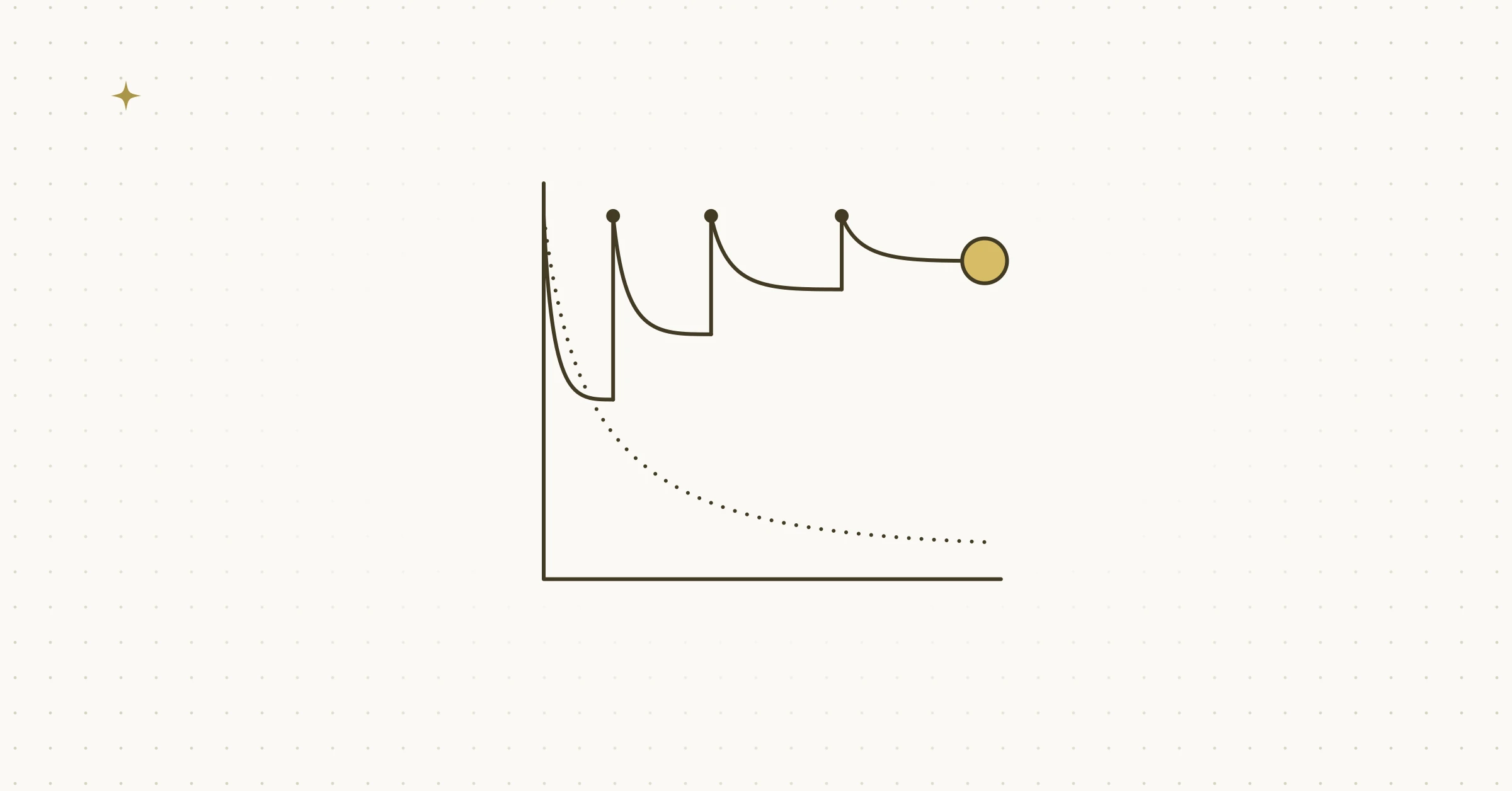
Spaced repetition means reviewing at growing gaps. How the forgetting curve works, how long the gaps should be, and what the research shows.
8 min read≈ 1,810 words3 questions
Field
Education, decisions, habits, wellbeing and mental models.
6 Ideas · 9 Books · 4 Essays · 63 questions
This field is about the practical side of a good life. It asks how to decide, learn, work and change your habits. Its questions are personal, but many of the answers come from psychology, philosophy, economics and mathematics.
The pieces here include mental models, book reviews and personal essays. A mental model is a simple rule of thought that you can apply in many situations. The reviews look at popular self-help and career books and check their claims against research. The essays are personal and do not claim to be science. They end with questions for you to think about, not with a quiz.
Start with inversion, which means asking what would make a plan fail and then avoiding it. The dichotomy of control helps you decide where to put your effort. The after-action review gives you four questions for learning from any project. Then read the review of Eric Barker’s book, which tests common advice about success against studies.
The best first reads in this field, in this order.
IdeaIntro
Ask yourself how to succeed at something, and the answers are often vague. One change to the question makes the answers concrete and quick to find. You learn that change, how to use it step by step on a real plan, where a famous quote about it really comes from, and when the method stops helping.
7 min read≈ 1,430 words3 questions
IdeaIntro
Why do the Stoics say the aim matters more than the hit? You learn how Epictetus, who spent years as a slave, divided life into two parts, and how people have used that division from a prison camp to a job interview. You also see where it is too simple.
8 min read≈ 1,650 words3 questions
IdeaIntro
Most teams finish a project and move straight on to the next one, and then they repeat the same mistakes. The US Army built a simple habit to stop this, and companies and hospitals later copied it. You learn the four questions at its heart, how to run one after a real project, what the research says it achieves, and why it fails when people fear blame.
6 min read≈ 1,370 words3 questions
BookIntro
Should you follow the rules, be nice, never quit and believe in yourself? Eric Barker checks six pieces of common success advice against research. You learn which pieces hold up, which fail, what the book's own evidence can and cannot show, and who should read it.
9 min read≈ 1,980 words5 questions
EssayIntro
When you think about a big change in your life, which inner voice should decide? You learn what Graham Weaver, a Stanford teacher and investor, told graduating students in 2024: his three promises, the nine-lives exercise and why he warns against the words "not now". You also see where his advice needs a second look.
7 min read≈ 1,480 words
Spaced repetition means reviewing at growing gaps. How the forgetting curve works, how long the gaps should be, and what the research shows.
8 min read≈ 1,810 words3 questions
Kiyosaki's model of four ways to earn money explained: employee, self-employed, business owner, investor, plus what the model gets right and wrong.
9 min read≈ 1,890 words5 questions
Robert Greene's Mastery says great skill comes from a long apprenticeship, not talent. What the book argues, where it is weak, and how to read it.
9 min read≈ 2,040 words5 questions
A Roman emperor's private notebook on judgment, duty and impermanence: what Meditations says, how to read it, and which translation to choose.
10 min read≈ 2,120 words5 questions
Ray Dalio's rules for facing reality, learning from mistakes and deciding together, explained, with the critics' view of the culture they built.
9 min read≈ 1,890 words5 questions
What Rich Dad Poor Dad teaches about assets, cash flow and fear, why its rich dad is probably invented, and which of its tips are risky.
9 min read≈ 1,990 words5 questions
Rick Rubin's book on creativity as a way of paying attention: its main ideas, the four phases of a project, and where its vague, spiritual language fails.
9 min read≈ 2,070 words5 questions
What The Daily Stoic offers: 366 short Stoic passages with modern comments, built on three disciplines. How to use it, and what it cannot replace.
9 min read≈ 1,960 words5 questions
Marshall Goldsmith on the 20 habits that hold successful people back and his method for changing them. What the book argues, its limits, and who it helps.
9 min read≈ 1,970 words5 questions
Where Jim Rohn's seven "silent killers" really come from, what he said about each attitude, and which parts of his advice still hold up.
6 min read≈ 1,330 words
Why effort driven by fear often makes uncertain things go worse, what trust means in practice, and where the idea of letting go stops being useful.
6 min read≈ 1,400 words
Tarot cannot predict your future, and the evidence is clear. But a card can still be a useful prompt for thinking. Here is how to use it honestly.
6 min read≈ 1,420 words
Why a positive test result often means less than it seems. Bayes' theorem worked through with 1,000 women and a mammogram, step by step.
8 min read≈ 1,680 words3 questions
How to pick the best option when you see them one at a time and cannot go back. The 37 percent rule, worked through with ten flats, and its limits.
7 min read≈ 1,540 words3 questions