
What Is Spaced Repetition?
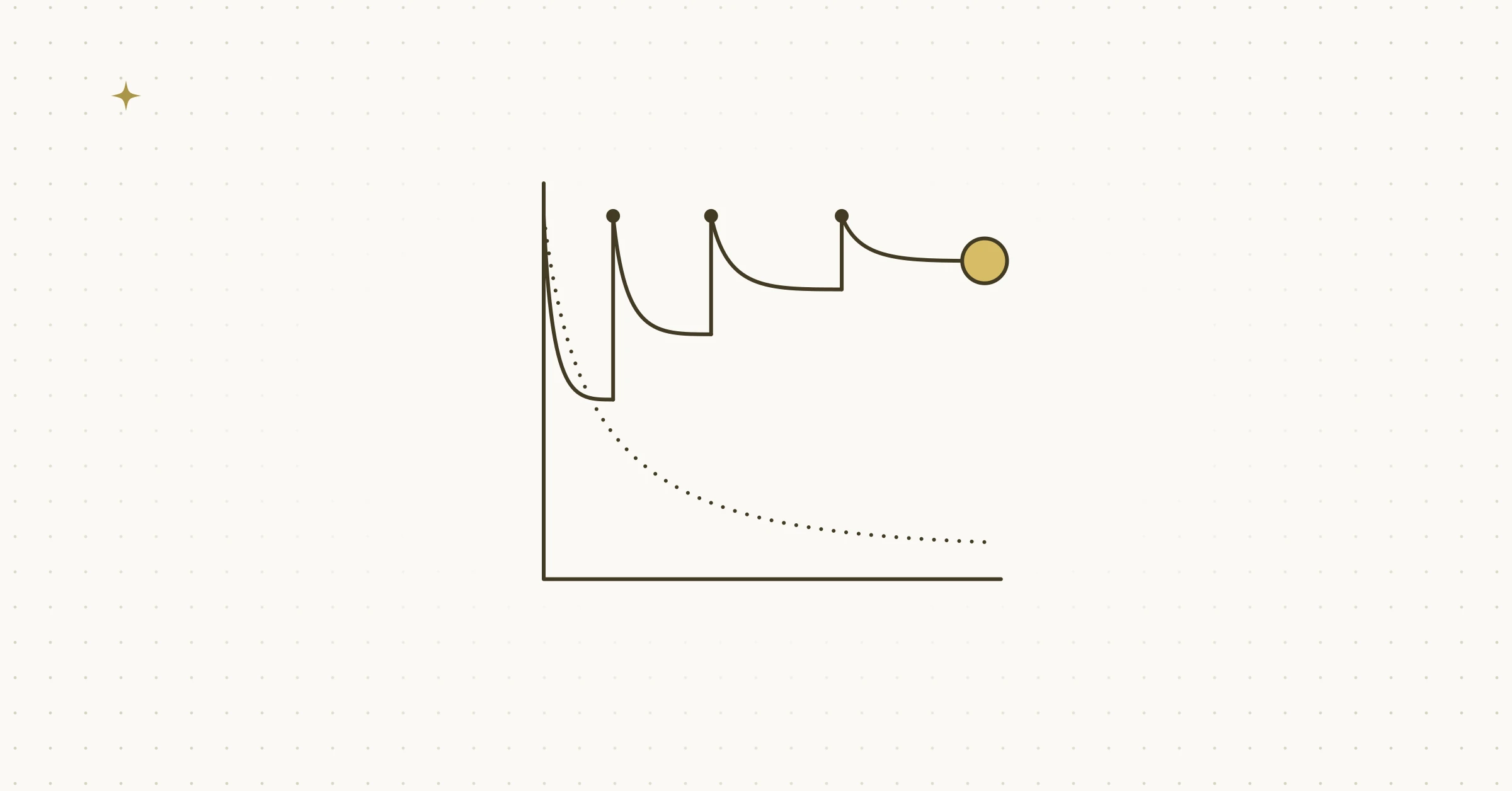
Spaced repetition means reviewing at growing gaps. How the forgetting curve works, how long the gaps should be, and what the research shows.
8 min read≈ 1,810 words3 questions
Field
Cognition, emotion, biases, behavior and consciousness.
4 Ideas · 7 Books · 2 Essays · 47 questions
Psychology studies how people think, feel and act. It asks questions that sound simple. Why do we believe things that are not true? Why do we change our story after a decision? Why does a group sometimes judge better than an expert, and sometimes much worse?
Most of the answers come from experiments. A researcher changes one thing in a situation and measures what people do. Many classic findings come from small groups of students, and some of them did not hold up when other teams repeated the study. So the pieces here say how strong the evidence is, not only what a book or a theory claims.
Start with cognitive dissonance. It explains a pattern you can see in yourself every week. When your actions and your beliefs do not fit together, you often change the belief. Then read about the wisdom of the crowd and about Daniel Kahneman’s two ways of thinking. Together they show when human judgment works well and when it fails in a predictable way.
The best first reads in this field, in this order.
IdeaIntro
Why would people paid one dollar to lie end up liking a dull task more than people paid twenty? You learn what cognitive dissonance is, how the famous 1959 experiment worked, and where you meet the effect in your own decisions. You also learn how well the evidence holds up today.
7 min read≈ 1,620 words3 questions
IdeaIntro
About 800 people at an English livestock fair guessed the weight of an ox, and most of them were far off. You learn why the average of their guesses was still almost exactly right and which three conditions a group needs for this. You also learn why the same group can fail badly when people copy each other.
8 min read≈ 1,670 words3 questions
BookIntermediate
Why does a smart person answer a simple math question wrongly and still feel sure? You learn the seven ideas that carry Daniel Kahneman's long book, from the two systems to loss aversion and the two selves. You also learn which of its studies did not hold up and how to read it with that in mind.
10 min read≈ 2,200 words5 questions
EssayIntro
Shortly before his 85th birthday, Carl Jung was asked what makes people happy, and he answered with a list of five things. You learn what is on the list, what is missing from it, and why Jung warned in the same interview that no list can guarantee a happy life.
6 min read≈ 1,260 words
Spaced repetition means reviewing at growing gaps. How the forgetting curve works, how long the gaps should be, and what the research shows.
8 min read≈ 1,810 words3 questions
Eckhart Tolle's book on the ego, the pain-body and presence: what he teaches, which parts are spiritual claims, not tested knowledge, and how to read it.
10 min read≈ 2,140 words5 questions
Dan Ariely's comic about social norms and market norms: the main idea, the research behind it, its evidence problems, and who should read it.
9 min read≈ 1,890 words5 questions
Eric Barker tests popular success advice against research. What the book finds about grades, kindness, grit, networking and balance, and its limits.
9 min read≈ 1,980 words5 questions
Robert Greene's Mastery says great skill comes from a long apprenticeship, not talent. What the book argues, where it is weak, and how to read it.
9 min read≈ 2,040 words5 questions
Le Bon's 1895 classic on crowd psychology: his claims about contagion, suggestion and leaders, why they shaped propaganda, and what research says today.
9 min read≈ 2,080 words5 questions
Why behavior matters more than knowledge with money: Housel's main ideas on luck, compounding, saving and room for error, and where the book falls short.
9 min read≈ 1,980 words5 questions
Tarot cannot predict your future, and the evidence is clear. But a card can still be a useful prompt for thinking. Here is how to use it honestly.
6 min read≈ 1,420 words
Why a positive test result often means less than it seems. Bayes' theorem worked through with 1,000 women and a mammogram, step by step.
8 min read≈ 1,680 words3 questions