"Mistakes Were Made (but Not by Me)" by Carol Tavris and Elliot Aronson: Summary and Review

11 min read≈ 2,310 words5 questions · up to 5 points
What this is about
Why do people who did something wrong so rarely say "I was wrong", even to themselves? You learn the main ideas of this book by two social psychologists, from the pyramid of choice to the way memory edits the past. You also learn where its evidence is weaker than it sounds and which edition to read.
The book in three sentences· skip ahead
Tavris and Aronson argue that most people who stay with a bad decision are not lying but justifying themselves: they change their beliefs and memories so that their past choices look smart and decent. The engine is cognitive dissonance, and the authors follow it through memory, therapy, police work, marriage, war and politics. The way out is to separate a mistake from your idea of yourself, so that you can admit it.
Mistakes Were Made (but Not by Me): Why We Justify Foolish Beliefs, Bad Decisions, and Hurtful Acts
- Author
- Carol Tavris and Elliot Aronson
- Published
- 2007
- Publisher
- Mariner Books (third edition, 2020)
- Length
- 464 pages
- Audiobook
- 12h 11m, read by Carol Tavris
- Best for
- Readers who want to understand why people, including themselves, defend bad decisions instead of correcting them.
“Mistakes were made” is a sentence that admits an error without saying who made it. Carol Tavris and Elliot Aronson took it as the title of their book because it shows, in three words, the habit they want to explain. People who have done something foolish or harmful rarely lie about it in the ordinary sense, but they are very good at convincing themselves that it was not really their fault.
The book appeared in 2007, during the Iraq war, when the refusal of leaders to admit error was a daily topic. Its authors are two social psychologists. Aronson was a student of Leon Festinger, the man who invented the theory of cognitive dissonance, and worked with him at Stanford from 1956. Tavris is known for explaining psychological research to general readers. A revised edition followed in 2015, and a third edition in 2020 added a long chapter on politics. This review describes the third edition.
“Self-justification” is not lying: we convince ourselves first
The book’s central term is self-justification: the process by which people explain their own choices in a way that keeps their picture of themselves intact. The authors separate it carefully from lying and from making excuses. A liar knows the truth and hides it. A person who justifies himself has persuaded himself first, so there is nothing left to hide.
This is why the authors think self-justification is more dangerous than an open lie. It lets people believe “that what they did was the best thing they could have done,” as the introduction puts it. A person in that state cannot learn from the mistake, because from the inside there is no mistake to learn from. The opening examples range from politicians and church leaders to ordinary people who stay in a bad job or a failing plan.
Cognitive dissonance drives it, most strongly when your self-image is threatened
The engine of self-justification, the authors argue in chapter 1, is cognitive dissonance. They define it as “a state of tension that occurs whenever a person holds two cognitions” that do not fit together, where a cognition is any idea, attitude or belief. Their standard example is a smoker who knows that smoking can kill him. He can quit, or he can decide that the risk is exaggerated or that smoking keeps his weight down.
Aronson’s own contribution, which the book develops at length, is that dissonance is strongest when it threatens a person’s view of himself as competent, moral and smart. In a 1959 experiment with Judson Mills, people who went through an embarrassing test to join a discussion group later rated the dull group more highly than people who joined easily. “I am smart” clashed with “I suffered to join something boring,” so the group had to be better than it was. The mentua Idea What Is Cognitive Dissonance? explains the original theory and the classic one-dollar experiment step by step.
Two practical lessons follow from this chapter. The first is that you should not ask for advice from someone who has just made an expensive choice, such as buying a certain car, because they have the strongest need to praise it; ask someone who is still deciding. The second is that venting anger at another person usually makes you angrier, because after hurting someone you need to justify why they deserved it. The same mechanism also works in a kind direction: people who do someone a favour tend to like that person more afterwards.
One small choice can push two people far apart: “the pyramid of choice”
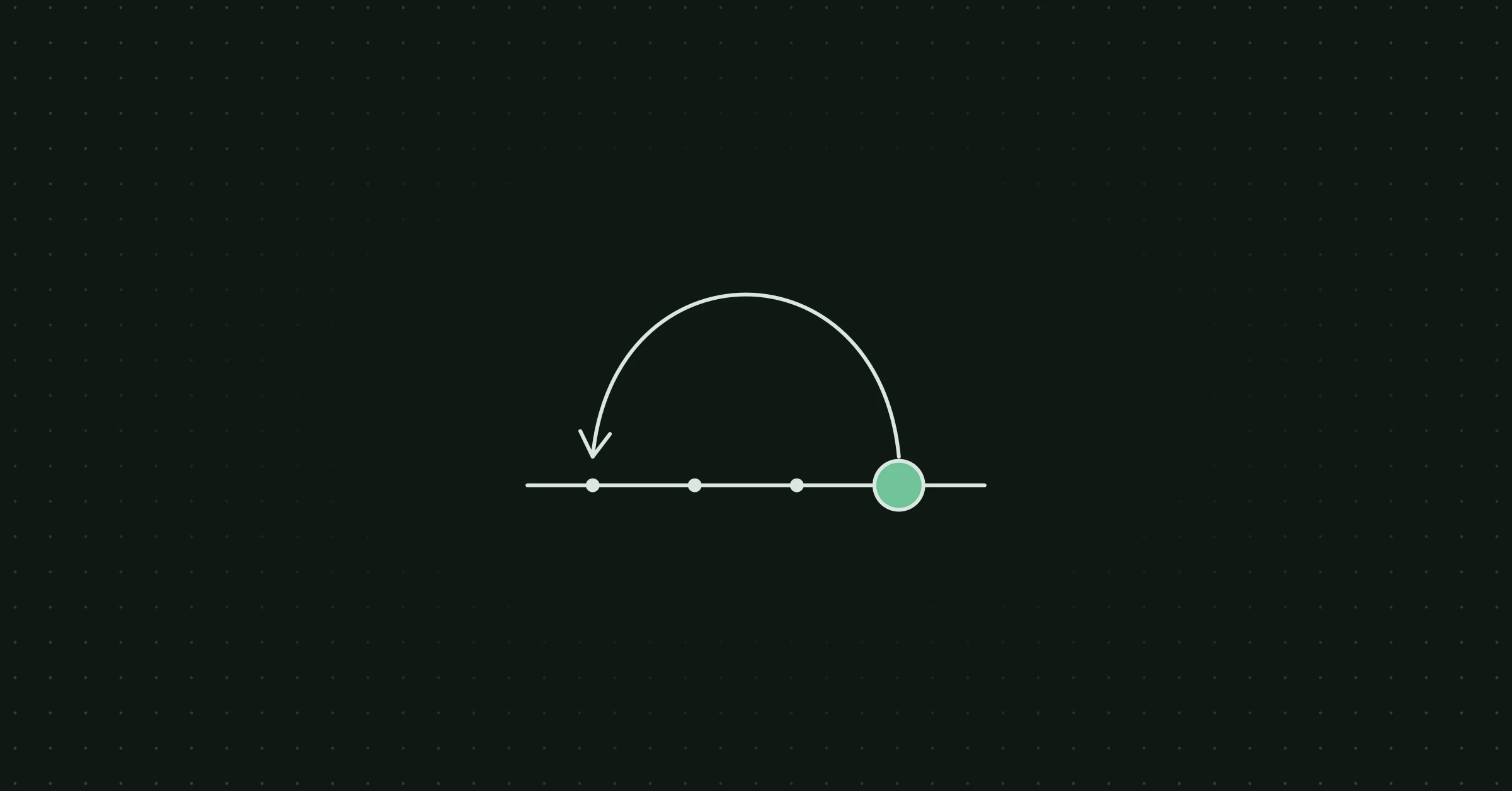
The book’s best-known image is the pyramid of choice. Imagine two students at the top of a pyramid who hold the same mild view on cheating: it is wrong, but not the worst thing in the world. During an important exam both go blank, and both can see a neighbour’s answers. One copies and one does not.
Both now feel dissonance, and both reduce it. The student who cheated decides that cheating is common and harmless. The student who resisted, and paid for it with a worse grade, decides that cheating is a serious wrong that should be punished. Each justification makes the next step down the pyramid easier, so by the time they reach the base the two stand far apart, and each is certain he was right from the start.
In a 2020 interview, Tavris explained why she prefers this image to the familiar “slippery slope”. On a slope you slide passively, while dissonance is active work: you build the justifications yourself, step by step. The pyramid explains how decent people end up defending things they would once have rejected, and why it is so hard for them to climb back up and reconsider the first small step.
Everyone sees other people’s biases, but not their own
Chapter 2 deals with blind spots. The authors use the term “naive realism”, from the psychologist Lee Ross, for the belief that we see the world as it really is, so that anyone who disagrees must be uninformed or biased. Because self-justification feels like clear thinking from the inside, we spot it easily in others and almost never in ourselves. The habit of noticing mainly the evidence that agrees with you has its own name, and What Is Confirmation Bias? explains how it works and when looking for agreement is reasonable.
The chapter applies this to doctors who accept gifts from drug companies and are sure the gifts do not affect them, and to prejudice. The authors describe prejudice as a form of self-justification that protects the belief “I am a good person” while allowing “I don’t like those people”. This chapter is shorter than the others, but the idea of the blind spot runs through the whole book.
Memory is a “self-justifying historian”
In chapter 3 the authors argue that memory does not store the past like a recording. It rebuilds events each time we recall them, and it tends to rebuild them in our favour. They call memory the “self-justifying historian”: it keeps the parts of the past that support the story we now tell about ourselves and quietly drops or changes the rest.
The examples range from small to serious. People remember having been worse in the past than they were, so that their progress looks larger. Adults blame their parents for choices they made themselves. At the extreme end, people form confident memories of events that never happened, including memories of abuse recovered in therapy and of abductions by aliens. The authors stress that these people are not lying. Their memories really have changed, which is why a sincere and confident witness can still be wrong.
Experts are trapped too: the “closed loop” in therapy and the courts
Chapters 4 and 5 show what happens when self-justification meets professional pride. A closed loop, in the authors’ sense, is a way of working in which a professional’s judgment can never be shown to be wrong, because every result is read as confirming it. Some therapists in the 1980s and 1990s believed that adults had repressed memories of childhood abuse. If a client found such memories, this proved the theory; if the client denied them, this proved how deep the repression was.
Against this, the authors set the scientific method, which tests whether an idea could be false.
science is a form of arrogance control
The chapter on the law follows the same pattern through police work and prosecution. Once detectives decide who is guilty, the prime suspect becomes the only suspect. Interrogation methods that allow lying to suspects can produce false confessions, and prosecutors who won a conviction often resist new DNA evidence that points to someone else. The authors’ remedy is to teach police officers and lawyers about their own vulnerability to self-justification. These two chapters are among the strongest in the book, because the costs of the closed loop are concrete: innocent people in prison.
Couples and enemies justify themselves into deeper conflict
Chapters 6 and 7 move from institutions to relationships. In a marriage, the authors argue, most couples do not break up because of one great betrayal but slowly, through a growing pattern of blame and self-justification. The decisive step is how partners explain each other’s annoying behaviour. Couples who stay happy explain a partner’s bad moments by the situation (“she was tired”); couples who drift apart explain them by character (“he is selfish”), while excusing their own faults by the situation.
The same pattern appears between groups and nations. Perpetrators and victims tell very different stories about the same events, and each side’s account justifies its next act. The authors apply this to torture and to the abuse of prisoners at Abu Ghraib, where people who saw themselves as good did cruel things and then justified them. To end such a cycle, they argue, the side that did harm must admit it honestly and the side that was harmed must at some point let go.
Owning up: separate the mistake from your idea of yourself
The last chapter of the original book, “Letting Go and Owning Up”, turns to what can be done. The authors’ main advice is to separate what you did from who you are. If a mistake means “I am stupid” or “I am a bad person”, admitting it is almost unbearable. If it only means “I made a bad decision on that day”, it can be admitted and corrected. They criticise cultures and schools that treat mistakes as proof of stupidity, and they draw on Carol Dweck’s research on how children react to failure.
The practical advice is modest. Notice the discomfort after a decision, because it shows that dissonance is at work. Look for evidence that you were wrong as well as for evidence that you were right. In organisations, build habits that catch errors before self-justification starts; the military practice described in What Is an After-Action Review? is one example of such a habit. The 2015 revision extended this chapter with a discussion of the opposite problem, people who cannot stop blaming themselves, and of how to live with dissonance and learn from it.
The third edition adds a chapter on dissonance and politics
The 2020 edition adds a long new chapter, “Dissonance, Democracy, and the Demagogue”. It applies the pyramid of choice to American political polarization and to the presidency of Donald Trump. When people strongly identify with a party, the authors argue, they feel little dissonance when the other side behaves badly but play down the same behaviour on their own side.
The chapter’s advice for arguing with the other side follows from the theory. If you make someone feel stupid for a choice, you raise their dissonance, and they will defend the choice harder. Asking them why they believe what they do, and listening, is more likely to work. The chapter is openly critical of Trump, which some readers will welcome and others will find one-sided.
How it differs from other books on error
Three neighbours show what this book adds. Daniel Kahneman’s Thinking, Fast and Slow (2011) explains errors of judgment by fast, automatic thinking, while Tavris and Aronson explain errors of self-defence by motivation: people do not just think badly, they need to have been right. The two books fit together well, as the review “Thinking, Fast and Slow” by Daniel Kahneman: Summary and Review shows.
Kathryn Schulz’s Being Wrong (2010) covers similar ground as a writer and philosopher, with more attention to what it feels like to be wrong and less experimental evidence. Jonathan Haidt’s The Righteous Mind (2012) explains political division through moral intuitions, while the third edition of Mistakes Were Made explains it through self-justification. What is distinctive here is the method: one theory followed through many fields of life, by a co-author who helped build it in the laboratory.
Where it falls short: one theory for everything, and older evidence
The first weakness is the state of the evidence. The book presents dissonance as one of the best supported ideas in psychology. In 2024, a team led by David Vaidis repeated a classic dissonance experiment in 39 labs with almost 4,900 participants and did not find the key effect: people who chose freely to write an essay against their own view did not change their attitude more than people who were told to write it. In 2025, an archival study by Thomas Kelly questioned how reliable When Prophecy Fails, the flying-saucer study that opens chapter 1, really was. Both appeared after the third edition, so the book cannot mention them, but they mean that its confident tone is no longer fully justified. People certainly justify their choices; the exact mechanism and the size of some lab effects are less certain.
The second weakness is reach. Reviewers noted early that the authors apply dissonance to almost everything, from shopping to war, and rarely ask what else could explain a case. The book also says little about why some people do admit their mistakes, which is the question a reader most wants answered. The cases are mostly American, and some, such as the Bush administration, now feel dated.
Which edition and format to choose
Read the third edition of 2020. It keeps the original chapters with updated examples, the longer 2015 ending on living with dissonance and the new political chapter; if politics does not interest you, the 2015 edition gives you the rest of the book. The book is driven by stories rather than charts, so the audiobook works very well. It runs about twelve hours, and Carol Tavris reads it herself. The print edition has extensive notes, which are useful if you want to check the studies behind a claim, and that is worth doing for the most surprising ones.
Quiz
5 questions · up to 5 points
Open a question and pick one answer. Only your first answer counts: +1 if it is right, −1 if it is wrong.
How do Tavris and Aronson separate self-justification from lying?
Show answer
A liar knows the truth, while a person who justifies himself has convinced himself first. This is the book's starting point. Self-justification is more dangerous than a lie because the person believes the story and so cannot see the mistake.
Two students with the same mild view on cheating face the same exam. One cheats, one does not. What does the pyramid of choice predict?
Show answer
Both justify their choice, so their views on cheating move far apart. Each student reduces dissonance by changing the attitude to fit the act. One decides cheating is harmless, the other that it is a serious wrong.
Why do the authors call memory a "self-justifying historian"?
Show answer
Memory reshapes past events so they fit the story we now tell about ourselves. The authors argue that memory is rebuilt each time, and that it tends to be rebuilt in a direction that flatters our present view of ourselves.
According to the last chapter of the first edition, what makes it easier to admit a mistake?
Show answer
Seeing the mistake as something you did, not as proof of who you are. If a mistake does not threaten your whole idea of yourself as competent and decent, the dissonance is smaller and admitting it costs less.
What does this review say about the book's evidence?
Show answer
The stories are strong, but some classic dissonance studies are weaker than the book suggests. A 39-lab replication in 2024 did not find the classic effect of choice in the induced-compliance experiment, and the famous flying-saucer study has been questioned since the third edition appeared.
Your points are saved only in this browser for now. Accounts that keep them for good are on the way.
Continue learning: What Is Cognitive Dissonance? →The takeaway
Mistakes Were Made (but Not by Me) argues that self-justification, driven by cognitive dissonance, lets people believe that their worst choices were reasonable. Small first decisions push people apart on the pyramid of choice, and memory then rewrites the past to fit. The book is vivid and useful, but it treats dissonance as settled science, although a large 2024 replication did not confirm a classic dissonance effect. Use it to notice the moment after a decision when you start collecting only the reasons that agree with you.
Key quotes
“science is a form of arrogance control”
“But people don't have to be lying to be mistaken.”
Should you read it?
Read it if
- You want to know why smart and decent people defend decisions that are plainly wrong.
- You work where mistakes are costly, such as medicine, law, management or therapy.
- You like psychology told through real cases, from court rooms to marriages.
Skip it if
- You already know dissonance theory well; the book applies one idea to many fields more than it adds new ones.
- You want the current state of the research; the book does not discuss the recent failed replications.
- You want a step-by-step method for changing your habits; the advice here is mostly to notice what you are doing.
As an Amazon Associate, mentua.org earns from qualifying purchases. It costs you nothing and never shapes the verdict.
Ideas from this book
- Cognitive dissonanceCognitive dissonance is the uncomfortable tension you feel when two of your beliefs contradict each other, or when your actions contradict your beliefs. In the 1950s Leon Festinger proposed that people try to reduce this tension. Often they do it by changing a belief so that it fits what they have already done, not by changing what they do.
- Confirmation biasConfirmation bias is the tendency to look for, notice and believe information that supports what you already think, and to overlook or discount information that speaks against it. It shapes which questions you ask and how strictly you judge the answers. The result is that a belief can feel well tested when it has never been put at risk.
References
- Excerpt: Mistakes Were Made (But Not by Me). NPR, 2007
The opening of chapter 1, with the flying-saucer story and the authors' definition of cognitive dissonance.
- Cognitive Dissonance and the Pandemic: A Conversation with Carol Tavris. Leighann Lord, Skeptical Inquirer, 2021
Tavris explains the pyramid of choice and the new chapter of the third edition in her own words.
- Bush's Mistake and Kennedy's Error. Michael Shermer, Scientific American, 2007
A column built on the book, with its central quotations on self-justification.
- A Multilab Replication of the Induced-Compliance Paradigm of Cognitive Dissonance. David C. Vaidis et al., Advances in Methods and Practices in Psychological Science, 2024
The 39-lab study that did not find the classic effect of choice on attitude change, published after the third edition.