Plate Tectonics, Explained
5 min read≈ 1,210 words3 questions · up to 3 points
What this is about
For fifty years most geologists rejected the idea that continents move, because nobody could name a force strong enough to move them. You learn what finally changed their minds, how a pattern of magnetic stripes on the ocean floor works like a tape recording, and why earthquakes and volcanoes gather in narrow belts. You also learn which big question about the plates is still open.
In a nutshell· skip ahead
Plate tectonics is the theory that the Earth's rigid outer shell is broken into about a dozen large plates and many small ones. They move a few centimetres a year over hotter, softer rock below. New ocean floor forms where plates move apart, and old ocean floor sinks back into the Earth where they meet. Most earthquakes, volcanoes and mountain ranges form along these plate boundaries.
Look at a map of the world and the east coast of South America seems to fit into the west coast of Africa, like two pieces of a puzzle. In 1912 a German scientist, Alfred Wegener, used this and much other evidence to argue that the continents had once been joined and had drifted apart. Most geologists rejected the idea for the next fifty years, because Wegener could not answer their simplest question: how can a continent of solid rock push its way through an ocean floor of solid rock?
How does plate tectonics work?
Wegener’s critics were right about the problem but wrong about the conclusion. The answer is plate tectonics: the Earth’s rigid outer shell, the lithosphere, is broken into about a dozen large plates and many small ones, and these plates move a few centimetres a year. The lithosphere is made of the crust and the cool top of the mantle below it. So the continents do not plough through the ocean floor, because they are parts of plates and the ocean floor moves with them.
The plates ride on hotter rock that is almost solid but flows very slowly over millions of years, a little like very stiff putty. Plates meet in three ways:
- They move apart. Hot rock rises between them, melts partly and forms new ocean floor along the mid-ocean ridges, a chain of underwater mountains more than 50,000 kilometres long. Geologists call this seafloor spreading.
- They move toward each other. Usually one plate bends down and sinks back into the Earth under the other, which is called subduction. Where two continents meet, neither sinks, so the crust folds up instead. India ran into Asia about 50 million years ago, and the collision raised the Himalayas.
- They slide past each other. Along the San Andreas fault in California, the Pacific Plate slides past the North American Plate.
Because the Earth does not grow, ocean floor must be destroyed in the trenches at about the rate it is made at the ridges.
How do stripes on the ocean floor prove that plates move?
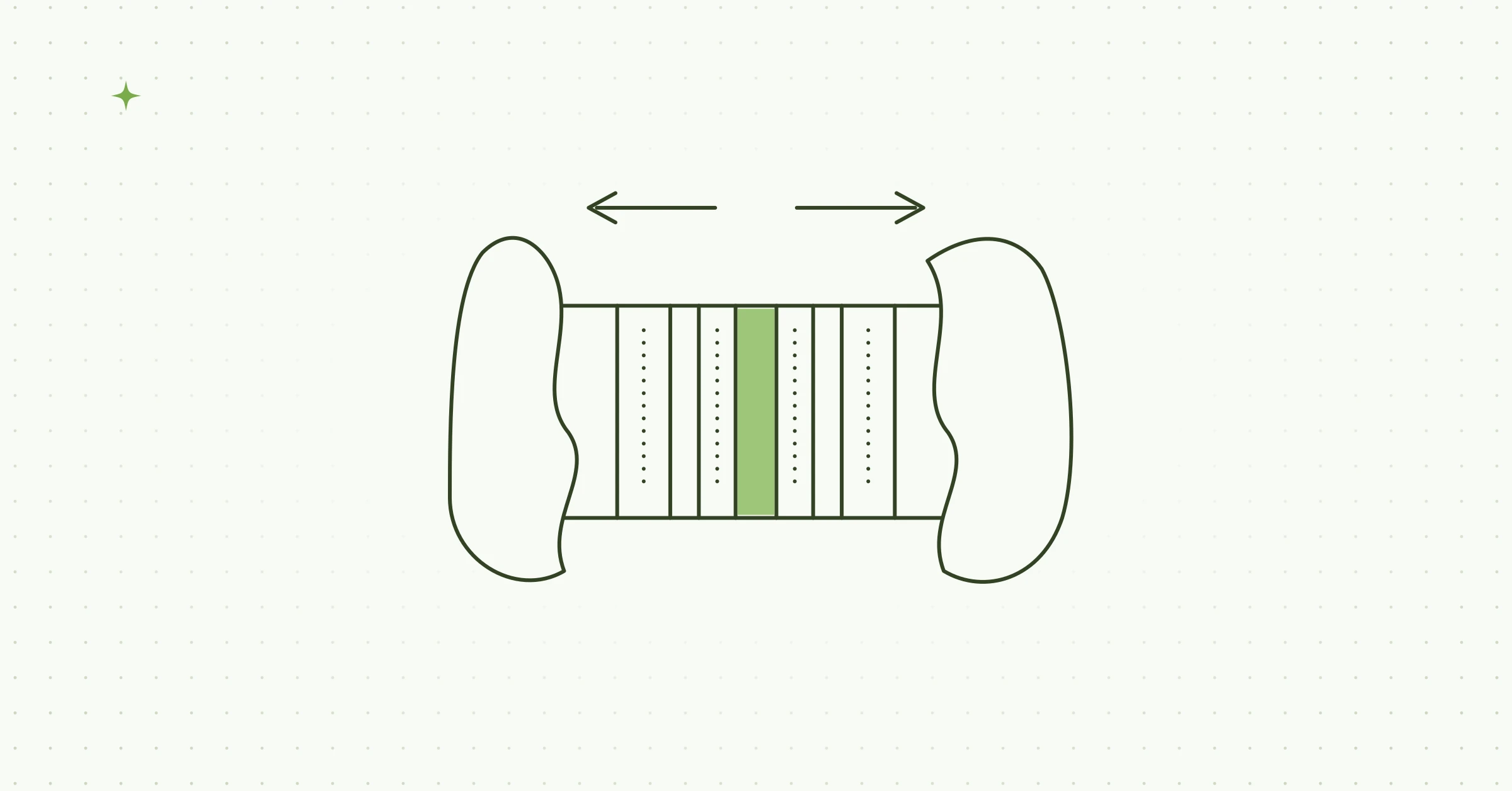
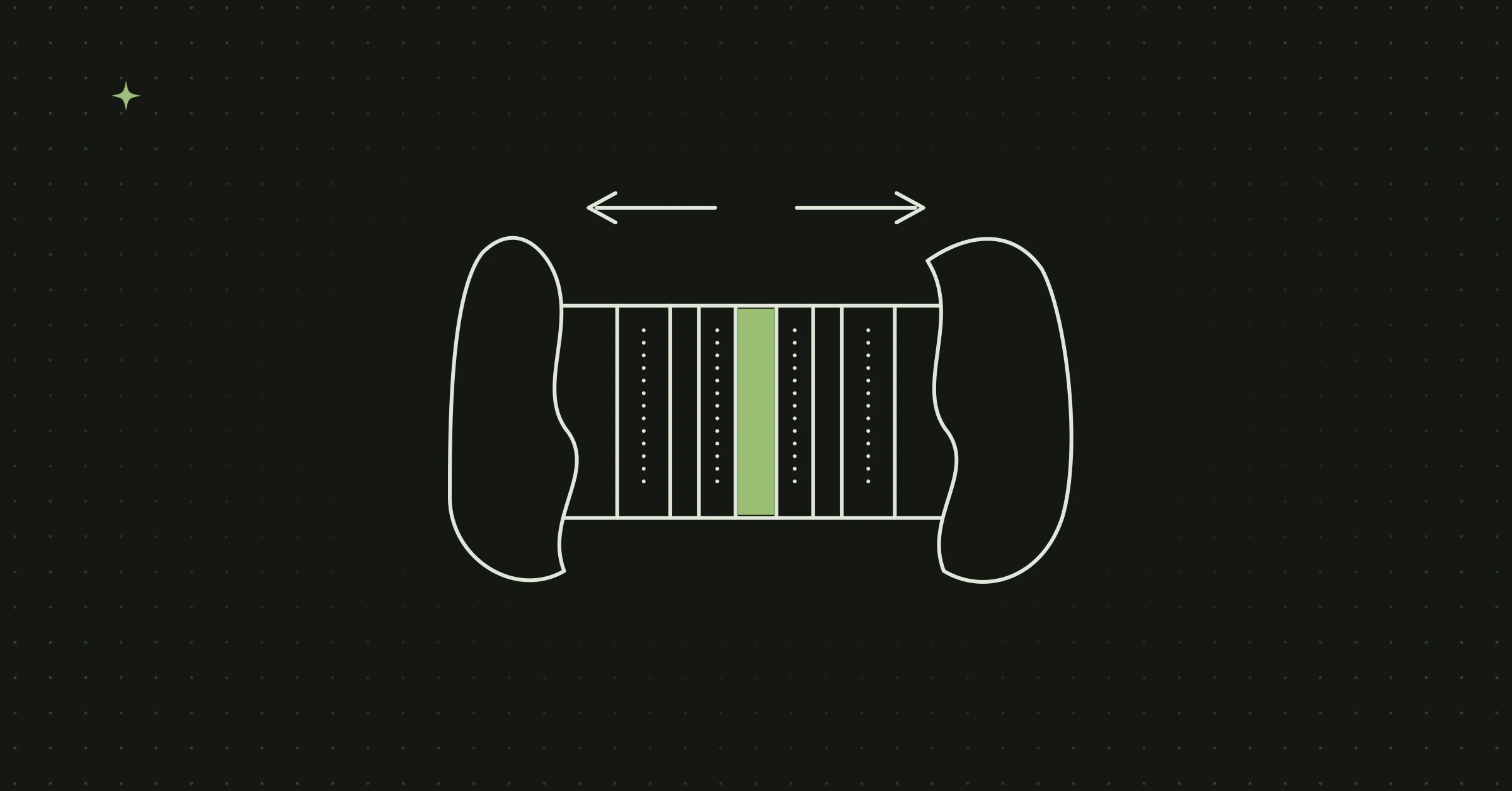
The decisive evidence came in the 1950s and 1960s, when ships towing magnetometers, instruments that measure magnetism, found a strange pattern of stripes on the ocean floor. We can follow it across the Mid-Atlantic Ridge, where North America and Europe move apart.
- The rock records the magnetic field. Lava at the ridge contains grains of magnetite, an iron mineral that behaves like a tiny compass. When the lava cools, the grains are locked in the direction of the magnetic field at that moment.
- The field flips. At irregular intervals the Earth’s magnetic north and south swap places, most recently about 780,000 years ago, so rock from a “normal” period and rock from a “reversed” period point in opposite directions.
- The new rock moves away. The two plates separate by about 2.5 centimetres a year, so each side carries away half of the new rock, about 1.25 centimetres a year.
- The record becomes stripes. In 780,000 years each side has moved about 10 kilometres, so the youngest stripe, with today’s normal direction, is about 20 kilometres wide. On both sides of it lies a stripe of reversed rock from the period before, and so on outward.
The result is the same pattern on both sides of the ridge, like one tape recording played in two directions. Frederick Vine and Drummond Matthews explained it this way in 1963. In 1968 the drilling ship Glomar Challenger brought up cores from the floor of the South Atlantic, and their ages grew with distance from the ridge, as the theory predicted.
Over the last 100 to 200 million years, spreading of 25 kilometres per million years has turned the Atlantic from a narrow inlet into a wide ocean. Surprisingly, very little of the ocean floor is older than about 150 million years, while some rocks on the continents are about 4 billion years old, because ocean floor is constantly made at the ridges and destroyed in the trenches.
What plate tectonics teaches you
Plate tectonics shows that a pattern can be real long before anyone understands its mechanism. Wegener’s coastlines and fossils were correct evidence, rejected mainly because his explanation of the movement was wrong.
- The news. Large earthquakes and volcanoes are not random: Japan, Chile, Indonesia and Alaska all lie around the rim of the Pacific Ocean, where ocean floor sinks under other plates. When you read of a disaster there, ask which plates meet, and you will know that more will follow.
- Where you live or travel. Hazard maps and building rules follow plate boundaries, and in Iceland, which sits on the Mid-Atlantic Ridge, the ground cracks open as the plates separate.
- Weighing evidence. When coastlines, fossils, stripes and earthquake belts all follow from one cause, that cause deserves serious attention. What Is Occam’s Razor? explains why one explanation for many facts is a good place to start, and Bayes’ Theorem, Explained shows how each new piece of evidence should change a belief.
Biologists use the theory to explain why related species and fossils lie on continents now far apart, which links it to Natural Selection: How It Works and Why It Matters.
What does plate tectonics still not explain?
Many people picture the plates floating on liquid magma. In fact the mantle below them is hot solid rock that flows very slowly, and magma forms only in small amounts in particular places, such as under ridges and volcanoes.
The biggest open question is the one Wegener could not answer: what moves the plates? Most geophysicists now think the main force is slab pull, the weight of old, cold, dense plate sinking in a trench and dragging the rest of the plate behind it. The push of the high ridges and the slow flow of the mantle help, but how much each force contributes is still debated.
The Newton of drift theory has not yet appeared.
The second open question is when the process began. Estimates range from more than 4.2 billion years ago to less than one billion, and at a 2006 meeting most experts voted for 2.5 to 4 billion years ago. The early Earth was hotter, so its plates may have behaved differently.
Learn more
Plate tectonics has no single author. Wegener presented continental drift in January 1912 and in his 1915 book The Origin of Continents and Oceans, and he died on the Greenland ice cap in 1930, long before his idea was accepted. In the early 1960s Harry Hess and Robert Dietz proposed seafloor spreading. The Canadian geophysicist Lawrence Morley explained the stripes independently of Vine and Matthews in 1963, but two journals rejected his paper. Between 1965 and 1968 Tuzo Wilson, Dan McKenzie, Jason Morgan and others turned these findings into the theory of rigid plates.
The best next step is John McPhee’s Annals of the Former World (Affiliate Link). It won the 1999 Pulitzer Prize for General Nonfiction and follows geologists across North America as they read plate history in the rocks.
Quiz
3 questions · up to 3 points
Open a question and pick one answer. Only your first answer counts: +1 if it is right, −1 if it is wrong.
Why do the magnetic stripes on the ocean floor form the same pattern on both sides of a mid-ocean ridge?
Show answer
New rock forms at the ridge, records the magnetic field as it cools and is then carried away to both sides. Each half of the new floor moves away from the ridge, so each period of the magnetic field leaves one stripe on the left and one on the right.
You read that a strong earthquake has hit the coast of Chile, where the Nazca Plate sinks under South America. What does plate tectonics lead you to expect there?
Show answer
More large earthquakes in the future, because the sinking plate keeps getting stuck and then slipping. Where one plate sinks under another, the plates lock for long periods and then move suddenly, so large earthquakes return again and again.
What do the plates move on?
Show answer
Hot rock that is almost solid but can flow very slowly over millions of years. The rock under the plates is hot and almost solid, and it flows only very slowly, a little like very stiff putty.
Your points are saved only in this browser for now. Accounts that keep them for good are on the way.
Continue learning: Natural Selection: How It Works and Why It Matters →The takeaway
Plate tectonics says that the Earth's rigid outer shell is broken into plates that move a few centimetres a year: new ocean floor forms where plates move apart and sinks back into the Earth where they meet. The main evidence came from the ocean floor, where rock records the reversals of the Earth's magnetic field in stripes that are mirrored on both sides of each ridge. What drives the plates, and when the process began, are still debated. When you hear of an earthquake or a volcano, ask which plates meet there.
References
- Developing the theory. W. Jacquelyne Kious and Robert I. Tilling, U.S. Geological Survey, This Dynamic Earth
How ocean mapping, magnetic stripes and the drilling ship Glomar Challenger turned continental drift into plate tectonics.
- Understanding plate motions. W. Jacquelyne Kious and Robert I. Tilling, U.S. Geological Survey, This Dynamic Earth
The types of plate boundaries with real cases: Iceland, the Andes, the Himalayas and the San Andreas fault.
- Frederick Vine and Drummond Matthews. The Geological Society of London, Plate Tectonics: Pioneers of Plate Tectonics
A short account of the 1963 paper that explained the magnetic stripes, and of Lawrence Morley's independent idea.
- Alfred Wegener (1880–1930). NASA Earth Observatory, NASA Science
Wegener's life, his 1912 lectures and 1915 book, the hostile reception and his death in Greenland.
- When did plate tectonics begin on Earth?. Bob Stern, Speaking of Geoscience, Geological Society of America, 2016
Why geologists still disagree, by billions of years, about when the plates started to move.