"The Hero with a Thousand Faces" by Joseph Campbell: Summary and Review

10 min read≈ 2,250 words5 questions · up to 5 points
What this is about
Why do the Buddha under his tree, Jason with the Golden Fleece and Luke Skywalker in Star Wars seem to follow the same steps? You learn the main ideas of Joseph Campbell's 1949 study, from the three phases of the hero's adventure to the claim that myths are public dreams. You also learn what folklorists and feminist critics object to, and how the book became a manual for Hollywood.
The book in three sentences· skip ahead
Joseph Campbell argues that all hero myths tell one basic story, the monomyth, in which a hero leaves the everyday world, passes through trials in an unknown place and comes back with a gift for others. He reads this story with Freud and Jung as a map of inner growth. The payoff is a pattern for reading myths, religions and novels, and a challenge to find such meaning in modern life.
The Hero with a Thousand Faces
- Author
- Joseph Campbell
- Published
- 1949
- Publisher
- New World Library (Collected Works of Joseph Campbell, 3rd edition, 2008)
- Length
- 432 pages
- Audiobook
- 14h 37m, read by Arthur Morey, John Lee and Susan Denaker
- Best for
- Readers of myth, religion and literature who want the classic source of the hero's journey, and writers who want to know what the screenwriting manuals are built on.
Joseph Campbell’s claim in The Hero with a Thousand Faces is that the hero myths of every culture tell one and the same story, and that this story is really about the inner life of every person. Campbell, who taught literature at Sarah Lawrence College near New York from 1934 to 1972, built the book out of his introductory course on mythology. Pantheon Books published it in 1949 for the Bollingen Foundation, as number 17 of its Bollingen Series.
Its real fame came later. In 1977 Star Wars appeared, and George Lucas has said that Campbell’s book helped him shape the story. In 1988, the year after Campbell’s death, the PBS series The Power of Myth with Bill Moyers was filmed at Lucas’s Skywalker Ranch, and the book reached the best-seller lists. Today “the hero’s journey” is a standard term in writing classes.
All hero myths follow one pattern, the “monomyth”
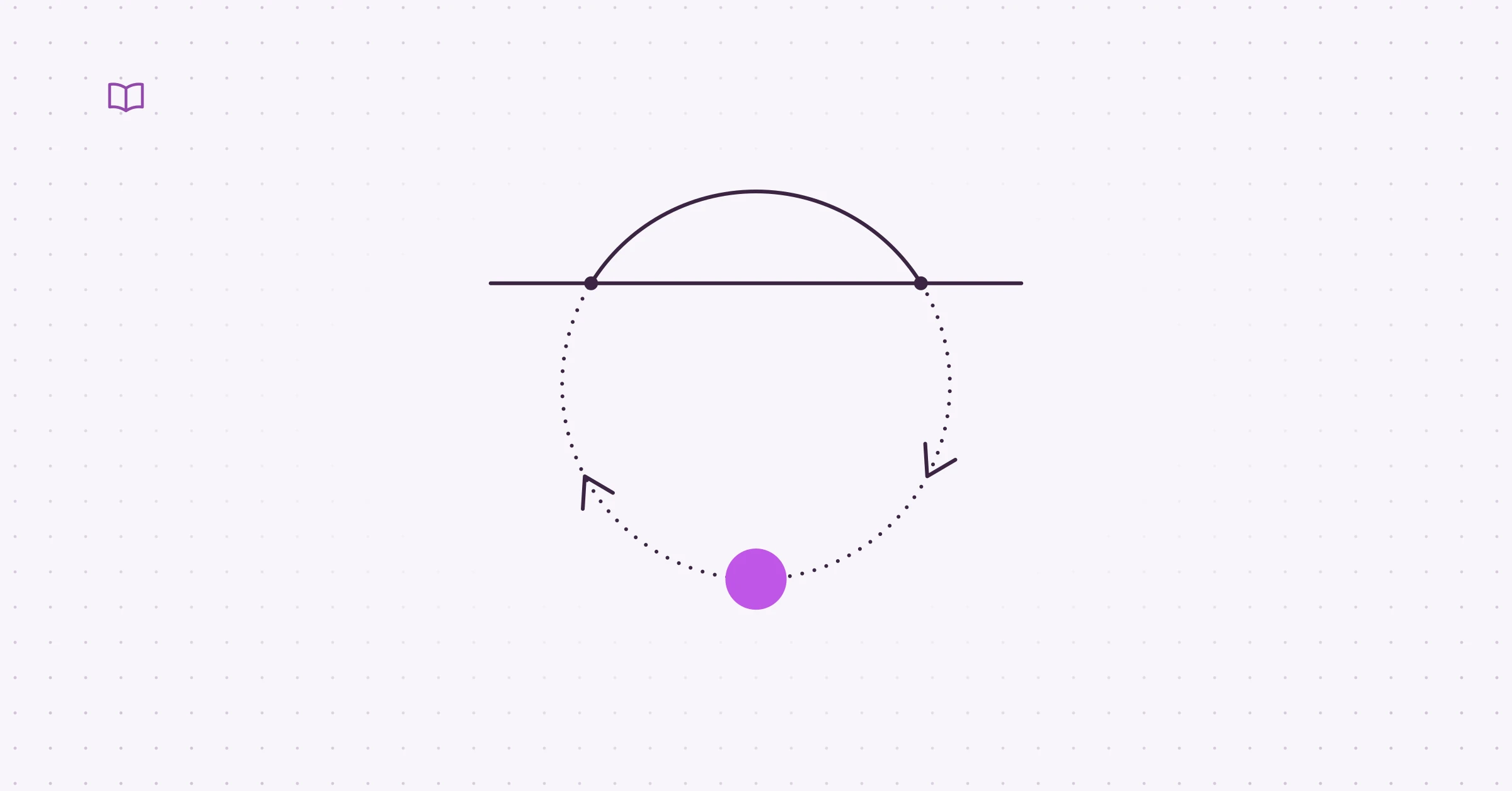
Campbell’s central idea is that behind the many hero stories of the world stands a single basic story, which he calls the monomyth. He took the word from James Joyce’s novel Finnegans Wake, as he says in a footnote. The core of the monomyth has three phases, separation, initiation and return, which Campbell takes from the rites of passage that mark birth, adulthood or death in traditional societies. In the third section of the Prologue he gives his famous summary:
A hero ventures forth from the world of common day into a region of supernatural wonder: fabulous forces are there encountered and a decisive victory is won: the hero comes back from this mysterious adventure with the power to bestow boons on his fellow man.
A boon is a gift or blessing, and it is the reason for the whole adventure. Campbell then shows the pattern in Prometheus, who stole fire from the gods, in Jason and the Golden Fleece, in Aeneas visiting the dead, and above all in the Buddha’s struggle under the Bo Tree. The rest of Part I follows the hero through seventeen stages, each with examples from many traditions, from Greek myth and Hindu texts to Grimm’s fairy tales and the Bible.
It helps to know what kind of claim this is. In a footnote Campbell says that his book is “a comparative, not genetic, study”. He does not explain how the stories spread from one people to another. He only wants to show that the same shapes appear everywhere, and to say what they mean.
Myths are dreams that a whole society shares
Why should the same story appear in Greece and in India? Campbell’s answer comes from psychoanalysis. He argues that myths and dreams speak the same symbolic language, because both come from the same depths of the mind:
Dream is the personalized myth, myth the depersonalized dream
The difference, he explains, is that the forms of a dream are bent by the troubles of the person who dreams it, while a myth shows problems and solutions that are valid for all people. He uses Sigmund Freud’s ideas and the dream reports of ordinary people, but his deeper debt is to Carl Jung and his idea of archetypes, the basic images that Jung believed all human minds share. For Campbell the first task of the hero is therefore inward. The hero must turn away from the surface of the world to the regions of the mind where the real difficulties lie, deal with them there, and break through to what Jung called “the archetypal images”.
This reading makes the book more than a catalogue. If Campbell is right, a myth is a guide for growing up and changing, written in pictures. When Theseus finds his way out of the labyrinth with Ariadne’s thread, the story also describes the way out of a person’s own confusion. Readers who know Jung’s later thoughts on a meaningful life, described in Carl Jung on a Fulfilled Life: Five Conditions and No Guarantee, will recognize the same belief that the psyche has a direction of growth.
Departure: the hero is called, hesitates and crosses a threshold
The first chapter of Part I describes how the adventure begins, in five stages, and Campbell gives each one a short gloss in the Prologue. The call to adventure is “the signs of the vocation of the hero”: something breaks into ordinary life and shows that the old world no longer fits.
Many heroes first say no. Campbell calls the refusal of the call the folly of the flight from the god, because the hero runs away from the change that the call demands. Those who answer usually meet supernatural aid, the unexpected help that comes to someone who has started on his proper adventure. In many tales the helper is a wise old man, and in the Prologue Campbell says that in modern life the psychoanalyst plays exactly this role.
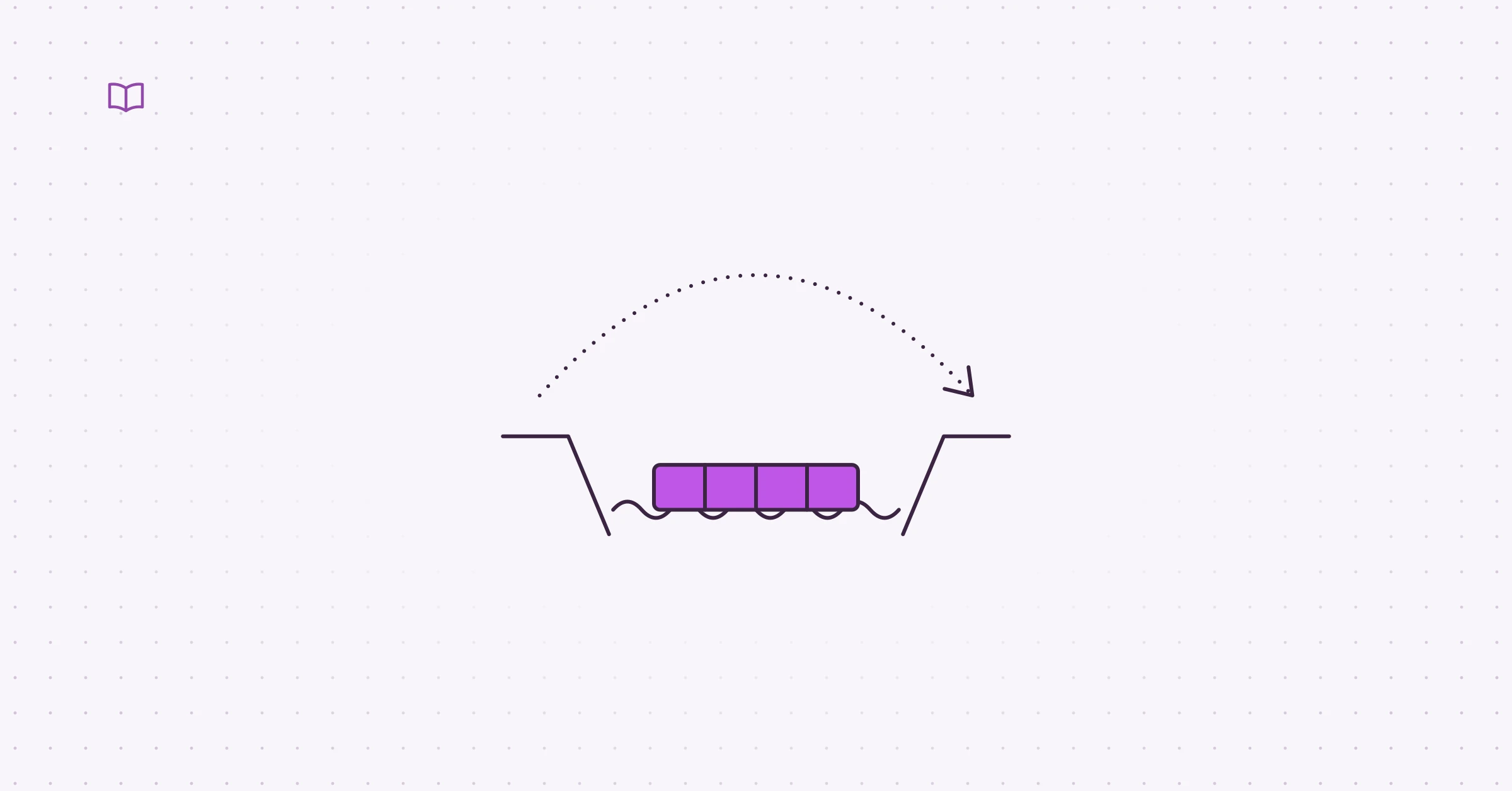
The hero then crosses the first threshold, guarded by a figure who marks the edge of the known world, and enters the belly of the whale. Campbell describes it as a passage into night, and the name recalls Jonah, swallowed by a great fish in the Bible. The image means that crossing the threshold is a kind of death, because the old self has to disappear before a new one can be born.
Initiation: trials lead to the “ultimate boon”
The second chapter, the longest, describes the transformation itself, again in six stages. On the road of trials the hero meets what Campbell calls the dangerous aspect of the gods, a series of tests that he often passes with the help of the earlier helper.
Campbell reads the high points of the initiation with Freud. In the meeting with the goddess, the hero meets a great mother figure, and Campbell’s gloss is “the bliss of infancy regained”. In woman as the temptress, the same figure appears as a danger to his spiritual aim, which Campbell links to the guilt of Oedipus. In atonement with the father, the hero is recognized by the father figure who made the world and is reconciled with him. In apotheosis, Greek for becoming divine, the hero himself becomes a god. Finally he gains the ultimate boon, the prize of the quest, which in its highest form is not a treasure but an enlargement of consciousness.
Return: bringing the boon home may be the hardest part
The third chapter turns to the way back, and Campbell argues that the hero may find this phase the most difficult of all. In the Prologue he gives two reasons. A hero who has reached the deep peace of enlightenment, like the Buddha, may lose all interest in the sorrows of the world. And a hero who does come back may meet so much misunderstanding from the people he came to help that his work collapses.
The stories show several ways of coming back. In the refusal of the return, the hero does not want to come back at all. In the magic flight, which Campbell names after the escape of Prometheus, he flees with the boon while the powers he robbed pursue him. In rescue from without, help must come from outside to bring him back. Then he crosses the return threshold into the world of common day and must bring what he has learned into ordinary life.
The last two stages describe the goal. The master of the two worlds is at home both in ordinary life and in the world he has discovered, and freedom to live is, in Campbell’s gloss, the nature and function of the boon that the hero brings back. The Buddha’s decision to teach after his enlightenment, described in “What the Buddha Taught” by Walpola Rahula: Summary and Review, shows why Campbell gives that story so much space.
The hero rediscovers a power that was always within him
Part II, “The Cosmogonic Cycle”, widens the view from the hero to the universe. Its four chapters retell myths of the creation of the world, of virgin births, of the changing forms the hero takes in the legendary history of the human race, and of the end of the hero and of the world. The connection with Part I is a reversal. Campbell writes in the Prologue that the powers the hero wins at such risk turn out to have been within his own heart all the time, so his journey is a rediscovery, not a discovery. This part is denser and more abstract than Part I.
Modern people lack a shared mythology and must make the journey alone
Campbell’s last idea is a diagnosis of his own time. In the Prologue he argues that the decline of shared myths and rites may explain why so many modern people are neurotic, since nothing helps them through the passages of life. In the absence of a living mythology, he says, each of us carries a private pantheon of dreams. The Epilogue draws the conclusion that the gods can no longer return in their old forms, and that the modern hero must find the meaning of the old stories within, on his own. The same conviction stands behind “Follow your bliss”, the advice that Campbell made famous in his interviews with Moyers.
How it differs from other books on myth and religion
Three neighbouring books show what is special about Campbell’s.
- James George Frazer’s The Golden Bough (1890, expanded later) also collected myths from the whole world and found common patterns, but Frazer treated myth as primitive science that reason would replace. Campbell treats myth as lasting wisdom about the mind, which the modern world needs more than ever.
- William James’s The Varieties of Religious Experience (1902) studies religion through the first-hand reports of individuals, as “The Varieties of Religious Experience” by William James: Summary and Review explains. James stays close to his cases and judges each experience by its effects. Campbell moves fast across cultures and wants one pattern that explains them all.
- Christopher Vogler’s The Writer’s Journey (1992) grew out of a seven-page memo of 1985, “A Practical Guide to Joseph Campbell’s The Hero with a Thousand Faces”, which Vogler wrote as a story analyst at Disney. Vogler turned Campbell’s stages into twelve steps for screenwriters. This is useful for craft, but Campbell describes what myths mean, while Vogler prescribes how films should be built.
Campbell’s distinctive method is to put a fairy tale from the Grimms, a Hindu scripture and a Christian mystic on the same page and read them as one story about the human spirit. This is the source of both the book’s power and its problems.
Where it falls short
The book has three weaknesses. The most serious is that specialists in folklore and anthropology argue that Campbell found his pattern by choosing the stories that fit it. The folklorist Barre Toelken wrote in 1996 that Campbell could build his monomyth only by citing the stories that matched it and leaving out others that were just as valid. Alan Dundes, in his 2004 address to the American Folklore Society, called Campbell a non-expert who relied on secondhand sources.
Campbell also protects his pattern against counter-examples: if a stage is missing from a story, he writes, it is “bound to be somehow or other implied”, and the omission itself can tell us something. A theory that can absorb every exception in this way is hard to test.
The second weakness is the hero himself. The pattern is built around a male hero, and women appear mostly as goddess, temptress or prize. Maureen Murdock, a former student of Campbell’s, reports that when she asked him about women’s journeys in 1981, he told her that women do not need to make the journey, because in the mythological tradition the woman is already there. Her book The Heroine’s Journey (1990) was written as an answer. The historians Joel Christensen and Sarah E. Bond add that the lonely hero who returns with a prize fits modern American individualism better than many of the cultures Campbell quotes.
The third weakness is that the book’s success has narrowed how it is read. In Hollywood the stages became a checklist, and many films now seem to follow them step by step. Campbell himself allows stages to be missing or changed, so the fault lies more with his followers than with him, but readers should know that “the hero’s journey” in a writing class is a simplified version.
Which edition and format to choose
The New World Library edition of 2008, part of the Collected Works of Joseph Campbell, which the buttons on this page link to, is the edition prepared by the Joseph Campbell Foundation. It keeps Campbell’s text, his many footnotes and the illustrations of statues and paintings that the argument often relies on. Read the Prologue slowly first, because its few dozen pages contain the whole argument, and then read the stages of Part I. You can skim the longer chains of examples.
The unabridged audiobook, read by Arthur Morey, John Lee and Susan Denaker, runs about fourteen and a half hours. It works for the retold stories, but you lose the pictures and the footnotes, and some listeners find the dense sentences hard to follow by ear. If you want a gentler entry first, the book of The Power of Myth, Campbell’s conversations with Bill Moyers, covers the same ideas in plain speech.
Quiz
5 questions · up to 5 points
Open a question and pick one answer. Only your first answer counts: +1 if it is right, −1 if it is wrong.
What are the three basic phases of the hero's adventure that Campbell calls the "nuclear unit of the monomyth"?
Show answer
Separation, initiation and return, taken from the pattern of rites of passage. Campbell says the hero's adventure is a larger version of the rites of passage: the hero leaves, is transformed in a strange world, and comes back.
How does Campbell explain the difference between a myth and a dream?
Show answer
Both are symbolic in the same way, but a dream is shaped by one person's troubles while a myth speaks to everyone. In the Prologue Campbell calls the dream a personalized myth and the myth a depersonalized dream. The myth shows problems and solutions that are valid for all people.
A talented student is offered a year abroad that frightens her, and she turns it down to stay in her familiar life. Which stage of Campbell's pattern does this resemble?
Show answer
The refusal of the call, when the hero holds on to the familiar world instead of answering the summons. Campbell calls this stage the folly of the flight from the god: the hero runs away from the change that the call demands.
Which part of the journey does Campbell say the hero may find the most difficult of all?
Show answer
The return home with the boon, because he may lose interest in the world or not be understood. In the Prologue Campbell writes that the return and reintegration with society may be the most difficult requirement, and he gives the Buddha's doubt after his enlightenment as an example.
What does this review advise about how to read The Hero with a Thousand Faces?
Show answer
Read the Prologue slowly first, then dip into the stages, and test the pattern against myths it leaves out. The review says the Prologue holds the whole argument, that the long chain of examples can be read selectively, and that the book's main weakness is its choice of examples.
Your points are saved only in this browser for now. Accounts that keep them for good are on the way.
Continue learning: "The Varieties of Religious Experience" by William James: Summary and Review →The takeaway
The Hero with a Thousand Faces by Joseph Campbell argues that hero myths everywhere share one pattern, the "monomyth" of departure, initiation and return, and that this pattern describes how a person grows up and changes. Campbell reads myths as public dreams, describes the stages of the journey in detail, and calls modern people to make the journey inwardly. Its weakness is that it chooses the stories that fit. Read it as a key to symbols and stories, and test its pattern against stories that do not fit.
Key quotes
“Dream is the personalized myth, myth the depersonalized dream”
“where we had thought to slay another, we shall slay ourselves”
“the perilous journey was a labor not of attainment but of reattainment, not discovery but rediscovery.”
Should you read it?
Read it if
- You want to understand why stories from Greek myth to the life of the Buddha to modern films share so many steps.
- You are interested in how Freud and Jung read myths and religious symbols as a language of the mind.
- You write stories and want the original behind the hero's-journey templates, with all its variety and doubts.
Skip it if
- You want a careful history of particular myths in their own cultures; specialists criticize the book for exactly this gap.
- You have little patience for long chains of examples and a dense, sometimes grand prose style from the 1940s.
As an Amazon Associate, mentua.org earns from qualifying purchases. It costs you nothing and never shapes the verdict.
References
- The Hero's Journey. Joseph Campbell Foundation
The foundation's introduction to the monomyth, with Campbell's own summaries of the stages.
- The Man Behind the Myth: Should We Question the Hero's Journey?. Joel Christensen and Sarah E. Bond, Los Angeles Review of Books, 2021
Two historians of the ancient world on Campbell's selective use of myths and the masculine hero.
- The Heroine's Journey. Maureen Murdock
A former student of Campbell's explains why she wrote a model for women, and what Campbell told her in 1981.