What Is Entropy?
5 min read≈ 1,200 words3 questions · up to 3 points
What this is about
An ice cube melts in a warm drink, but a cool drink never turns back into a warm drink and an ice cube, although no law of motion forbids it. You learn what counting a few molecules in a box reveals about this one-way behaviour, and why "disorder" is a misleading word for it. You also learn why the Earth gives back almost all the energy it receives from the Sun.
In a nutshell· skip ahead
Entropy measures how many ways the tiny parts of a system, such as its molecules, can be arranged without changing what we see from outside. The second law of thermodynamics says that the entropy of an isolated system almost never decreases. Things spread out and heat flows from hot to cold because spread-out states can happen in vastly more ways.
Perfume opened in one corner of a room soon reaches the other, and an ice cube in a warm drink melts while the drink cools. You have never seen either run backwards, although the laws of motion would allow it. So why does nature only run one way?
What is entropy?
Entropy measures how many ways the tiny parts of a system, such as its molecules, can be arranged without changing what we see from outside. The second law of thermodynamics says that the entropy of an isolated system, which exchanges no energy or matter with anything else, almost never decreases.
A microstate is one exact arrangement of all the parts, meaning which molecule is where and how fast it moves, while a macrostate is what you can measure from outside, such as “half of the gas is on the left”. Many microstates look like the same macrostate, and entropy counts them.
How do you count the ways a gas can be arranged?
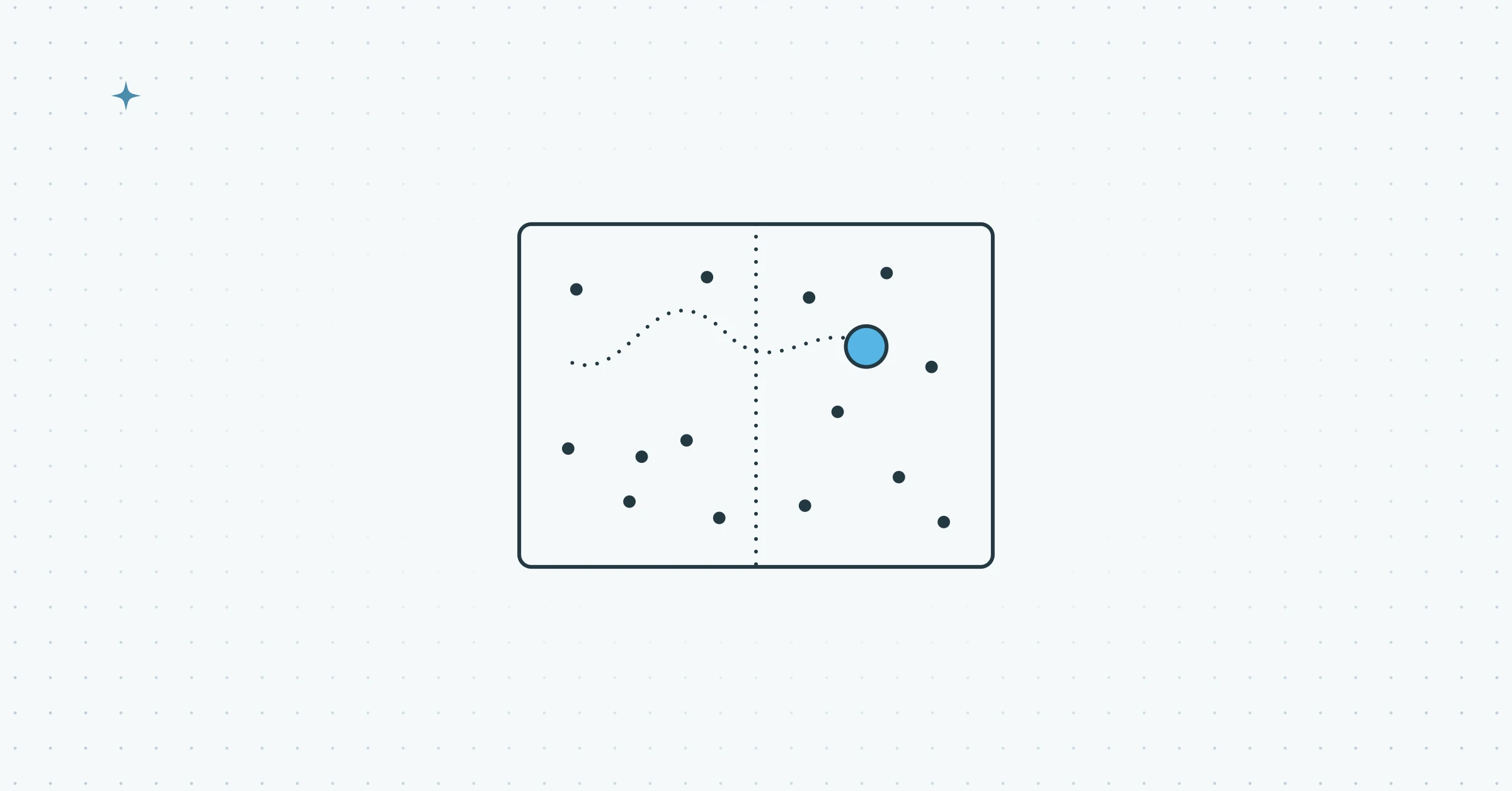
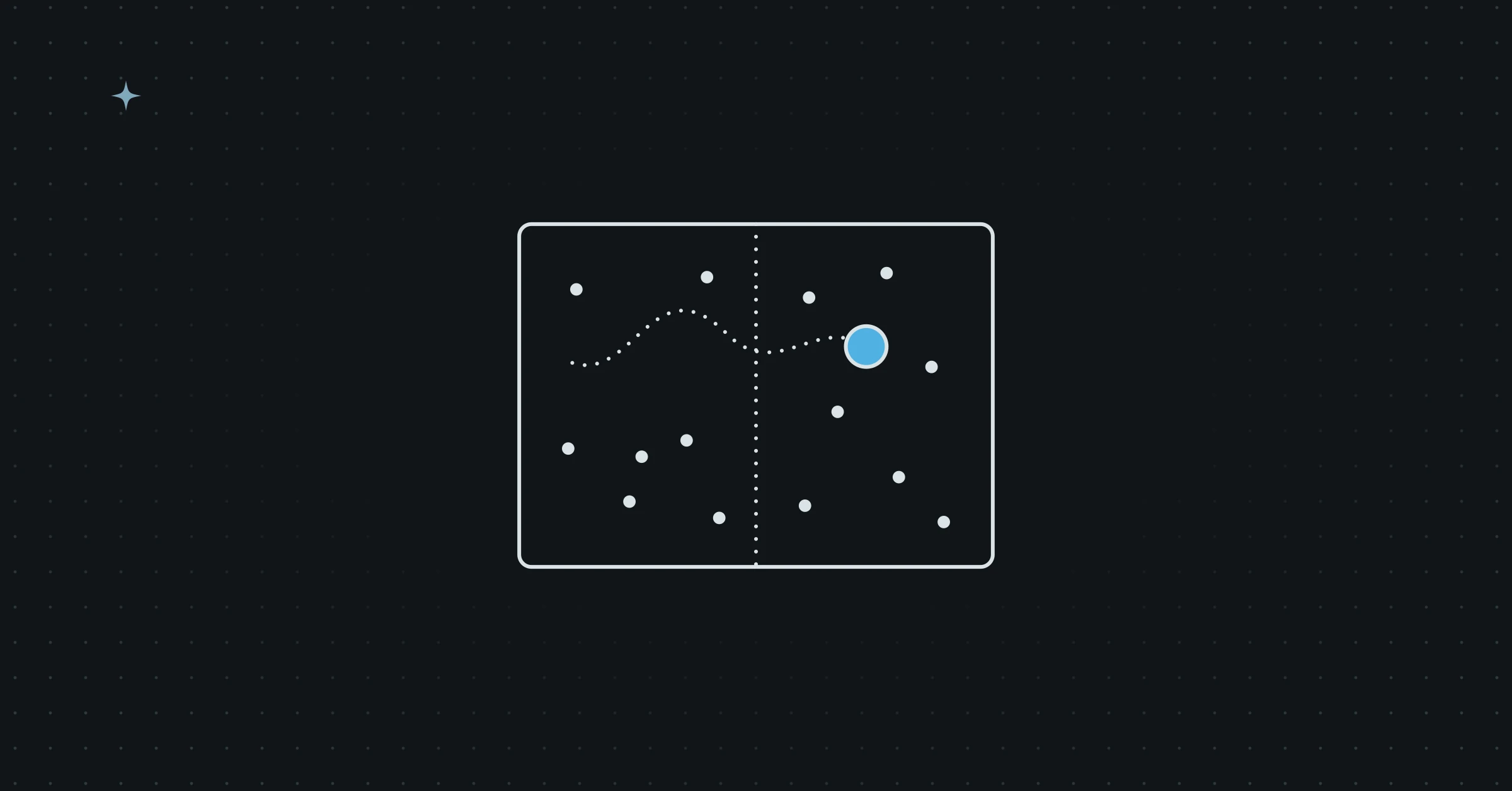
Imagine a closed box with two halves and only four gas molecules inside, A, B, C and D. Each one is equally likely to be in either half, so there are 2 × 2 × 2 × 2 = 16 microstates.
| Molecules on the left | Which ones | Number of microstates |
|---|---|---|
| 4 | ABCD | 1 |
| 3 | ABC, ABD, ACD, BCD | 4 |
| 2 | AB, AC, AD, BC, BD, CD | 6 |
| 1 | A, B, C, D | 4 |
| 0 | none | 1 |
Because every microstate is equally likely, the chance of finding all four on the left is 1 in 16, about 6 percent, and of an even split 6 in 16, about 38 percent. Nothing forces the even split, which is more likely only because more microstates lead to it.
With 100 molecules there are about 1.3 × 10^30 microstates, and only one of them has all 100 on the left, while about 96 percent have between 40 and 60 on each side. A billion snapshots per second for the age of the universe would have only about a 1 in 3,000 chance of catching that one. In a real room with about 10^27 air molecules, a noticeable gathering in one half never happens, because almost everywhere random motion can lead is a spread-out state.
The Austrian physicist Ludwig Boltzmann turned this counting into a formula, in which W is the number of microstates of a macrostate and S is its entropy.
S = k log W
The logarithm is there because the microstates of two boxes side by side multiply, while their entropies should add, and a logarithm turns multiplying into adding. Boltzmann’s constant k, 1.380649 × 10^-23 joules per kelvin, translates the count into the units of heat.
What does entropy have to do with heat?
Entropy began as an idea about heat, defined in 1865 by the German physicist Rudolf Clausius: when heat Q flows into a body at temperature T in kelvin, its entropy rises by Q divided by T.
This rule explains why heat flows from hot to cold. If 600 joules leave a body at 600 kelvin and enter one at 300 kelvin, the hot body loses 600 / 600 = 1 joule per kelvin and the cool body gains 600 / 300 = 2, so the total rises by 1. The reverse flow would lower the total, which the second law rules out.
The same rule leads to a surprising fact about the Earth, which sends back into space almost exactly as much energy as it receives from the Sun. Sunlight arrives from a surface at about 5,800 kelvin, and infrared light leaves at about 255 kelvin, or -18 °C. For every photon of sunlight it sends out about 20 infrared photons, so the outgoing energy carries about 20 times as much entropy. Life and weather therefore run on the difference between concentrated energy coming in and spread-out energy going out.
The entropy of the universe tends toward a maximum.
What entropy teaches you
Entropy teaches you to ask in how many ways an outcome can happen: outcomes with many ways are the ones to expect, and outcomes with few ways last only with a steady supply of energy.
- Energy at home. Electricity for a lamp ends as slightly warmer air, so what you use up is not energy but its concentrated form. The second law also limits how much heat becomes work, so a coal or nuclear power station turns less than half its heat into electricity.
- Passwords. In 1948 Claude Shannon used a formula of the same shape for information and also called it entropy. For passwords this means that eight random lowercase letters allow about 2 × 10^11, while four random words from a list of 7,776 allow about 3.7 × 10^15.
Is entropy the same as disorder?
Many books call entropy “disorder”, but that word confuses what looks messy to us with the number of ways molecules can be arranged. A glass of crushed ice looks messy and the same glass of melted water looks tidy, yet the water has more entropy, because molecules in a liquid can arrange themselves in far more ways. The chemist Frank Lambert added that a shuffled deck of cards has practically the same thermodynamic entropy as a sorted one, since the order of cards is not an arrangement of molecules or energy. “Spreading” is therefore a better word for entropy than “disorder”.
The second law does not forbid order either. Water freezes in a freezer and living things grow ordered bodies because they are not isolated, so the heat they release raises the entropy of their surroundings by more than it falls inside.
Does entropy always increase?
The second law is about probabilities, so in tiny systems entropy can briefly fall. In 2002 Denis Evans’s team at the Australian National University watched a latex bead about 6 micrometres across in a laser trap in water. Over a tenth of a second the bead sometimes ran against the second law, but over more than about two seconds it never did.
The strongest objection concerns time, because the laws that move molecules work the same forwards and backwards. In 1876 Josef Loschmidt, a colleague of Boltzmann, pointed out that reversing every molecule’s motion would send the perfume back into the bottle. So why does entropy rise only toward the future? The usual answer is that the universe began with very low entropy, and why it did is still an open question, which Why Does the Universe Seem Fine-Tuned for Life? takes up from another side. Stephen Hawking builds a whole chapter on this question, as the review “A Brief History of Time” by Stephen Hawking: Summary and Review explains.
Learn more
Clausius named entropy in 1865 after the Greek tropē, “transformation”, building on Sadi Carnot’s 1824 work on steam engines. S = k log W is carved on Boltzmann’s grave in Vienna, although that form and the constant k come from Max Planck. Peter Atkins’s The Laws of Thermodynamics: A Very Short Introduction (Affiliate Link) is a short introduction to all four laws. Entropy also explains part of Why Is the Night Sky Dark? Olbers’ Paradox, Explained.
Quiz
3 questions · up to 3 points
Open a question and pick one answer. Only your first answer counts: +1 if it is right, −1 if it is wrong.
Four gas molecules, A, B, C and D, move around a box with a left and a right half. In how many different ways can exactly two of them be on the left?
Show answer
6, because there are six different pairs that can be on the left The pairs are AB, AC, AD, BC, BD and CD. Each pair on the left is a different microstate of the same macrostate.
A freezer turns a tray of liquid water into ice, and the water's entropy goes down. Why does this not break the second law of thermodynamics?
Show answer
It releases heat into the kitchen, where entropy rises by more than it falls in the water The second law is about the total entropy of an isolated system. The freezer is not isolated: its electricity and the heat it releases make the total grow.
A sorted deck of cards is shuffled until it looks completely mixed. What happens to the thermodynamic entropy of the cards?
Show answer
It stays practically the same, because the order of cards is not an arrangement of molecules Thermodynamic entropy counts the arrangements of molecules and their energy. The order of the cards is not one of them, so a mixed deck and a sorted deck have the same entropy.
Your points are saved only in this browser for now. Accounts that keep them for good are on the way.
Continue learning: Why Is the Night Sky Dark? Olbers' Paradox, Explained →The takeaway
Entropy counts how many arrangements of a system's molecules fit what we see from outside. The second law of thermodynamics says it almost never decreases, because spread-out states have far more arrangements than gathered ones. For 100 molecules in a box, all of them on one side is one arrangement in about 10^30. Entropy is not the same as visible disorder, and when you use energy you do not destroy it but spread it out, which makes it less useful.
References
- Ueber verschiedene für die Anwendung bequeme Formen der Hauptgleichungen der mechanischen Wärmetheorie (English excerpts). Rudolf Clausius, Classic Chemistry, Le Moyne College, from Annalen der Physik und Chemie 125, translated in W. F. Magie, A Source Book in Physics, 1865
The original passage in which Clausius names entropy after the Greek word for transformation and states that the entropy of the universe tends toward a maximum.
- Entropy. Rod Nave, HyperPhysics, Georgia State University
A short university course page on entropy as the number of ways a state can be reached, with the ice chips example and a warning about the word disorder.
- Shuffled Cards, Messy Desks, and Disorderly Dorm Rooms: Examples of Entropy Increase? Nonsense!. Frank L. Lambert, Journal of Chemical Education 76 (10), revised online edition, 1999
A chemist's clear argument that rearranging everyday objects does not change thermodynamic entropy, and that entropy is better understood as the spreading of energy.
- Small systems defy second law. Physics World, IOP Publishing, 2002
A report on the experiment in which a tiny bead in a laser trap briefly ran against the second law for fractions of a second.