What Is Spaced Repetition?
8 min read≈ 1,810 words3 questions · up to 3 points
What this is about
Two students spend the same hour on the same words, and a month later one of them remembers far more. The difference is only when they studied. You learn why memory fades, how to plan reviews with a card box, how long to wait between reviews, and why good study often feels worse.
In a nutshell· skip ahead
Spaced repetition is a way of learning in which you review the same material several times, with gaps of days or weeks between the reviews. Each review comes when you have started to forget, and the gaps grow as the memory gets stronger. With the same total study time, you remember much more and for much longer than after cramming.
Two students have to learn the same 40 Spanish words for a test in ten days. Both spend exactly one hour on them. The first student studies for one hour on the evening before the test. The second student studies for 15 minutes on four different days. A month after the test, which of them will still know more of the words? And why should the timing matter at all, when the time spent was the same?
What is spaced repetition?
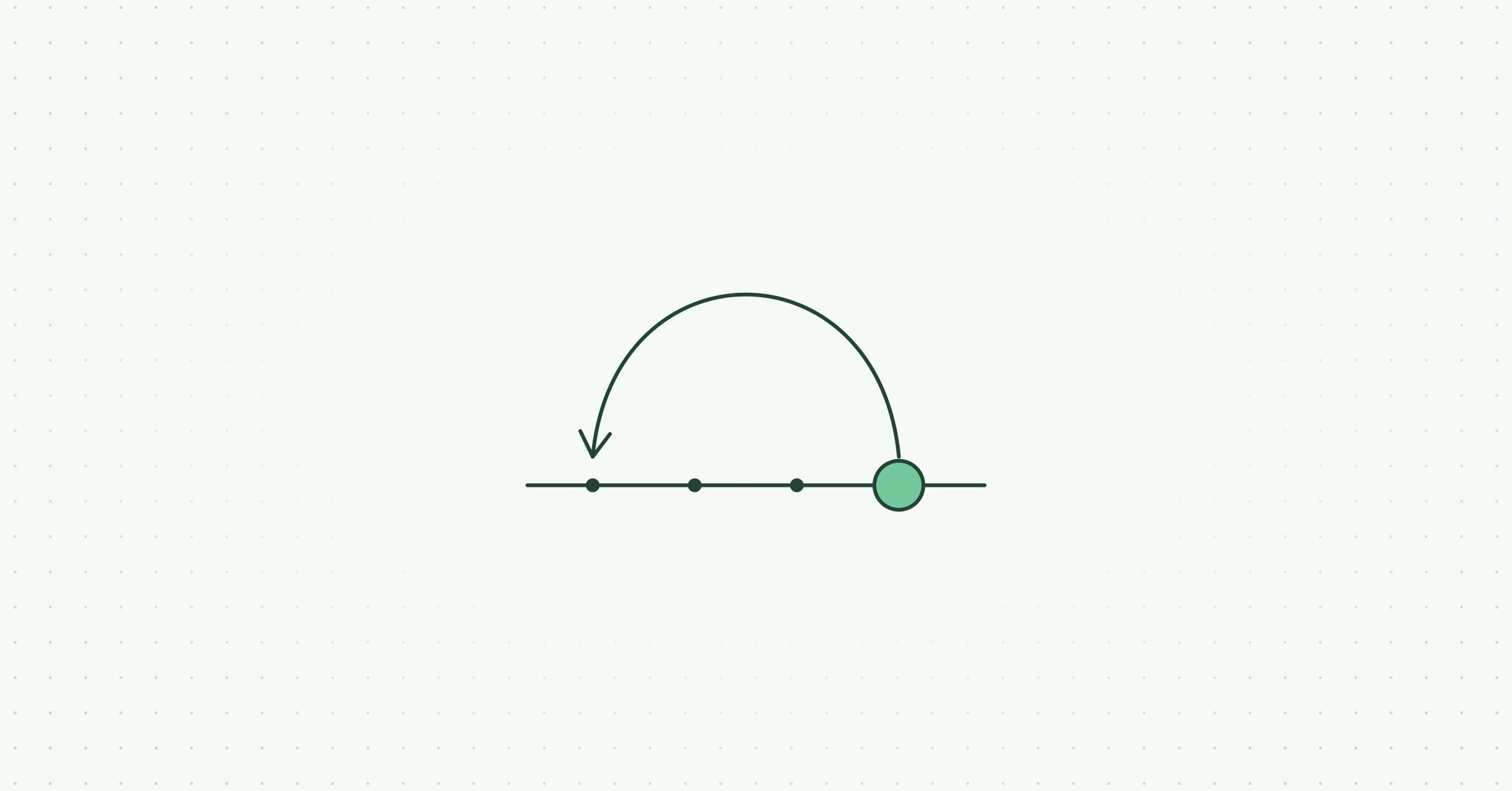
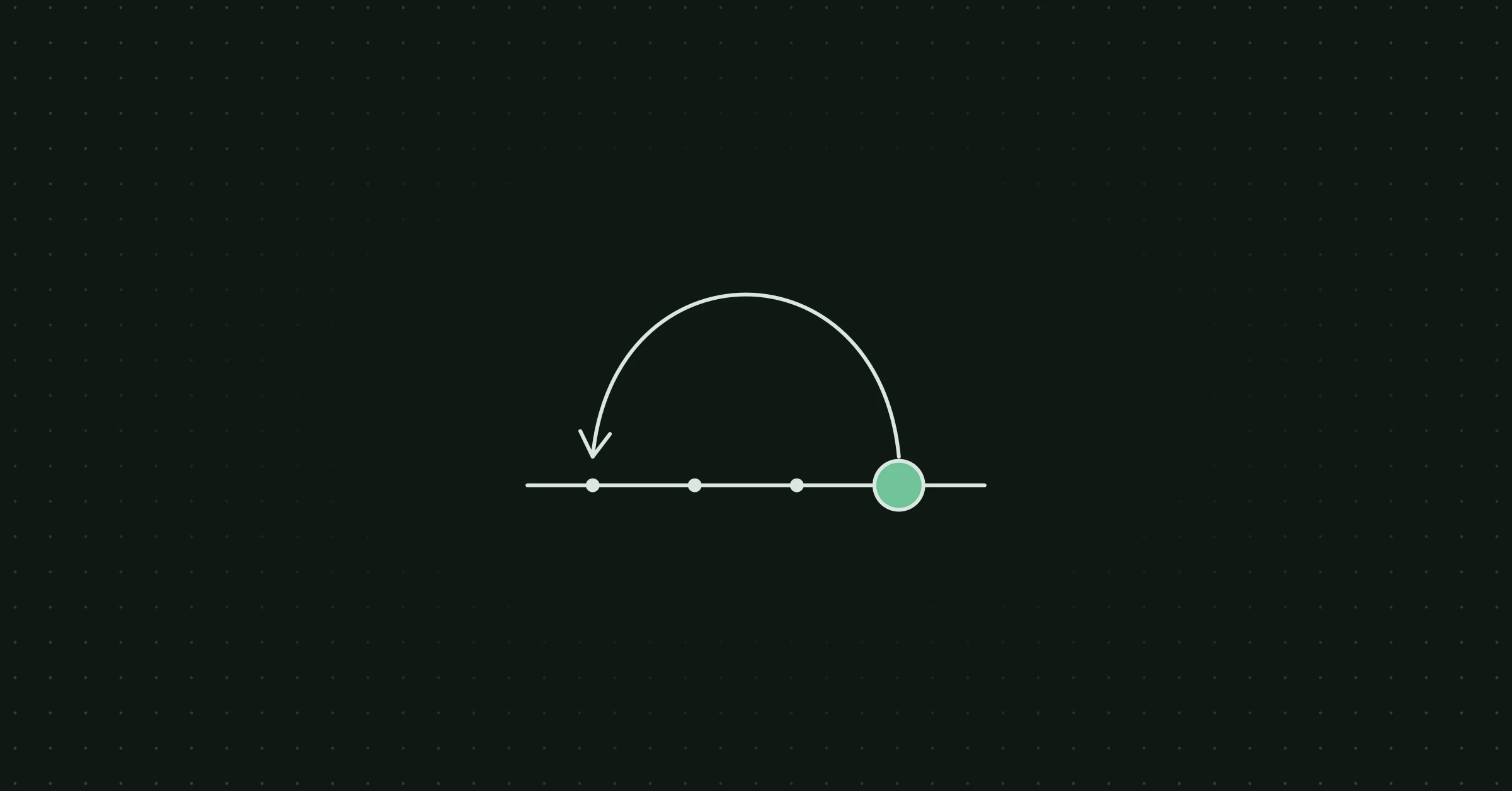
Spaced repetition is a way of learning in which you review the same material several times, with gaps between the reviews. Each review comes when you have started to forget, and the gaps get longer as the memory gets stronger. It is the opposite of cramming, where all the study happens in one block.
The method is built on a finding called the spacing effect. The same amount of study time leads to better long-term memory when it is spread out than when it is packed into one session. So the answer to the opening question is the second student, who spread the hour over four days.
To see why spacing works, we need to look at how we forget.
How fast do we forget?
In the 1880s, the German psychologist Hermann Ebbinghaus measured his own forgetting. He learned lists of invented syllables like “dax” or “bup”, waited, and then learned the same lists again. He counted how much less effort the second learning took. That saving showed how much of the list was still in his memory.
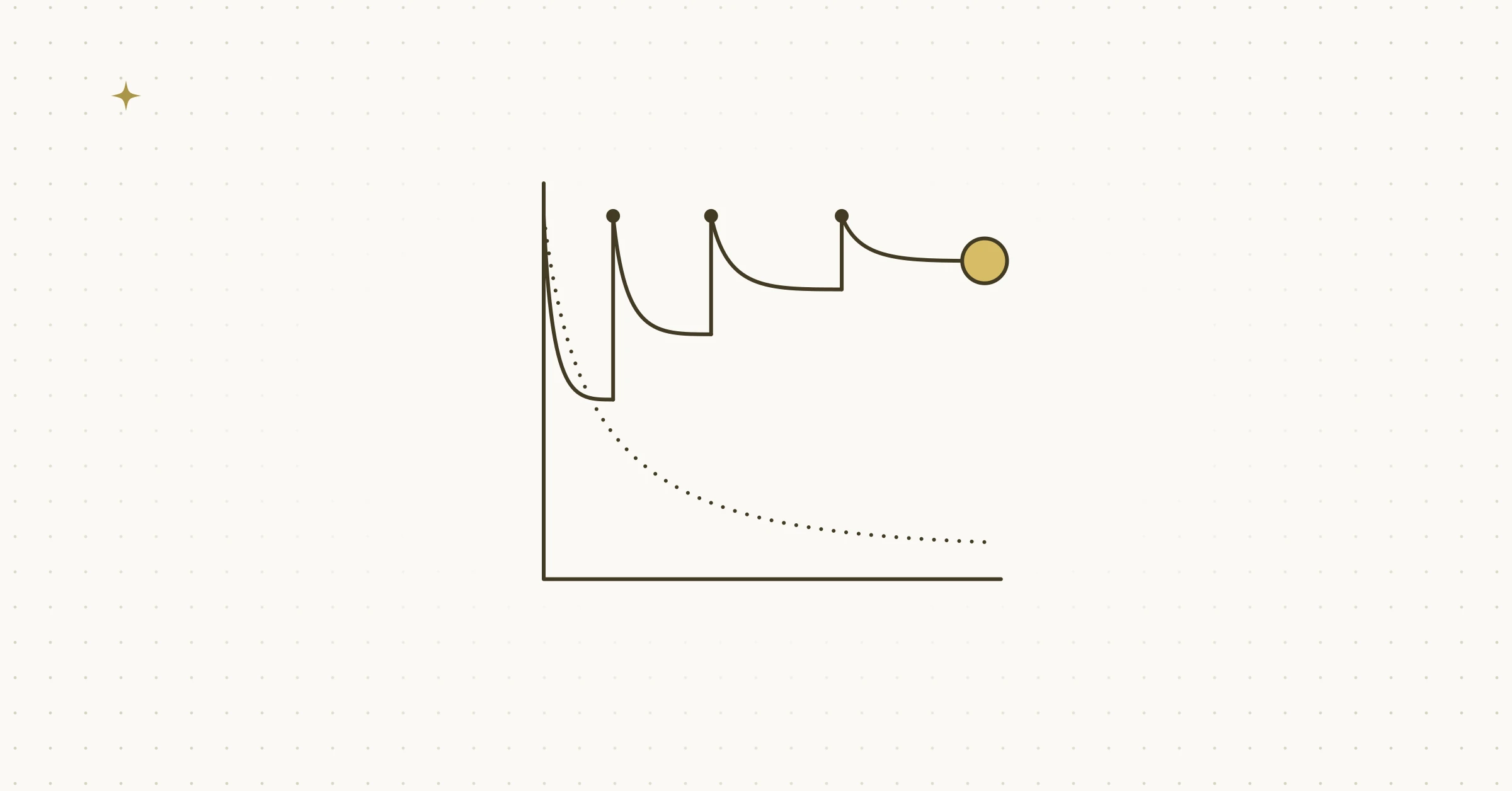
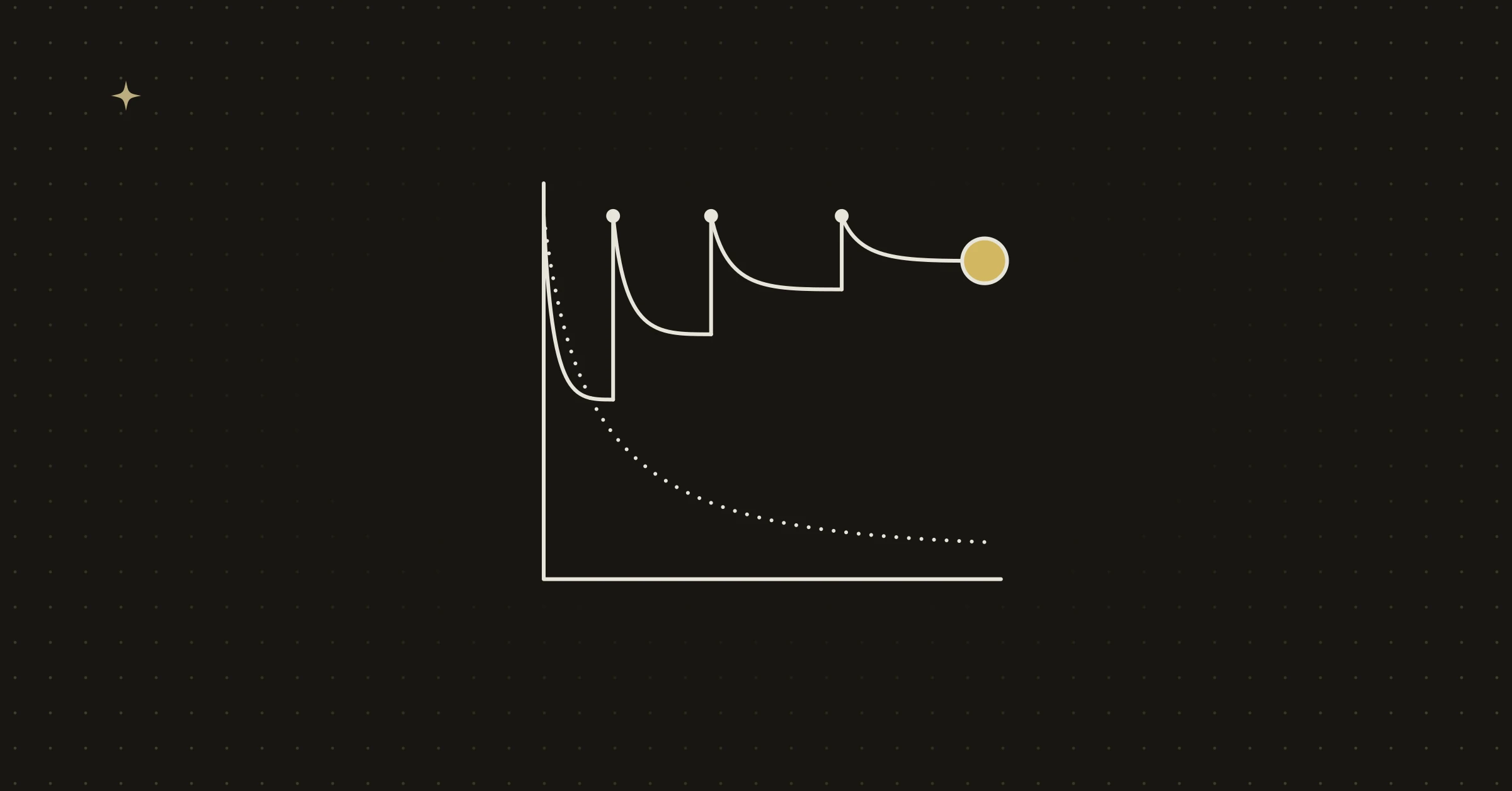
The result is now called the forgetting curve. Forgetting was very fast at first and then slowed down. After one hour, he needed about half the original effort again. After one day, about a third of the work was still saved. After a month, about a fifth was still saved. Most of the loss happened in the first day.
Ebbinghaus also tested whether it helps to spread repetitions out. He compared two ways of learning 12-syllable lists. In one, he repeated each list 68 times on a single day. In the other, he spread 38 repetitions over three days. When he relearned the lists the next day, both had the same effect. Spreading the work out saved almost half the repetitions.
It makes the assumption probable that with any considerable number of repetitions a suitable distribution of them over a space of time is decidedly more advantageous than the massing of them at a single time.
This means that if you repeat something many times, it is much better to spread the repetitions over time than to do them all at once.
How does a review plan work with real cards?
A plan for spaced repetition has to decide, for every card, when you should see it again. The easiest tool for this is a card box. The German writer Sebastian Leitner described one in the early 1970s, and it is now called the Leitner system. Let us follow the second student, Mia, through her ten days. The numbers below are an example, not data from a study.
- Day 1. Mia writes the 40 words on cards and puts them all in box 1. She studies them, then tests herself: she looks at each Spanish word and says the English one before she turns the card. She knows 25 words. These move to box 2. The other 15 stay in box 1.
- Day 2. She studies only box 1 today. After the session she knows 10 of the 15 cards, so they move up to box 2. Five cards stay behind.
- Day 4. Now she tests herself on box 1 and box 2. She still knows most cards in box 2, so they move up to box 3. She has forgotten four cards. Those go back to box 1, however far up they were.
- Day 7. She tests herself on all three boxes. The cards in box 3 have not been seen for three days, and she knows almost all of them.
The rule is simple. A card you know moves up and waits longer. A card you miss goes back to box 1 and comes again soon. So Mia spends her time on the words she does not know yet. The easy words come back rarely.
Each review is a test, not a rereading. Mia has to pull the answer from memory before she checks it. This is called retrieval, and it is part of why the method works.
Why does a review help more after some forgetting?
Would it not be better to review while the words are still fresh? Researchers still debate the exact reason, but the main idea is clear. When you review right away, the answer comes without effort, and the effort is what makes the memory stronger. When you review after some forgetting, you have to work to recall the answer. Each successful recall of this kind makes the memory fade more slowly than before, so the next gap can be longer.
How long should the gaps be? In 2008, Nicholas Cepeda and his colleagues taught more than 1,350 people a set of little-known facts. Each person reviewed the facts once, after a gap of up to three and a half months. The final test came up to a year later. Two results stood out.
- The best gap depends on how long you need to remember. For a test one week later, the best gap was about 20 to 40 percent of that week, so a day or two. For a test one year later, it was about 5 to 10 percent of the year, so about a month.
- There is a best gap, and it is not the shortest. Test results first improved as the gap grew. When the gap became too long, they fell again, but only gradually.
For Mia, whose test is ten days away, a first review after a day or two fits this rule well.
What spaced repetition teaches you
When you study can matter as much as how long you study. Ask yourself: am I planning when I will see this again, or am I hoping it will stay?
- Studies. For any exam, put the reviews in your calendar before you start. Learn a topic, test yourself a day or two later, then again a week later. Flashcard apps such as Anki do this scheduling for you. They work like a Leitner box on a phone, with a program choosing the gaps.
- Languages and skills you want to keep. If you want to remember a language for years, short reviews every few weeks are worth more than one intensive course followed by nothing.
- Teaching and training. A teacher can repeat a short quiz on last month’s topic. A company can review safety rules a few weeks after the training day.
In What Is Inversion? Thinking Backward to Avoid Mistakes, you ask what would guarantee failure. For learning, three habits would do it. You study once, you never test yourself, and you never look at the material again. Spaced repetition is the plan that avoids all three.
The most useful lesson is about your own feelings while you learn. In a flashcard study from 2009, Nate Kornell compared spaced study with massed study, where a small stack is repeated again and again in one sitting. Spacing worked better for 90 percent of the learners. Yet after the first session, 72 percent believed that massed study had worked better. Massed study feels good because the answers are easy to recall when you have just seen them. That ease tells you what you know right now, not what you will know next week.
Where does spaced repetition stop working?
The spacing effect is one of the best-tested findings in psychology. A review by Cepeda and colleagues in 2006 collected 839 measurements from 317 experiments. In 2015, a Dutch team repeated Ebbinghaus’s own experiment and found a very similar forgetting curve. But the method has limits, and two common beliefs about it are wrong.
The first wrong belief is that the gaps must follow a fixed, growing schedule, such as 1, 2, 4 and 8 days. In a 2011 study, Jeffrey Karpicke and Althea Bauernschmidt compared growing gaps with equal gaps. What mattered was the total spacing, not whether the gaps grew. Growing gaps are practical, because they save time on easy items, but no single schedule is the right one.
The second wrong belief is that a review can be a quick rereading. Rereading feels like study, but you never have to recall anything. In 2013, a large review of study methods by John Dunlosky and colleagues rated two methods as the most useful: spreading study out and testing yourself. Spaced repetition works best when it does both, as Mia’s cards do.
There are also real limits.
- Most evidence is about facts and words. The studies mostly used word lists, vocabulary and facts. There is much less evidence for understanding an argument or solving new problems.
- It keeps knowledge, but it does not create understanding. If you put a formula you do not understand on a card, you will remember a formula you do not understand.
- The numbers are not universal. Ebbinghaus tested one person with meaningless syllables. His percentages describe that case and should not be applied directly to a textbook chapter.
- It needs planning. Reviews pile up if you add many new cards every day, and the method only works if you come back.
Learn more
Spaced repetition has no single inventor, but the spacing effect has a clear starting point. Hermann Ebbinghaus published his experiments in 1885 in Über das Gedächtnis, later translated as Memory. He was his own only test subject and used meaningless syllables so that earlier knowledge could not help him. In the early 1970s, Sebastian Leitner turned the idea into a card box for students in his book So lernt man lernen (“How to learn to learn”). Since the 2000s, the team around Nicholas Cepeda, Harold Pashler and Doug Rohrer has measured how long the gaps should be.
If you want to see how repetition fits into learning a craft over many years, read “Mastery” by Robert Greene: Summary and Review. Its stage of skill acquisition is slow, repeated practice. If you want to look back at a project as carefully as you review a card, What Is an After-Action Review? shows a method for learning from experience. If you want a whole book on the science of studying, read Make It Stick (Affiliate Link) by Peter Brown, Henry Roediger and Mark McDaniel. It explains spacing, self-testing and other methods with many examples.
Quiz
3 questions · up to 3 points
Open a question and pick one answer. Only your first answer counts: +1 if it is right, −1 if it is wrong.
In the 2008 study by Cepeda and colleagues, what decided the best gap between first learning a fact and reviewing it?
Show answer
How long the learner needed to remember the fact. The best gap grew with the time until the final test. For a test a week later it was a day or two. For a test a year later it was about a month.
You learn the road signs for a driving theory test that is exactly one week away. Which plan follows the research best?
Show answer
Learn them today, test yourself again in a day or two, and once more before the test. For a test one week away, the best first gap is about a day or two. A short self-test before the exam then helps you keep what you know.
After studying a small stack of flashcards over and over in one evening, you feel that you know them well. What does the research say about this feeling?
Show answer
It is a poor guide, because massed study feels effective but is usually less effective than spacing. In Kornell's flashcard study, spacing worked better for 90 percent of the learners. Yet after the first session, 72 percent believed massed study had worked better.
Your points are saved only in this browser for now. Accounts that keep them for good are on the way.
Continue learning: What Is Inversion? Thinking Backward to Avoid Mistakes →The takeaway
Spaced repetition means reviewing the same material several times with growing gaps between the reviews. It works because memory fades fast at first, and each review after some forgetting makes the memory fade more slowly. The best gap grows with how long you need to remember: a day or two for a test next week, about a month for one next year. The evidence is strongest for facts and words, so plan your reviews for those and test yourself instead of rereading.
Key quotes
“It makes the assumption probable that with any considerable number of repetitions a suitable distribution of them over a space of time is decidedly more advantageous than the massing of them at a single time.”
References
- Memory: A Contribution to Experimental Psychology, Chapters 7 and 8. Hermann Ebbinghaus, translated by Henry A. Ruger and Clara E. Bussenius, Classics in the History of Psychology, York University, 1885
The original experiments: how fast he forgot lists of syllables, and in section 34 why repetitions spread over several days beat repetitions on one day.
- Distributed Practice in Verbal Recall Tasks: A Review and Quantitative Synthesis. Nicholas J. Cepeda, Harold Pashler, Edward Vul, John T. Wixted and Doug Rohrer, Psychological Bulletin, 2006
The large review of 317 experiments that shows how robust the spacing effect is and that the best gap grows with the time you need to remember.
- Spacing Effects in Learning: A Temporal Ridgeline of Optimal Retention. Nicholas J. Cepeda, Edward Vul, Doug Rohrer, John T. Wixted and Harold Pashler, Psychological Science, 2008
The study with more than 1,350 learners that measured the best review gap for tests from one week to one year later.
- Optimising Learning Using Flashcards: Spacing Is More Effective Than Cramming. Nate Kornell, Applied Cognitive Psychology, 2009
Three flashcard experiments in which spaced study beat massed study for 90 percent of the learners, although most of them believed the opposite.
- Replication and Analysis of Ebbinghaus' Forgetting Curve. Jaap M. J. Murre and Joeri Dros, PLOS ONE, 2015
A modern repeat of Ebbinghaus's experiment with one learner and 70 hours of study, which found a very similar forgetting curve.