What Is the Extended Phenotype?
5 min read≈ 1,200 words3 questions · up to 3 points
What this is about
A cricket that lives on dry land walks to a pond and jumps in, and a beaver turns a stream into a lake. You learn why Richard Dawkins counted both as the work of genes, how natural selection can act on things outside an animal's body, and which effects do not count. You also learn why some biologists think he did not go far enough.
In a nutshell· skip ahead
The extended phenotype is Richard Dawkins' idea, from his 1982 book of that name, that a gene's effects do not stop at the body that carries it. A beaver's dam or a parasite's control over its host can be shaped by natural selection in the same way as teeth or eyes, because better versions help the genes behind them get copied.
A pair of beavers moves into a small stream. They cut young trees, push branches and mud across the water, and turn the stream into a pond that floods part of the valley. Nobody doubts that a beaver’s long front teeth were shaped by its genes and by evolution. But what about the dam: is it part of the beaver in the same sense as its teeth?
What is the extended phenotype?
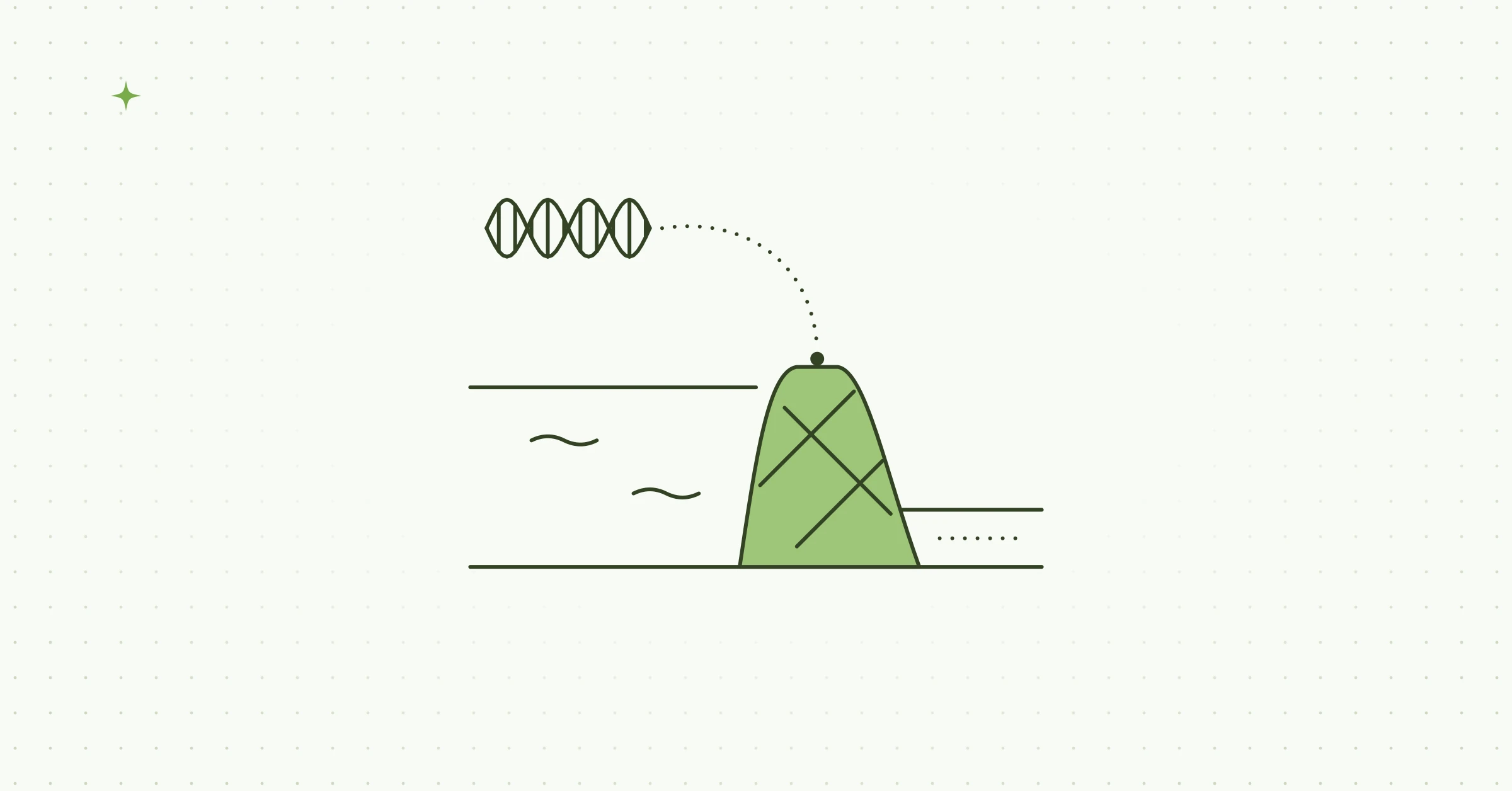
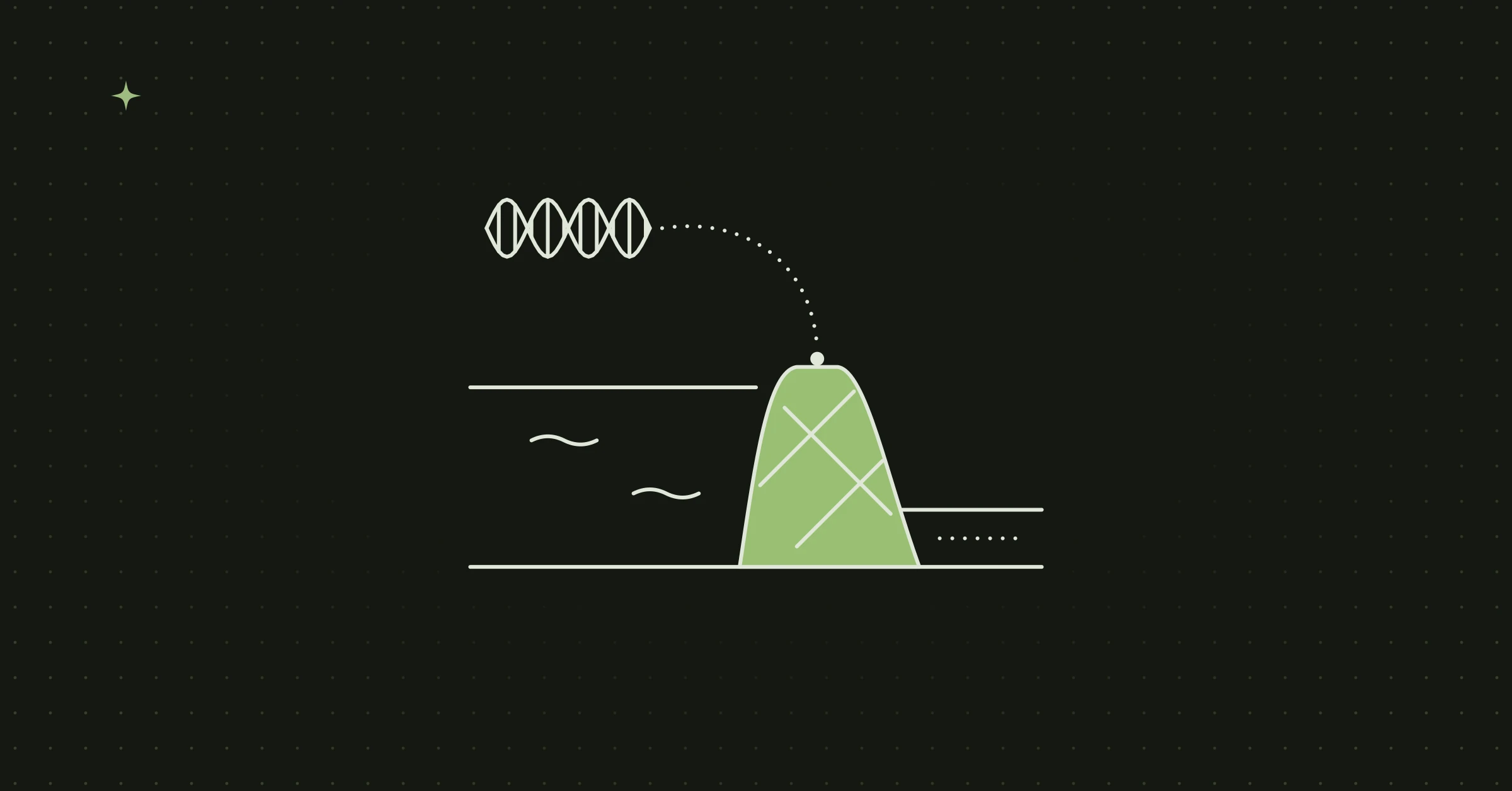
The extended phenotype is the answer the biologist Richard Dawkins gave to that question in 1982. In biology, an animal’s phenotype is the set of its observable traits, such as the colour of its eyes or the shape of its teeth, and Dawkins treated it as everything a gene affects. Dawkins argued that the effects of a gene do not stop at the skin, so a beaver’s dam belongs to the phenotype of beaver genes just as much as its teeth do. Natural selection can shape both in the same way.
We can follow the beaver’s dam step by step.
- Genes shape the body. Different versions of the same gene give beavers slightly different teeth, tails and muscles. This is the ordinary phenotype.
- Genes also shape behaviour. The urge to cut branches, to drag them into running water and to pack them with mud is partly inherited, so it varies from beaver to beaver with their genes.
- Behaviour builds the dam. Some beavers build higher and tighter dams than others.
- The dam affects survival. A good dam keeps the water deep around the beavers’ lodge, so the entrances stay under water, out of reach of wolves and other hunters, and the food stored for winter does not freeze in.
- Selection follows. Beavers with better dams raise more young, and those young carry the versions of genes that made the better dams. Over many generations, dam-building improves, as teeth do.
Selection never needed the dam to be part of the body. It only needed the dam to differ between beavers because of their genes, and to change how many copies of those genes reach the next generation.
Dawkins went further than buildings and argued that genes in one animal can shape the behaviour of another. The most striking case is a hairworm called Paragordius tricuspidatus, studied in southern France. Its larva grows inside a cricket that lives on dry land, but the adult worm has to reach water to breed. In 2002 the team of the French biologist Frédéric Thomas showed that infected crickets are more likely to jump into water than healthy ones. In the water the cricket often drowns, and the worm swims away.
A later study found that the worm produces molecules that may act on the cricket’s nervous system. If this holds, the cricket’s jump is part of the phenotype of the worm’s genes, although it happens in the cricket’s body.
Dawkins also described action at a distance, where no contact is needed. A cuckoo chick in a reed warbler’s nest gapes with a bright mouth, and the warblers keep feeding it although it is not their own chick. The chick’s genes control the warblers’ behaviour through what the warblers see.
What the extended phenotype teaches you
The idea gives you one question to ask whenever an animal does something that seems to harm it: whose genes gain from this behaviour? Often the answer is the animal’s own genes, but sometimes it is the genes of something living inside it or around it.
- Health. When you are ill, some changes in your body may help you fight the infection, while others may help the germ spread to the next person. Researchers in evolutionary medicine ask this question when they decide whether a symptom is worth treating, though for most symptoms the answer is still disputed.
- Nature stories. A report about an ant or snail that behaves strangely is often a story about a parasite, and asking who benefits turns a curious fact into an explanation.
- Your own choices, by transfer. The biology is about genes, but the question works more widely. When an app makes it hard to stop scrolling, your habit serves the goals of the people who designed it, so it helps to ask whose aims a behaviour serves.
Ecologists use a related idea when they study how beavers, earthworms or corals change rivers, soil and reefs, and how those changes shape the lives of other species.
Where does the idea reach too far?
The most common misreading is that everything an animal changes belongs to its extended phenotype, but Dawkins rejected this reading. In a reply to his critics in 2004, he counted only effects that natural selection could have shaped, which means effects that vary with an animal’s genes and help those genes get copied. A beaver’s footprints in the mud are also effects of its body, but better footprints do not help a beaver raise more young, so they are not part of its extended phenotype.
The second limit is that manipulation by a parasite is hard to prove. An infected animal may behave strangely only because it is ill, and that is a side effect, not an adaptation of the parasite. To show real manipulation, researchers have to show that the change helps the parasite pass on its genes. The hairworm comes close, but for many other reported cases the evidence is weaker.
The strongest objection comes from the opposite side. The biologist Kevin Laland and his colleagues argue that animals constantly change their surroundings, and that these changes affect later generations and other species even when they are not adaptations. A beaver pond, for example, changes the lives of fish, insects and plants for decades. Laland calls this niche construction and says it should count as a separate cause of evolution. Dawkins answered that this stretched his idea too far. By 2009, as the science writer Philip Hunter reported in EMBO Reports, many biologists saw the two views as complementary, although they still disagree about which matters more.
Learn more
The idea has a clear origin. Dawkins introduced it in The Extended Phenotype (1982), a book written for biologists that follows on from The Selfish Gene of 1976. For the 1989 edition of The Selfish Gene he added a chapter, “The long reach of the gene”, that summarises the argument for general readers. The physiologist J. Scott Turner extended it to whole structures such as termite mounds, while Kevin Laland, John Odling-Smee and Marcus Feldman built the rival theory of niche construction.
To see where the idea came from, read “The Selfish Gene” by Richard Dawkins: Summary and Review, which places it at the end of Dawkins’ argument that the gene is the unit that natural selection acts on. If the basic mechanism is new to you, start with Natural Selection: How It Works and Why It Matters. Dawkins’ idea of a replicator other than the gene is the subject of What Is a Meme?. The full technical case is in the book itself, The Extended Phenotype (Affiliate Link).
Quiz
3 questions · up to 3 points
Open a question and pick one answer. Only your first answer counts: +1 if it is right, −1 if it is wrong.
According to Dawkins, when does an effect outside an animal's body count as part of the extended phenotype?
Show answer
When it varies with the animal's genes and that variation changes how often those genes are copied. That is what lets natural selection act on it. Better dams mean more young beavers carrying the genes behind the dams.
A spider spins a web. Spiders whose webs catch more insects leave more offspring. How would Dawkins describe the web?
Show answer
As part of the phenotype of the spider's genes, shaped by selection like its legs. The web is an effect of genes outside the body, it varies between spiders, and better webs help the genes behind them spread, just like the beaver's dam.
Which statement about the extended phenotype matches the article?
Show answer
Dawkins limited it to effects that natural selection could have shaped, and supporters of niche construction say even that is too narrow. Dawkins counted only possible adaptations, while Kevin Laland and others argue that the changes animals make to their surroundings matter for evolution even when they are not adaptations.
Your points are saved only in this browser for now. Accounts that keep them for good are on the way.
Continue learning: "The Selfish Gene" by Richard Dawkins: Summary and Review →The takeaway
The extended phenotype is Richard Dawkins' idea that a gene's effects reach beyond the body, so natural selection can shape things an animal builds or other animals it controls. A beaver's dam counts because beavers whose genes make better dams raise more young, and a hairworm's genes appear to drive the cricket it lives in into water, where the worm needs to breed. Only effects that vary with genes and help those genes get copied count. Use it by asking, when an animal acts against its own interest, whose genes gain.
References
- Extended phenotype redux: How far can the reach of genes extend in manipulating the environment of an organism?. Philip Hunter, EMBO Reports 10 (3), 212–215, 2009
A clear overview of the idea, from beaver dams to parasites, and of the debate between Dawkins and the supporters of niche construction.
- 'Suicide' of crickets harbouring hairworms: a proteomics investigation. David G. Biron, Frédéric Thomas and others, Insect Molecular Biology 15 (6), 731–742, 2006
The study that looked for how a hairworm drives its cricket into water, and found worm molecules that may act on the cricket's nervous system.
- Extending the extended phenotype. Kevin N. Laland, Biology and Philosophy 19 (3), 313–325, 2004
The main critique from the side of niche construction, to which Dawkins replied in the same issue with Extended phenotype, but not too extended.