What Is the Free-Rider Problem?
5 min read≈ 1,200 words3 questions · up to 3 points
What this is about
Four people each get 20 tokens, and every token they put into a shared pot grows by 60 percent. If all four give everything, each of them ends up richer, yet the logic of the game says nobody should give anything. You learn why that is, what real people do in the laboratory, and which tools help groups pay for things they all want.
In a nutshell· skip ahead
The free-rider problem arises when a group wants a good that nobody can be kept from using, such as clean air, a lighthouse or a public park. Each person can enjoy the good without paying, so each is tempted to let the others pay. If many think this way, the good is paid for too little or not at all.
A town would like a fireworks show on New Year’s Eve, and almost everyone says they would pay ten euros for it. But the show lights up the whole sky, so anyone can watch it from their balcony whether they paid or not. When the organizers pass the hat, they collect far less than the show costs. Nobody in town dislikes fireworks, so why does the money not come in?
Why does a group fail to pay for something every member wants?
This is the free-rider problem. It arises with a public good, a good with two features: one person’s use does not reduce what is left for others, and nobody can be kept from using it once it exists. Fireworks, a lighthouse and clean air are public goods in this sense. Because each person gets the benefit whether they pay or not, each is tempted to let the others pay, and when many people reason this way, the good is paid for too little or not at all.
Economists study this with the public goods game, a laboratory game played for real money, here in the version that the economists Ernst Fehr and Simon Gächter used in a well-known experiment published in 2000.
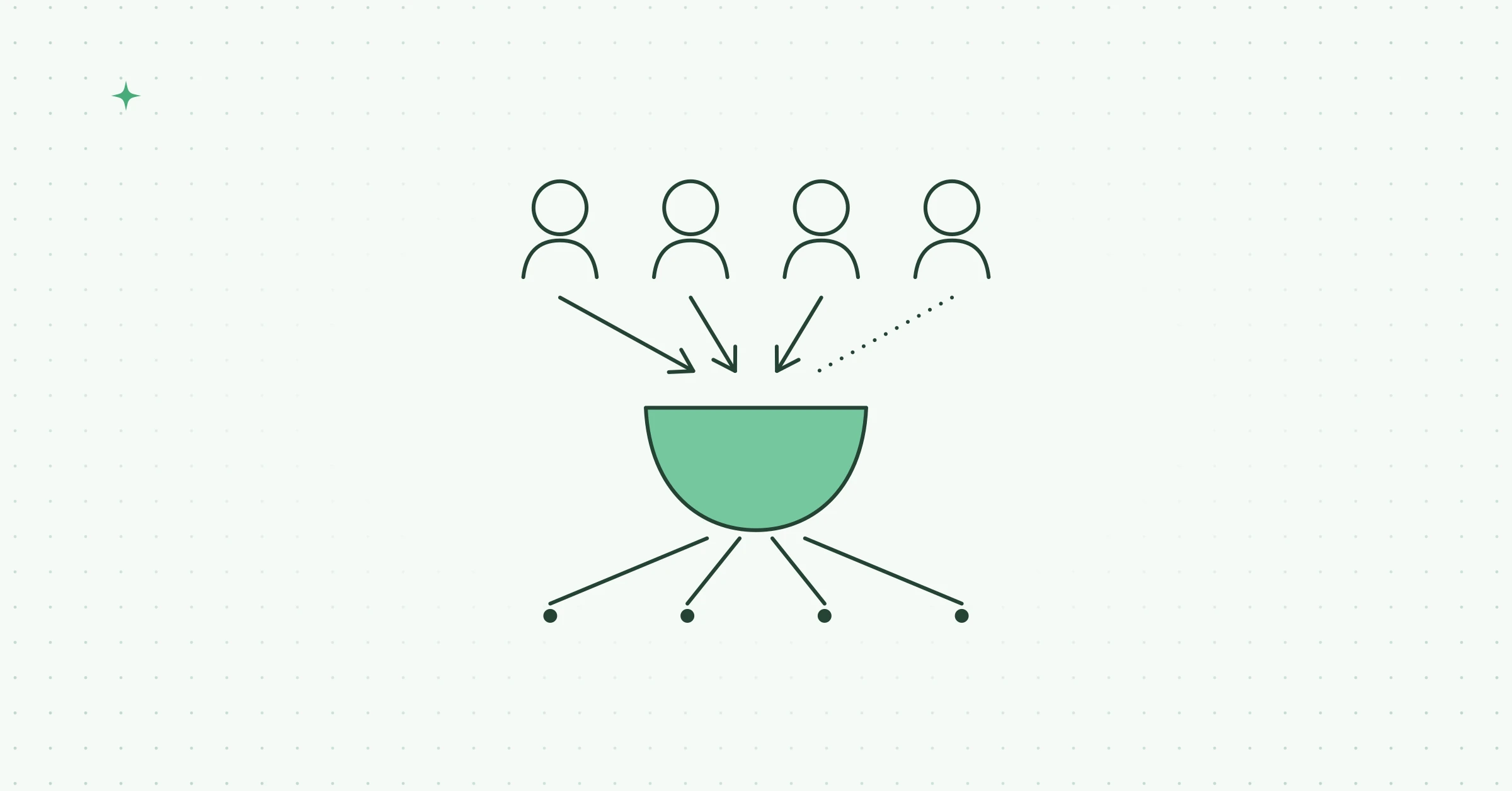
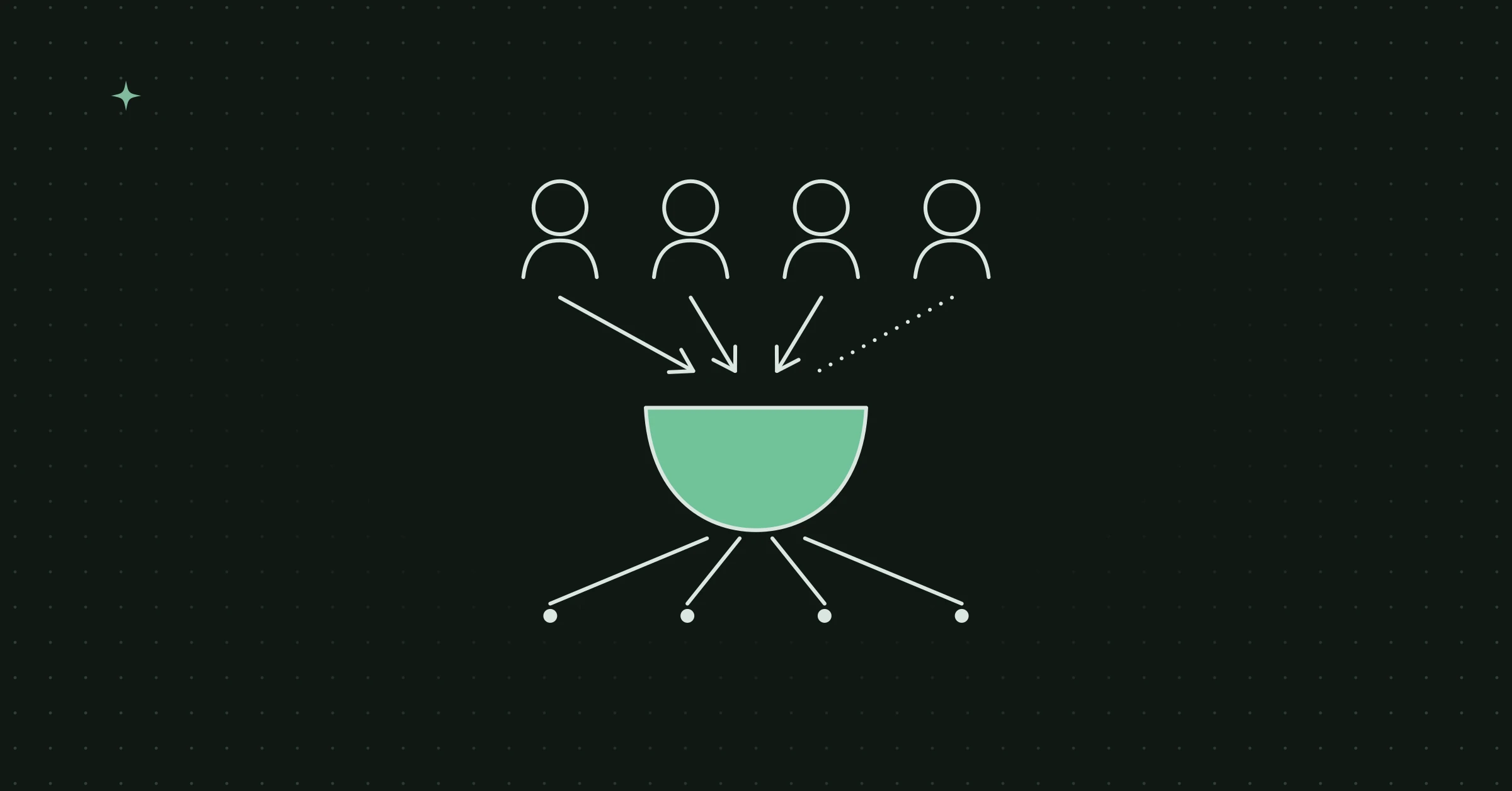
- The setup. Four players each receive 20 tokens, and each decides in private how many to put into a shared pot and how many to keep.
- The pot grows. Every token in the pot is multiplied by 1.6, and the result is shared equally among all four players, whoever gave it.
- Everyone gives everything. The pot holds 80 tokens, which grow to 128, so each player gets 32 and is 12 tokens better off than if nobody gave.
- One player gives nothing. Now the pot holds 60 tokens, which grow to 96, so each player gets 24. The givers end with 24 tokens each, the free rider with 20 kept plus 24 from the pot, which makes 44.
- The arithmetic for each player. A token you give creates 1.6 tokens, but you get back only a quarter of that, 0.4 tokens. So each token you give costs you 0.6 whatever the others do, and a purely selfish player gives nothing.
If all four reason this way, each keeps 20 tokens instead of the 32 they could all have had. The public goods game is the prisoner’s dilemma with more than two players, because what is best for each person leads to a result that is worse for all.
The free-rider problem is easy to confuse with the tragedy of the commons. A pasture or a fishing ground is a common-pool resource: as with a public good, it is hard to keep people out, but each use takes something away, because a cow eats grass that no other cow can eat. So the tragedy of the commons is about too much being taken, while the free-rider problem is about too little being given.
What the free-rider problem teaches you
When a shared good is missing or underfunded, ask whether people can enjoy it without paying. If they can, good intentions will rarely be enough, and the real question is how to change what each person gains from paying.
- Group projects and shared flats. Everyone in a study group gets the same grade, and everyone in a flat enjoys a clean kitchen, so tasks with names attached work better than appeals.
- Unions and associations. The economist Mancur Olson pointed out that the higher wages a union wins go to all workers, members or not. So unions have long offered members private benefits such as insurance or legal help, which Olson called selective incentives: rewards or penalties that reach only those who contribute or only those who do not.
- Taxes. States pay for public goods such as national defence and street lights with compulsory taxes instead of voluntary gifts, which is one answer to the free-rider problem.
- The climate. A country that cuts its emissions pays the full cost, while the benefit of a stable climate goes to every country, which makes climate agreements hard to keep.
Do real people free ride as much as the theory predicts?
They do not, which is the most surprising result of the research. In a survey of twelve earlier experiments that Fehr and Gächter cite, players gave on average 40 to 60 percent of their tokens in the first rounds. Over repeated rounds, however, contributions fell, and in the last round 73 percent of more than a thousand players gave nothing. The economist John Ledyard had described the same pattern in his survey of 1995. A common explanation is that many players are conditional cooperators, who give as long as they expect the others to give and give less when they see that some do not.
Fehr and Gächter then added a rule that after each round, players saw what the others had given and could pay part of their own earnings to reduce a free rider’s earnings. A selfish player would never pay to punish, since it brings no gain, and in one version of the game the groups were mixed anew every round, so the punisher would never meet the free rider again. Yet many players punished, and the effect was large. In groups that stayed together for ten rounds, the average contribution in the last round was slightly above 3 tokens without punishment, but above 18 tokens with it, and 82.5 percent of players gave all 20.
So the common misconception is that free riding is a law of human behaviour. The theory describes purely selfish players, and real people are not purely selfish, although enough of them are to make cooperation fragile. Groups also have tools against it: some goods can be made excludable, like a toll road or a paywall. Some projects can offer assurance, as crowdfunding sites do when they take the money only if the goal is reached. Many communities rely on norms, monitoring and small penalties, which is what Elinor Ostrom found in her studies of shared pastures and irrigation systems.
Learn more
The idea has no single inventor. In 1740 the Scottish philosopher David Hume wrote that two neighbours can agree to drain a meadow they own together. A thousand people cannot, he added, because each seeks “to free himself of the trouble and expence” and leave the burden to others. In 1954 the American economist Paul Samuelson defined goods that each person enjoys without reducing anyone else’s share in a three-page paper, “The Pure Theory of Public Expenditure”. In 1965 Mancur Olson made free riding the centre of The Logic of Collective Action, arguing that large groups will not work for their common interest without coercion or selective incentives.
How real communities escape such problems is the subject of “Governing the Commons” by Elinor Ostrom: Summary and Review, which treats Olson’s argument as one of three models she wants to correct. For the original argument, Olson’s short book is still readable: The Logic of Collective Action (Affiliate Link).
Quiz
3 questions · up to 3 points
Open a question and pick one answer. Only your first answer counts: +1 if it is right, −1 if it is wrong.
In the public goods game of the article, each player has 20 tokens and every token in the pot is multiplied by 1.6 and shared among four players. Why does a purely selfish player give nothing?
Show answer
Each token given costs the giver 1 token but returns only 0.4 tokens to them. The 1.6 tokens a gift creates are shared among four people, so the giver gets back only 0.4. Whatever the others do, keeping a token pays more.
A local radio station broadcasts for free and asks listeners for donations. Which change would most directly reduce free riding, according to Olson's idea of selective incentives?
Show answer
Giving donors something that non-donors do not get, such as a members' magazine or tickets to events. A selective incentive is a private reward or penalty that reaches only those who pay or do not pay. The broadcast stays free, but donating now brings a benefit of its own.
How does the free-rider problem differ from the tragedy of the commons?
Show answer
Free riding means too little is paid for a good that use does not reduce, while the tragedy means a resource that each use reduces is overused. A public good such as a lighthouse is not used up by one more ship, so the risk is that nobody pays for it. A common pasture is eaten up by each extra cow, so the risk is overuse.
Your points are saved only in this browser for now. Accounts that keep them for good are on the way.
Continue learning: What Is the Tragedy of the Commons? →The takeaway
The free-rider problem means that a good nobody can be kept from using tends to be underfunded, because each person can enjoy it without paying. In a public goods game with four players, each token given returns only 0.4 tokens to the giver, so giving nothing pays, although giving everything would make all richer. In experiments people start by giving about half and then give less, but the chance to punish free riders keeps contributions high. To get a shared good paid for, exclude non-payers, reward or punish individuals, or build shared norms.
Key quotes
“Two neighbours may agree to drain a meadow, which they possess in common; because 'tis easy for them to know each others mind; and each must perceive, that the immediate consequence of his failing in his part, is, the abandoning the whole project.”
References
- The Free Rider Problem. Garrett Cullity, Stanford Encyclopedia of Philosophy, 2025
A careful overview of the problem from Hume to Olson and Ostrom, with the main ways to solve it and the debate about whether free riding is unfair.
- A Treatise of Human Nature, Book 3, Part 2, Section 7: Of the origin of government. David Hume, davidhume.org, 1740
The short section with the two neighbours and the meadow, in paragraph 8, followed by Hume's argument that governments arise partly to solve such problems.
- Cooperation and Punishment in Public Goods Experiments. Ernst Fehr and Simon Gächter, CESifo Working Paper 183 (published in American Economic Review 90 (4), 2000, 980–994), 1999
The experiment with groups of four, 20 tokens and the chance to punish. Its first pages also summarize earlier studies in which contributions start at 40 to 60 percent and then fall.
- Public Goods: A Survey of Experimental Research. John O. Ledyard, The Handbook of Experimental Economics, Princeton University Press, 111–194, 1995
The library record of the classic survey of public goods experiments before 1995, which established that contributions start well above zero and fall with repetition.
- Sustaining Cooperation in Laboratory Public Goods Experiments: A Selective Survey of the Literature. Ananish Chaudhuri, Experimental Economics 14 (1), 47–83, 2011
Picks up where Ledyard stopped: why many people give only if they expect others to give, and how punishment, advice and disapproval keep contributions up.