What Is the Male Gaze?
5 min read≈ 1,200 words3 questions · up to 3 points
What this is about
When you watch a film, someone has already decided where you look and whose eyes you borrow. You learn how a 1975 essay explained this with Hitchcock's Rear Window, why it treats looking as a form of power, and how to use the idea on films, adverts and your own photos. You also learn the strongest objections, including the author's own second thoughts.
In a nutshell· skip ahead
The male gaze is the film theorist Laura Mulvey's name for the way classic Hollywood films arrange looking. The camera takes the position of a heterosexual man, the audience is led to share it, and women appear mainly as images to be looked at. The one who looks drives the story, while the one who is looked at becomes a picture.
In Alfred Hitchcock’s Rear Window (1954), a news photographer with a broken leg spends weeks in a wheelchair by his window, watching his neighbours across a courtyard in New York. When his girlfriend, played by Grace Kelly, bends over him for a kiss, the film shows her face in a slow close-up, and we look at her as he does. Whose eyes are we watching through, and what does that do to the woman being watched?
How does the male gaze work?
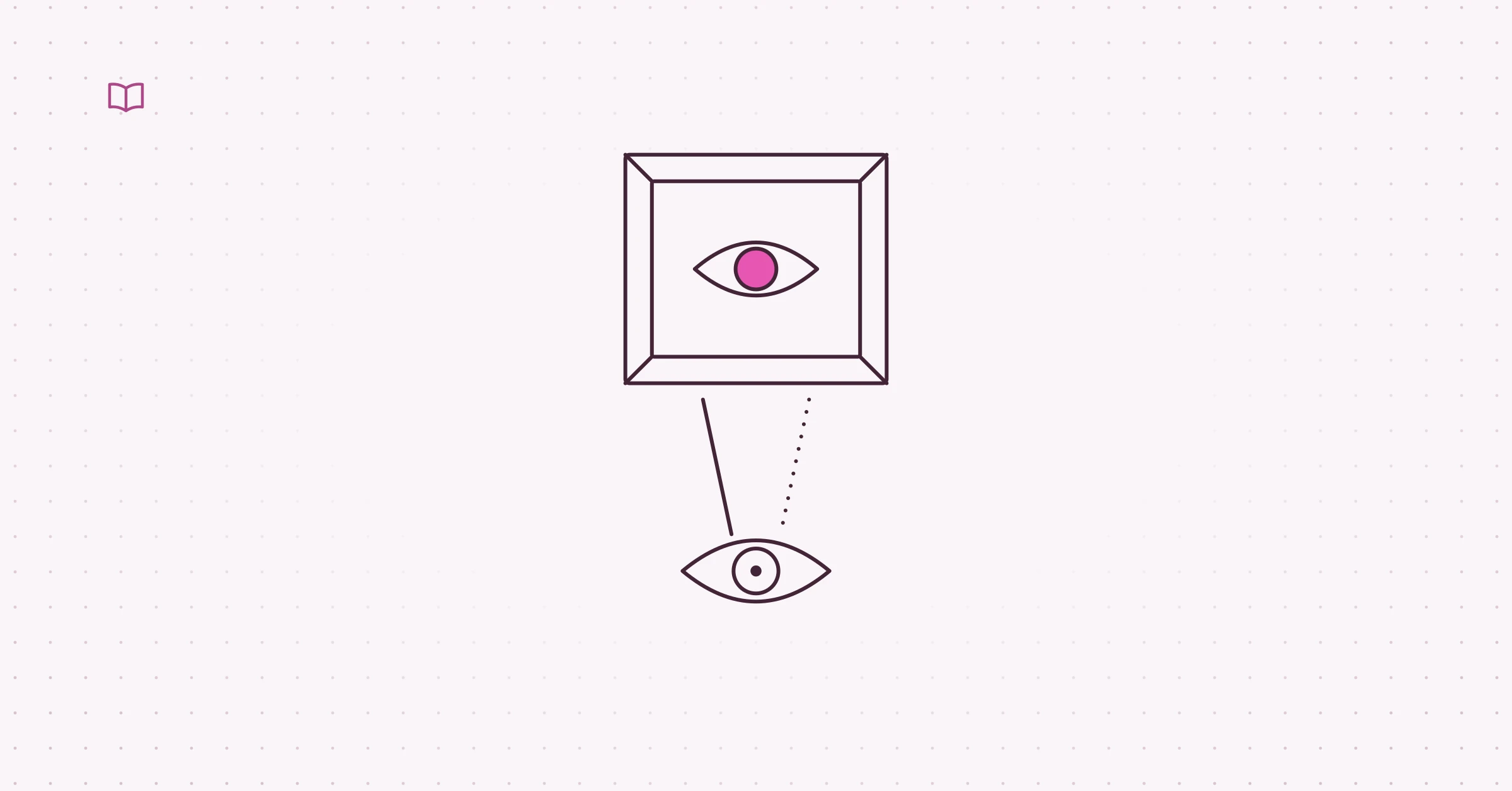
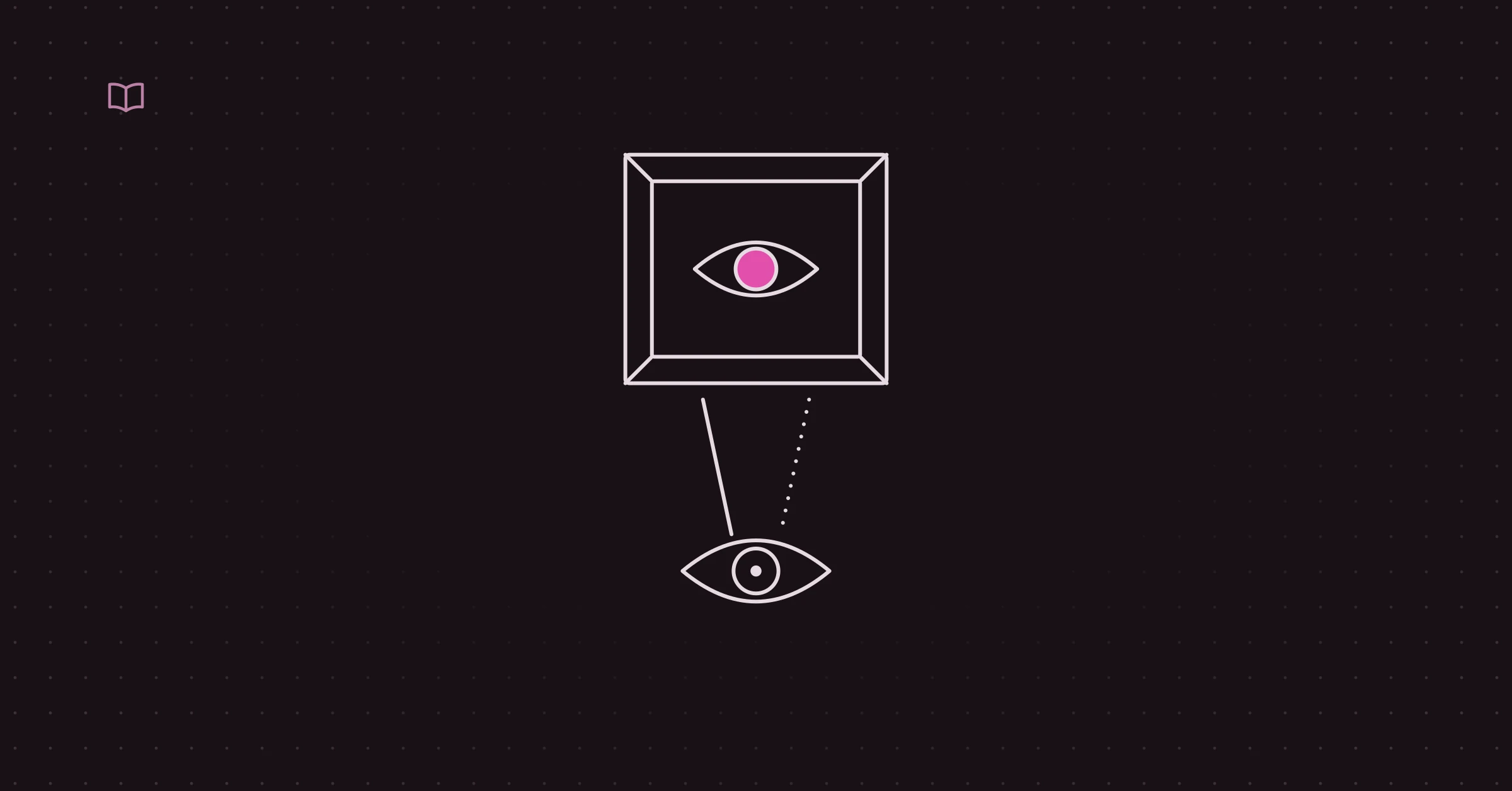
The male gaze is the film theorist Laura Mulvey’s name for the way classic Hollywood films arrange looking. The camera takes the position of a heterosexual man, the audience is led to share it, and women appear mainly as something to be looked at. Her 1975 essay “Visual Pleasure and Narrative Cinema” claims that looking is never neutral. The one who looks drives the story, while the one who is looked at becomes a picture, valued for what Mulvey called to-be-looked-at-ness: being dressed, lit and framed in order to be seen.
Mulvey separated three looks in every film, and Rear Window, which she discusses in the essay, lines them up almost perfectly.
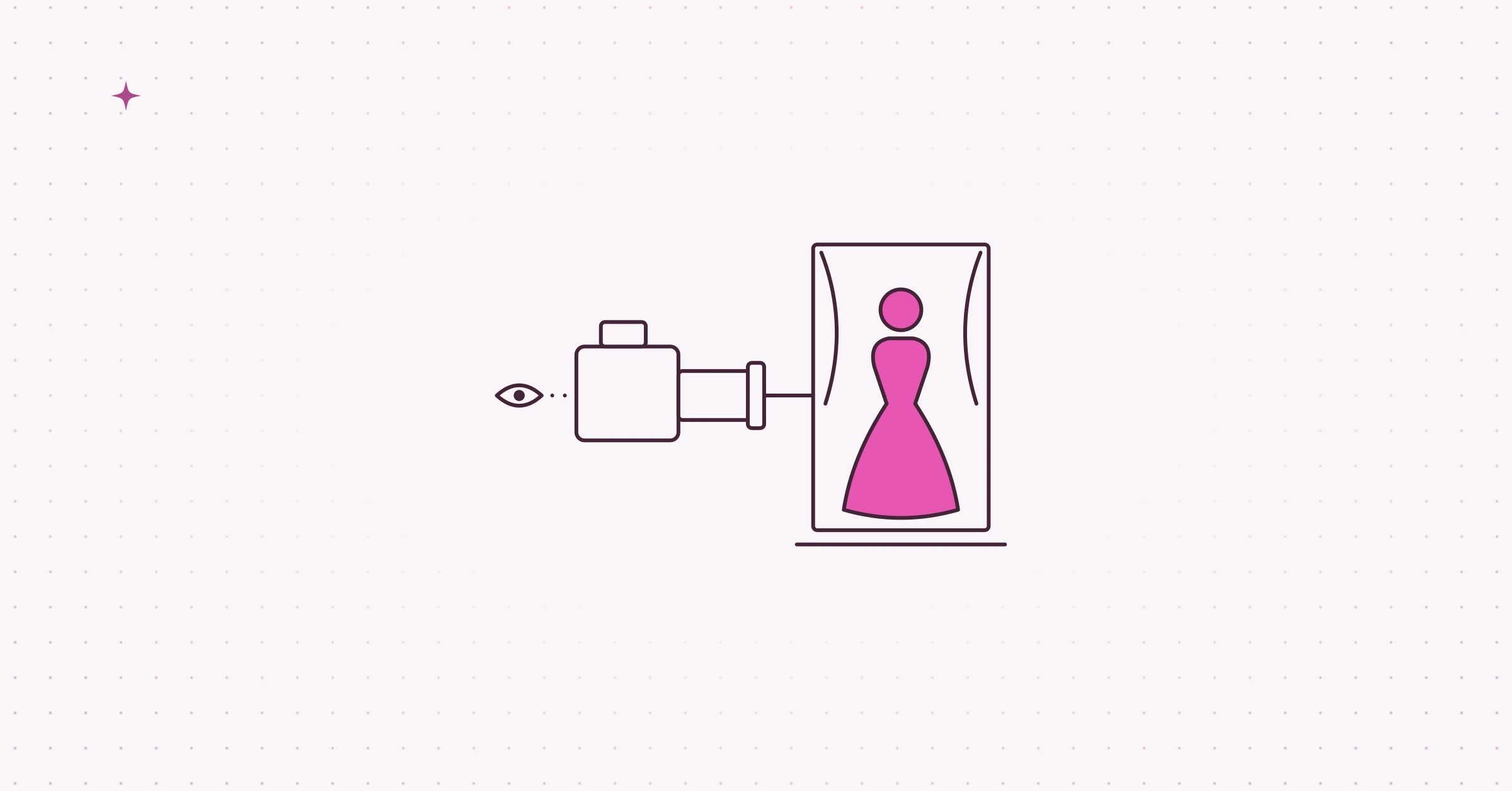
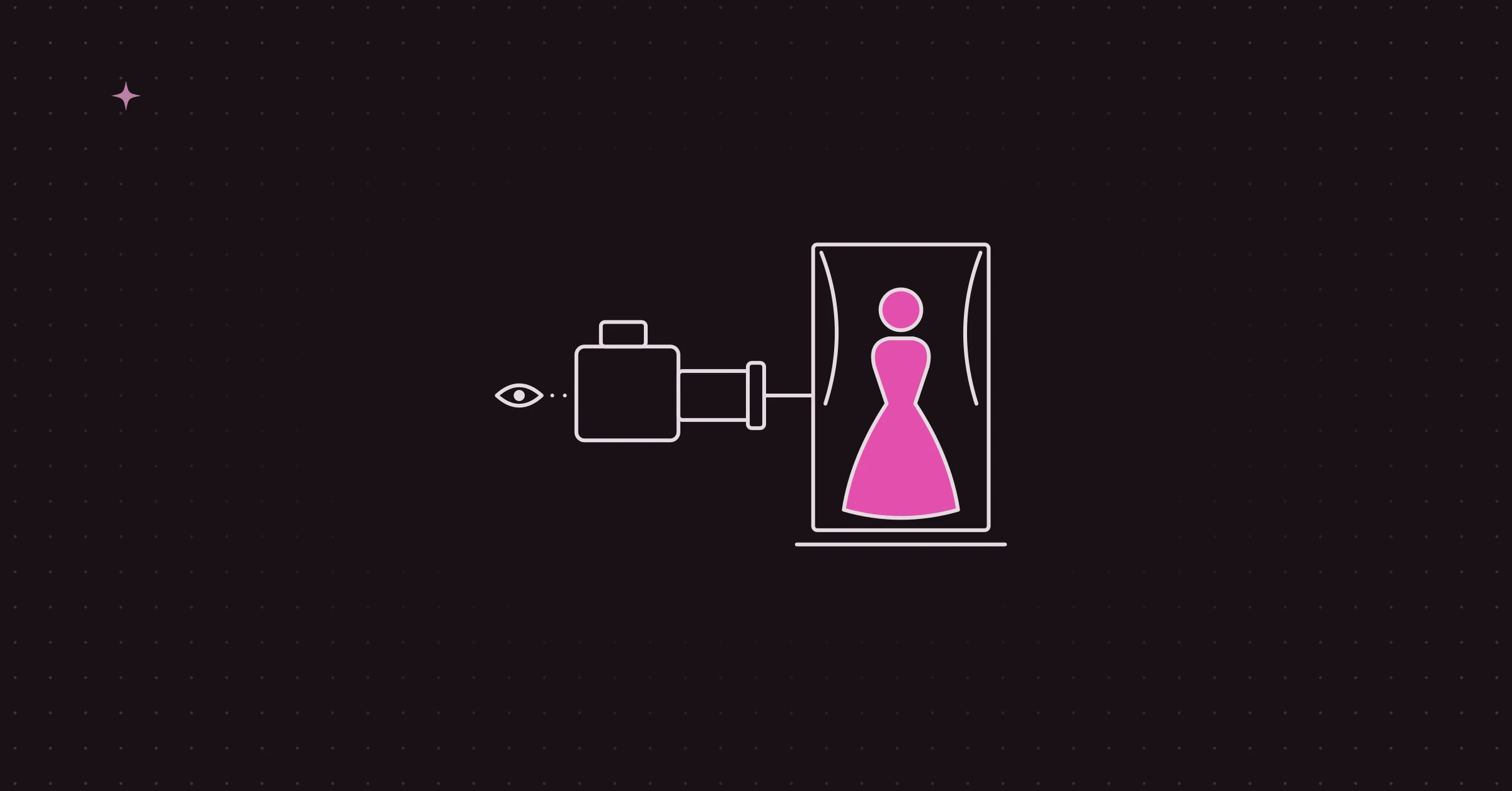
- The camera’s look. Hitchcock keeps the camera inside the photographer’s apartment for almost the whole film. We see the courtyard from his window, often through his field glasses or the long lens of his camera, so the camera’s view and his view are nearly the same.
- The characters’ looks. The photographer, L. B. “Jeff” Jefferies, played by James Stewart, does the watching, and everyone else is watched. His job already makes him the one who captures images, while Lisa Fremont, Kelly’s character, is defined by her clothes and her perfect appearance.
- The audience’s look. We sit still in the dark as Jeff sits still in his chair, and because the camera gives us his view, we take his place without noticing. Classic films, Mulvey argued, hide the camera and the audience through smooth editing and quiet camera work. Only the characters’ looks seem to exist, so the whole arrangement feels natural.
The story shows how much power the look carries. While Lisa stays in Jeff’s room, on the audience’s side of the window, he hardly desires her. Mulvey points out that his interest returns when Lisa climbs into the flat of Lars Thorwald, the neighbour Jeff suspects of murder, because she has become part of the picture he is watching. The order is reversed only once, when Thorwald catches Lisa, notices her signal to the window and looks straight across at Jeff. For a moment the man who watched is the one who is seen.
In a world ordered by sexual imbalance, pleasure in looking has been split between active/male and passive/female.
To explain why audiences enjoy this, Mulvey used psychoanalysis, the theory of the unconscious mind founded by Sigmund Freud and developed by Jacques Lacan. In her reading the male star is like the more complete image a child recognizes in a mirror: a hero who acts, and with whom the viewer identifies.
What the male gaze teaches you
Every image is taken from somewhere, so you can ask of any film, advert or photo whose eyes the camera borrows and who gets to act. The question also works against the belief described in What Is Naive Realism?, that we see things exactly as they are.
- Watching films and series. Notice who gets close-ups of their face while they think and who gets shots of their body while they stand still. This often explains why a story feels like one person’s story.
- Advertising and social media. John Berger argued that women learn to watch themselves as others will see them. Checking your face during a video call is a small case of that habit. What Is the Spotlight Effect? shows that people overestimate how closely others watch them, which is a good reason to doubt that imagined audience.
- Making images yourself. When you film a wedding or a product, asking where the camera stands lets you decide on purpose who looks and who is looked at.
What are the main objections to the male gaze?
The most common misunderstanding is to use “male gaze” for any image of an attractive woman or for men staring in real life. Mulvey’s claim is about how a film is built, through camera position, editing and story. A film directed by a woman can use that structure, and a film directed by a man can avoid it.
The theory faces four serious objections. The first concerns its foundation, because psychoanalytic ideas such as the fear of castration, which Mulvey used to explain the pleasure of looking, cannot be tested. In Post-Theory (1996) the film scholars David Bordwell and Noël Carroll argued for explanations that can be checked against how viewers actually follow a film. The description of the three looks survives this criticism much better than the explanation of why they please us.
The second objection is the passive viewer. Mulvey’s spectator is a single man absorbed in the screen, while real audiences are mixed and often critical. Mulvey answered this herself in “Afterthoughts on ‘Visual Pleasure and Narrative Cinema’” (1981). She kept her argument but turned to the women in the audience, who, she suggested, can take the hero’s active position for a while and then move back.
The third objection comes from bell hooks. In “The Oppositional Gaze: Black Female Spectators” (1992) she argued that feminist film theory wrote about women as if all of them were white. Black women could identify neither with the hero nor with the white heroine, so many learned to watch critically, which she called the oppositional gaze. She linked it to a history in which Black people could be punished just for looking.
The fourth objection is that films are often more divided than the theory allows. The critic Tania Modleski argued in 1988 that Hitchcock’s films are deeply ambivalent about women, and in Rear Window it is Lisa who climbs, searches and finds the evidence while Jeff can only watch.
Learn more
The male gaze has a clear author. Laura Mulvey, a British film theorist who also made films, first presented the ideas in a paper at the University of Wisconsin in Madison in 1973, and Screen published it in the autumn of 1975. She had spent the 1960s loving Hollywood films, yet the essay states its aim plainly: “It is said that analysing pleasure, or beauty, destroys it. That is the intention of this article.” The phrase “male gaze” appears in it only twice, while “the look” appears about twenty times. Its main forerunner is John Berger’s 1972 book Ways of Seeing, which summed up the European nude in the line “men act and women appear”.
For the same argument made with paintings, read “Ways of Seeing” by John Berger: Summary and Review. Mulvey’s own attempt at a different cinema is Riddles of the Sphinx, which she made with Peter Wollen in 1977.
Quiz
3 questions · up to 3 points
Open a question and pick one answer. Only your first answer counts: +1 if it is right, −1 if it is wrong.
Which three looks did Mulvey separate in a film?
Show answer
The look of the camera, the looks of the characters at each other, and the look of the audience. Mulvey argued that classic films hide the camera's look and the audience's look, so that only the characters' looks seem to be there and the arrangement feels natural.
A TV drama shows a job interview. We see the male manager's face in close-up while he decides, and the female candidate mostly in long shots from his chair, often from head to toe. How would Mulvey's idea describe this scene?
Show answer
The camera shares the manager's point of view, so he is the one who looks and acts while she is shown as someone to be looked at. The camera's look and the audience's look are lined up with his look, which is the structure Mulvey called the male gaze.
Which statement about the male gaze matches Mulvey's argument?
Show answer
It is built into the camera work, editing and story of a film, so a film by a woman can use it and a film by a man can avoid it. Mulvey described a structure of looks in classic narrative film. It does not depend on the director's sex or on any single man staring.
Your points are saved only in this browser for now. Accounts that keep them for good are on the way.
Continue learning: "Ways of Seeing" by John Berger: Summary and Review →The takeaway
The male gaze is Laura Mulvey's 1975 term for how classic films line up the looks of the camera, the hero and the audience, so that the man looks and acts while the woman is there to be looked at. In Hitchcock's Rear Window we see almost everything through the lens of a photographer who watches his neighbours. Its psychoanalytic explanation is hard to test, and real viewers, as Mulvey herself and bell hooks later argued, look in more varied and critical ways. Use it to ask of any image whose eyes the camera borrows and who gets to act.
References
- Visual Pleasure and Narrative Cinema. Laura Mulvey, Screen 16, no. 3, pp. 6–18, 1975
The original essay that introduced the male gaze, with the three looks, the discussion of Rear Window and Vertigo, and the call to destroy the pleasure of classic film.
- Feminist Aesthetics. Carolyn Korsmeyer and Peg Brand Weiser, Stanford Encyclopedia of Philosophy, 2025
A reference survey that places Mulvey's idea in feminist philosophy of art, mentions bell hooks, and reports the objections of philosophers who reject its psychoanalytic assumptions.
- Laura Mulvey remembers shooting avant-garde classic Riddles of the Sphinx. Chris Fennell, British Film Institute, 2013
An interview in which Mulvey explains how the women's movement led her to write the essay and how she and Peter Wollen turned its ideas into a film.
- Post-Theory: Reconstructing Film Studies. David Bordwell and Noël Carroll (eds.), University of Wisconsin Press, 1996
The best-known challenge to psychoanalytic film theory, arguing for testable explanations of how viewers understand films.