What Is Naive Realism?
6 min read≈ 1,250 words3 questions · up to 3 points
What this is about
In 1951 two student groups watched the same film of a rough football game and counted very different numbers of fouls. You learn why this happens, why each side then decides the other is blind or biased, and why knowing more about a conflict can make it worse. You also learn what to do the next time someone sees a thing completely differently.
In a nutshell· skip ahead
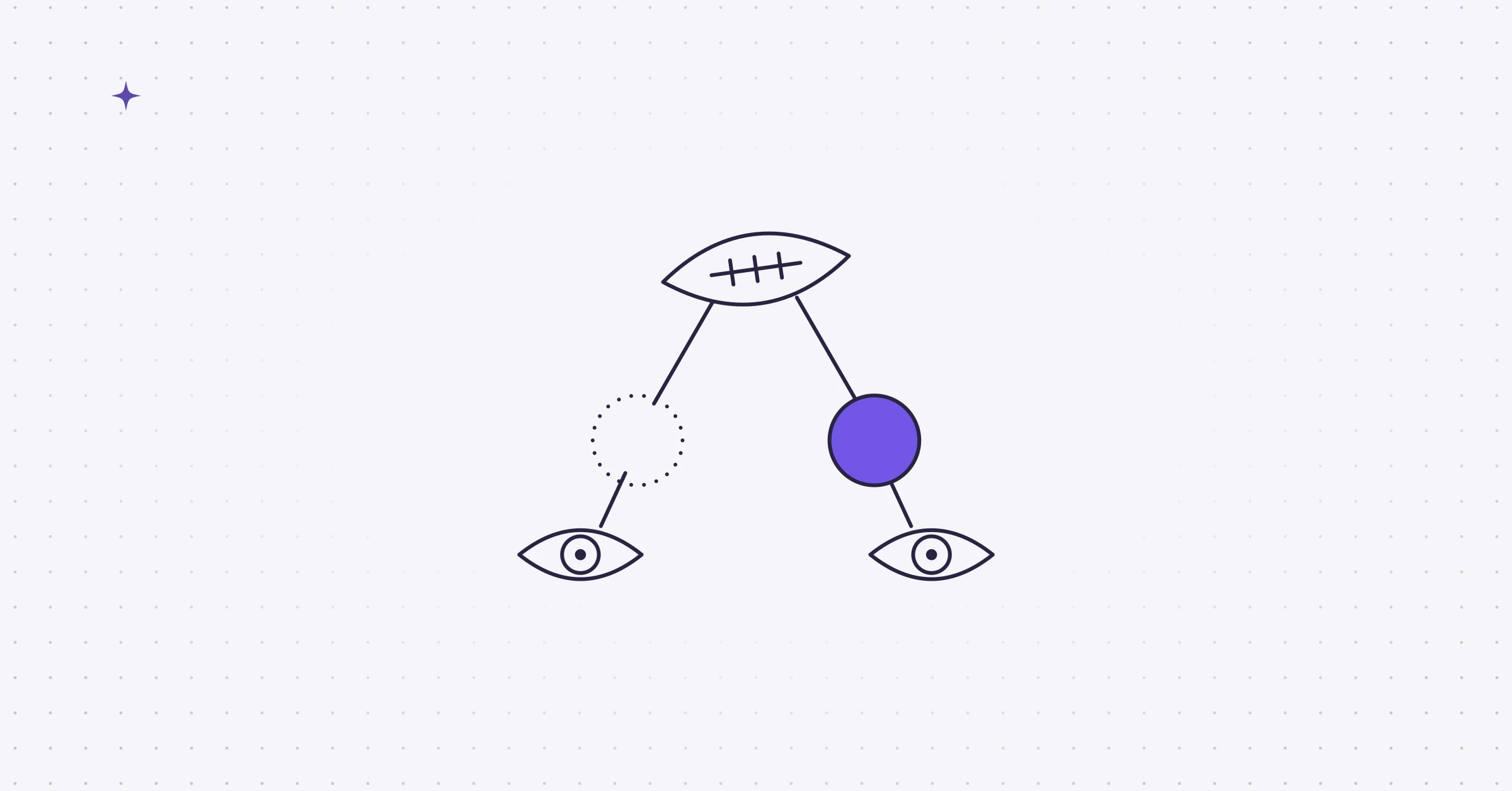
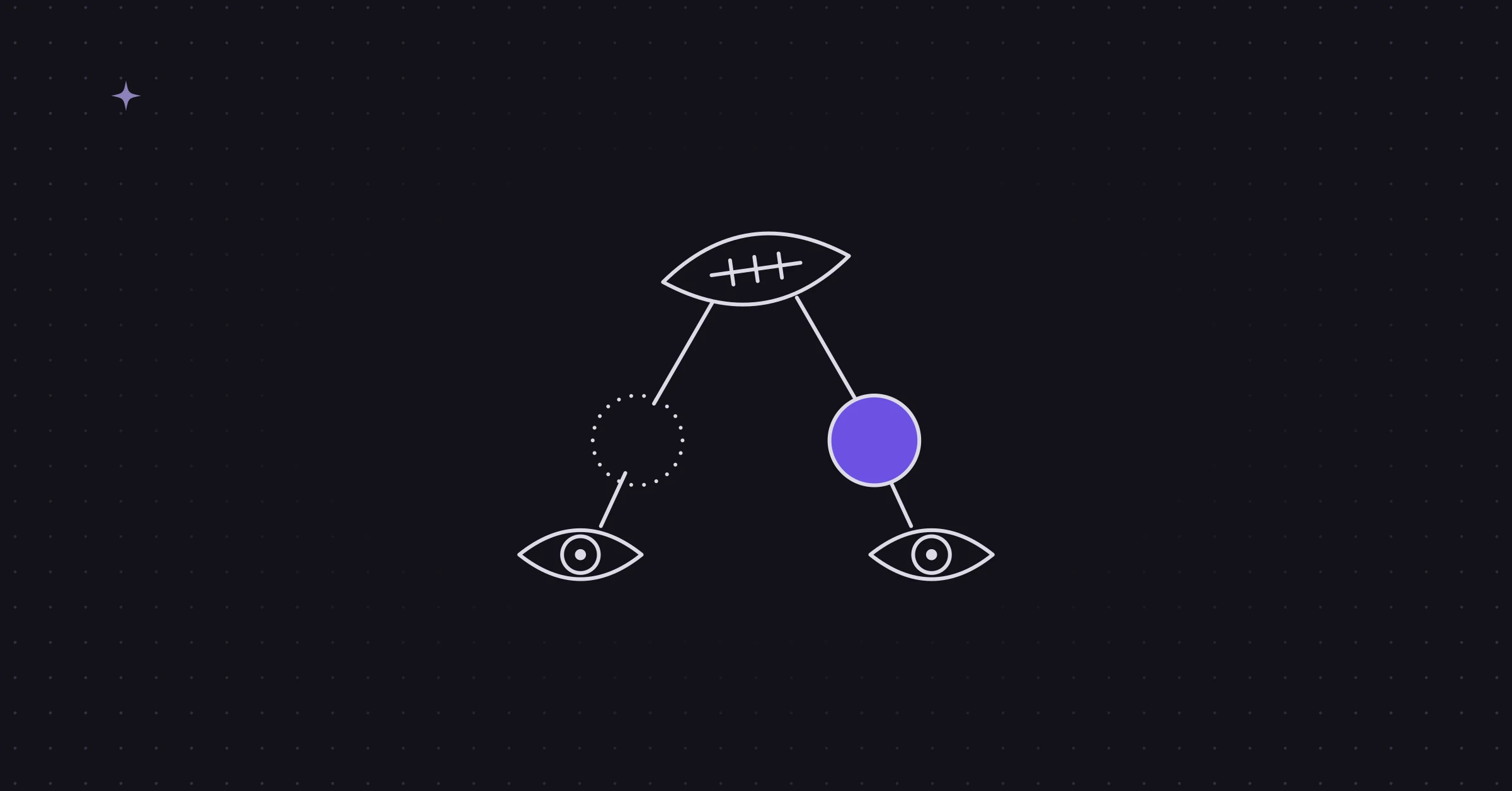
Naive realism is the conviction that you see the world as it really is, without interpretation. From it follow two further beliefs: that reasonable people with the same facts will agree with you, and that people who still disagree must be uninformed, irrational or biased. Your own interpretation stays invisible to you, while theirs looks like an error.
After a televised debate, two friends meet for a drink. One is sure that her candidate won easily, the other is sure that the moderator kept interrupting his, and within ten minutes each suspects that the other did not really watch. Both saw the same ninety minutes, so why is each convinced that the other side is blind?
What is naive realism?
Naive realism is the conviction that you see the world as it really is, so that anyone who sees it differently must be missing something. The psychologists Lee Ross of Stanford University and Andrew Ward gave the idea its name in the mid-1990s and described it as three linked beliefs:
- I see events as they are, not as my interpretation makes them.
- Other reasonable people with the same information will see them the same way if they think carefully.
- If someone still disagrees, they must be uninformed, unable to think it through, or biased by their interests or their group.
Seeing and judging always involve interpretation, but from the inside the interpretation does not feel like one; it feels like looking through a clean window. The clearest example is older than the name.
- The game. On 23 November 1951, Princeton played Dartmouth in American football. The game was rough: Princeton’s star player, Dick Kazmaier, left with a broken nose, and a Dartmouth player broke his leg.
- The test. Two psychologists, Albert Hastorf of Dartmouth and Hadley Cantril of Princeton, showed the same film of the game to 48 Dartmouth students and 49 Princeton students, who marked every foul they saw.
- The result. Princeton students counted 9.8 fouls by Dartmouth on average, while Dartmouth students counted 4.3 fouls by their own team. For Princeton’s fouls, both groups gave about four.
One Dartmouth alumnus even asked for the missing parts of the film, because he could not see the fouls he had heard about. The authors concluded in 1954 that there is no such “thing” as a “game” existing “out there” which people merely observe. Each group saw a different game, and each was sure that it had seen the real one.
Why does disagreement look like bias in the other person?
If your view feels like plain reality, a different view needs an explanation, and the only place left to look for it is the other person. So you decide that they lack information, cannot reason, or have a reason to distort.
In 1985 Robert Vallone, Lee Ross and Mark Lepper tested this with 144 Stanford students. Pro-Israeli and pro-Arab students watched the same US network news reports on the 1982 massacre of civilians in two refugee camps in Beirut. Both groups judged the coverage as biased against their side, and each expected it to turn neutral viewers against them. The most surprising result was that in both groups, students who knew more about the conflict saw more bias. More knowledge did not bring the two readings closer; it gave each side more to object to.
The same logic applies to how people judge themselves. In 2002 Emily Pronin, Daniel Lin and Lee Ross found that Stanford students and travelers at San Francisco airport rated themselves as less affected by common biases than other people. Those who rated themselves above average on good qualities kept insisting that their ratings were accurate, even after reading how this very bias could have shaped them. The researchers call this the bias blind spot.
Pronin, Thomas Gilovich and Ross later explained it with introspection, looking inward at your own thoughts: you find no bias there and conclude that there is none, but you judge other people by what they do. Since most bias works outside awareness, the inward look finds nothing. In a 2015 study of 661 adults, only one said that they were more biased than the average person.
What naive realism teaches you
When someone sees the same thing differently, the useful first question is not what is wrong with them but what they see, know or care about that you do not. Your feeling that they are biased is exactly what you would feel if you were the biased one, so it cannot tell you which of you is right.
- News and politics. If a report seems slanted against your side, check whether the other side complains about the same report. When both sides call it biased, the complaint says little about the report. Once you hold a view, you also tend to test only what fits it, as What Is Confirmation Bias? explains. Jonathan Haidt argues that political opponents also weigh different moral concerns, which makes each side’s view feel like plain reality to its members; see “The Righteous Mind” by Jonathan Haidt: Summary and Review. What Is Moral Foundations Theory? explains which moral concerns each side weights, and why each side misjudges the other.
- Work and study. A colleague who rejects your plan after seeing the same figures may weigh a different risk or know a fact you lack. Before you argue, state their position in words they would accept, and ask them to do the same for yours.
- Quarrels at home. After an argument each person remembers “what happened” as if from a recording, so tell your story as your view of events, not as the facts.
Does this mean every view is equally right?
No, and this is the most common misreading. Naive realism does not claim that there is no reality or that all views are equal. The fouls in the 1951 film were real, and some people really are uninformed or biased. The idea says something narrower: the strong feeling that you see things as they are is not evidence that you do, because people on both sides have the same feeling.
The strongest objection is that symmetry can mislead. If one side has the facts and the other does not, treating both as equally biased is false balance. The research tells you where to start, by testing your own reading first, and leaves the decision to the evidence.
The evidence has limits too. The football study looked at one game and about a hundred students, so it illustrates the idea more than it proves it. The hostile media effect stands on firmer ground: a 2011 meta-analysis, which pools many studies, combined 34 and found it in print and television news, though its strength varied.
Learn more
The idea has a clear father in Lee Ross, a Canadian-born psychologist who worked at Stanford for more than fifty years until his death in 2021. He wrote the key chapter, “Naive Realism in Everyday Life”, with Andrew Ward in 1996, and the term comes from philosophy, where naive realism is the view that we perceive objects directly as they are. He built on older work, including the football study and Gustav Ichheiser, who noted in 1949 that people blame others’ different views on some defect in them.
Carol Tavris and Elliot Aronson use naive realism in their chapter on blind spots. “Mistakes Were Made (But Not by Me)” by Carol Tavris and Elliot Aronson: Summary and Review shows how it combines with self-justification, the mechanism that What Is Cognitive Dissonance? explains. Ross and Gilovich wrote the idea up for general readers in The Wisest One in the Room (Affiliate Link).
Quiz
3 questions · up to 3 points
Open a question and pick one answer. Only your first answer counts: +1 if it is right, −1 if it is wrong.
In Hastorf and Cantril's study, what happened when Princeton and Dartmouth students watched the same film of the 1951 game?
Show answer
Princeton students counted more than twice as many Dartmouth fouls as the Dartmouth students did. Princeton students counted 9.8 Dartmouth fouls on average and Dartmouth students 4.3, although both groups watched the identical film.
Two friends who support rival parties watch the same TV news report on an election. What does the research on naive realism predict?
Show answer
Each friend finds the report slanted against their own party and expects it to push neutral viewers the other way. This is the hostile media effect from the 1985 Beirut study: both groups of partisans judged identical coverage as biased against their side and expected it to sway neutral viewers against them.
Which statement about naive realism is correct?
Show answer
It says that the feeling of seeing things as they are is no proof that you do, although some views are still wrong. Naive realism is about the confidence people place in their own view. It does not deny that facts exist or that some people are mistaken.
Your points are saved only in this browser for now. Accounts that keep them for good are on the way.
Continue learning: What Is Confirmation Bias? →The takeaway
Naive realism, a term from the psychologist Lee Ross, is the belief that you see the world as it is, so that people who disagree must be uninformed, irrational or biased. In a 1951 study, Princeton students counted 9.8 fouls by Dartmouth on the same film where Dartmouth students counted 4.3. It does not mean that every view is equally right, and the classic study was small. When someone sees a thing differently, first ask what they see that you do not.
References
- They Saw a Game: A Case Study. Albert H. Hastorf and Hadley Cantril, Journal of Abnormal and Social Psychology 49 (1), 129–134, 1954
The original football study, with the newspaper quotes, the questionnaires and the counts of fouls by each group of students.
- The Hostile Media Phenomenon: Biased Perception and Perceptions of Media Bias in Coverage of the Beirut Massacre. Robert P. Vallone, Lee Ross and Mark R. Lepper, Journal of Personality and Social Psychology 49 (3), 577–585, 1985
The abstract of the study in which both pro-Israeli and pro-Arab students judged the same news coverage as biased against them.
- The Bias Blind Spot: Perceptions of Bias in Self Versus Others. Emily Pronin, Daniel Y. Lin and Lee Ross, Personality and Social Psychology Bulletin 28 (3), 369–381, 2002
Three studies showing that people see biases much more in others than in themselves, even after the bias is explained to them.
- Objectivity in the Eye of the Beholder: Divergent Perceptions of Bias in Self Versus Others. Emily Pronin, Thomas Gilovich and Lee Ross, Psychological Review 111 (3), 781–799, 2004
A review that links the bias blind spot to naive realism and to the trust people place in their own introspection.