What Is the Orthogonality Thesis?
5 min read≈ 1,160 words3 questions · up to 3 points
What this is about
Would a machine far cleverer than any person also be wiser about what is worth doing? You learn the idea Nick Bostrom uses to answer that question, why it goes back to a famous line by David Hume, and the strongest objections to it. You also see why the same distinction helps when you judge clever people, organizations and your own plans.
In a nutshell· skip ahead
The orthogonality thesis, put forward by the philosopher Nick Bostrom in 2012, says that how intelligent an agent is and what it ultimately wants are independent. Intelligence here means skill at predicting and planning. Since that skill can serve any aim, almost any level of intelligence could be combined with almost any final goal, even one people find pointless.
Imagine a machine that can out-think every scientist alive, and whose only wish is to count the grains of sand on a beach. Most people feel that something is wrong here, because a mind that clever would surely notice that counting sand is pointless and find a better aim. But why exactly should more intelligence lead to better goals?
Why can a clever mind want anything at all?
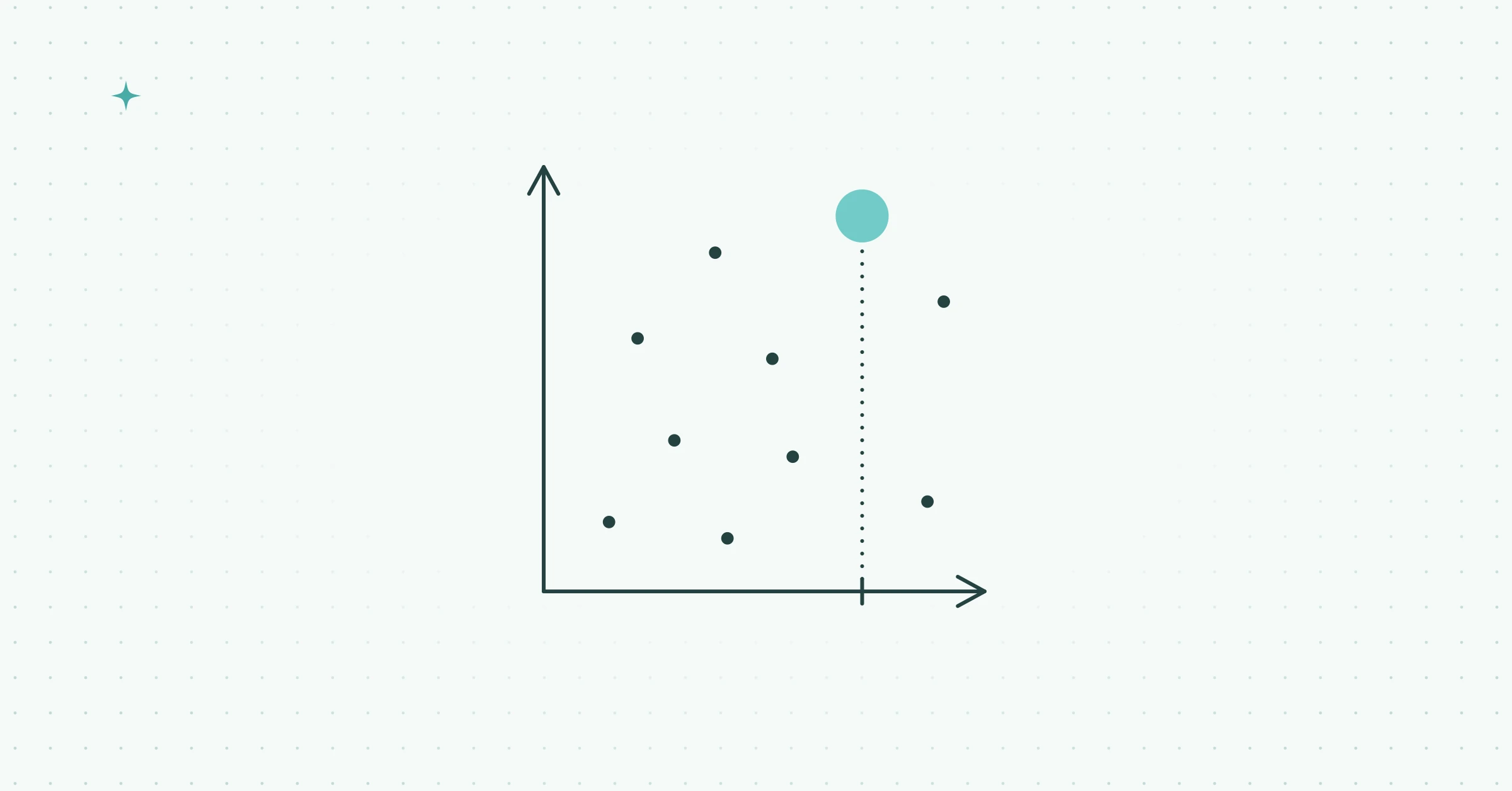
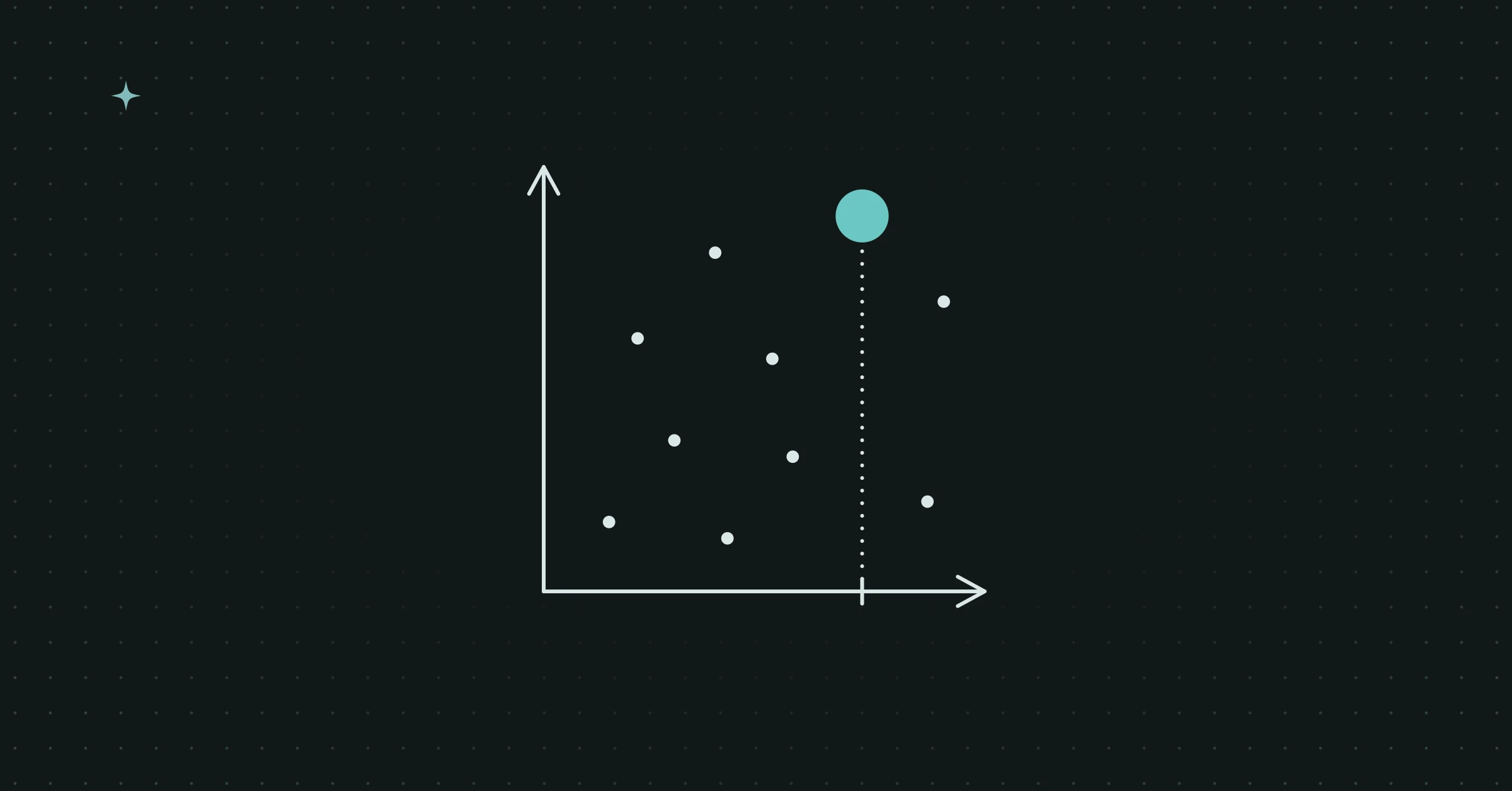
The orthogonality thesis answers that it need not. It says that how intelligent an agent is and what it ultimately wants are two separate things. In the words of the philosopher Nick Bostrom, “more or less any level of intelligence could in principle be combined with more or less any final goal”. “Orthogonal” is a word from geometry for lines at right angles, like the two axes of a graph: you can move along one without moving along the other.
Bostrom uses intelligence in a narrow sense, as skill at prediction, planning and choosing the right means for an end. A final goal is something an agent wants for its own sake, not as a step toward something else. With these two terms, an example from Bostrom’s 2012 paper, worked through in four steps, shows the mechanism.
- Draw the graph. Put final goals along the horizontal axis and intelligence along the vertical one, so that every possible agent is a point. A thermostat sits low, a chess program higher and a person higher still, each above its own goal.
- Place the sand counter. Bostrom’s machine has one final goal: to count the grains of sand on Boracay, an island in the Philippines. Give it modest intelligence and it counts slowly and makes errors.
- Raise its intelligence. Now it designs better sensors, plans faster ways to sort sand and predicts the tides that move the grains. Each step makes it better at counting, so its point moves straight up the graph.
- Look for a sideways step. Nothing in better planning gives it a reason to move to another goal. To judge sand counting as “pointless”, it would need a standard of what is worth doing, and that standard is a goal, not a skill.
But would real understanding not change this? Bostrom’s answer goes back to the Scottish philosopher David Hume, who argued in 1739 that reason works out facts and means but cannot by itself set our ends. Hume put it in a sentence that still shocks readers: “’Tis not contrary to reason to prefer the destruction of the whole world to the scratching of my finger.” Such a preference is monstrous, but it contains no mistake in logic or in fact. Bostrom notes that Hume’s view supports his thesis, although the thesis does not depend on it.
Bostrom goes further, and this is the surprising part. He grants that there might be objective moral facts, and even that anyone who fully understood them would be moved by them. The thesis could still hold, he says, because a machine could be excellent at planning while lacking whatever faculty grasps those facts.
What the orthogonality thesis teaches you
The thesis teaches you to ask two questions where people usually ask one: how capable is this agent, and what is it trying to achieve? Admiration for the first answer easily hides the second.
- Judging people. A brilliant lawyer, strategist or speaker shows skill, not good aims. A fraud can take more careful planning than an honest deal, so cleverness alone is no reason to trust someone.
- Building systems. An organization or program that gets more resources gets better at reaching its target, whether or not the target is the right one. A sales team rewarded only for signed contracts will get better at signing contracts, including bad ones.
- Your own plans. Studying harder, earning more or training better improves how you reach your goals. Whether the goals are worth having is a separate question, and no amount of efficiency answers it for you.
This is also why AI researchers treat alignment, giving a system the right goals, as a problem of its own that more capability will not solve.
Where is the orthogonality thesis weak?
A common misreading is that the thesis predicts that intelligent machines will want strange or harmful things. It does not. Bostrom calls it a claim about what is logically possible, adds that it does not make it easy to give a machine any particular goal, and even suggests ways to predict a machine’s goals from its design. On its own, the thesis is modest and hard to deny. It becomes alarming only when joined to premises about how real systems are built, which need their own evidence. Being a conceptual claim, it cannot be confirmed or refuted by experiment.
The first serious objection comes from philosophers who hold that reason does set ends. Immanuel Kant argued that every rational being is bound by the moral law, a view explained in What Is the Categorical Imperative?, so a fully rational agent would arrive at moral goals. Bostrom replies by defining intelligence narrowly, as skill at means and ends, and leaving full rationality aside.
That reply leads to the strongest objection. In a 2022 paper, the philosophers Vincent Müller and Michael Cannon argue that Bostrom’s warning about superintelligence needs a general intelligence, one that can step back and rethink its whole situation. Such a mind should also be able to reflect on its goals and revise them, as humans do. If the machine is only good at means and ends, it may never become the kind of superintelligence the warning describes; if it is general, the thesis looks doubtful. A defender of the thesis can reply that humans revise goals only in the light of other goals they already hold, so reflection on goals never starts from nothing. The debate is still open.
Learn more
The thesis has a clear originator. Nick Bostrom, a Swedish-born philosopher then at the University of Oxford, stated it in “The Superintelligent Will”, a paper in the journal Minds and Machines in 2012. Two years later he made it the centre of chapter 7 of his book Superintelligence. He built on Hume’s claim that reason serves our desires and cannot rule them. Hume also observed that statements about what is never by themselves yield a conclusion about what ought to be. Bostrom’s paper also quotes the AI researcher Eliezer Yudkowsky on how easily people project human desires onto non-human minds.
To see how the thesis fits into Bostrom’s larger argument, including his claim that almost any goal leads an agent to seek power, read “Superintelligence” by Nick Bostrom: Summary and Review. A related mistake, taking humanlike conversation for understanding, is the subject of What Is the Turing Test?.
Quiz
3 questions · up to 3 points
Open a question and pick one answer. Only your first answer counts: +1 if it is right, −1 if it is wrong.
What does the orthogonality thesis claim?
Show answer
Almost any level of intelligence could in principle be combined with almost any final goal. This is Bostrom's own formulation. Intelligence is skill at reaching goals, and that skill does not decide which goals an agent has.
A fraudster plans a complicated scheme with great skill, predicts how investigators will react and avoids every trap. What does the orthogonality thesis say about this case?
Show answer
His skill at planning tells you nothing about whether his aims are good, because intelligence and goals can vary separately. The thesis separates the question 'how well does he reach his goals?' from the question 'what are his goals?'. The fraudster scores high on the first and badly on the second.
Many people read the orthogonality thesis as a prediction that AI will have strange goals. What does it actually establish?
Show answer
Only that high intelligence does not by itself guarantee good goals; what goals a real system gets depends on how it is built. Bostrom says the thesis concerns what is logically possible. A warning about real systems needs further premises about how they are made.
Your points are saved only in this browser for now. Accounts that keep them for good are on the way.
Continue learning: "Superintelligence" by Nick Bostrom: Summary and Review →The takeaway
Nick Bostrom's orthogonality thesis says that intelligence, meaning skill at prediction and planning, is independent of an agent's final goals. In his example, a machine that only wants to count the grains of sand on an island gets better at counting as it gets smarter but gains no reason to want anything else. The thesis claims only what is possible, and critics argue that a truly general intelligence would reflect on its goals as humans do. When you meet great competence, ask separately what it is used for.
Key quotes
“Reason is, and ought only to be the slave of the passions, and can never pretend to any other office than to serve and obey them.”
References
- The Superintelligent Will: Motivation and Instrumental Rationality in Advanced Artificial Agents. Nick Bostrom, Minds and Machines 22 (2), 2012
The original paper: the thesis in Bostrom's words, the sand-counting and paperclip examples, the link to Hume and the caveats.
- A Treatise of Human Nature, Book 2, Part 3, Section 3: Of the influencing motives of the will. David Hume, Hume Texts Online, 1739
The section in which Hume argues that reason alone cannot move us to act, with the line about the world and the scratched finger.
- Existential risk from AI and orthogonality: Can we have it both ways?. Vincent C. Müller and Michael Cannon, Ratio 35 (1), 25–36, 2022
The sharpest recent objection: a general intelligence could reflect on its goals, so the thesis and the warning about superintelligence may not fit together.
- Moral Motivation. Connie S. Rosati, Stanford Encyclopedia of Philosophy, 2016
A clear survey of the Humean theory of motivation and of the debate about whether knowing what is right must move you to do it.