"Make It Stick" by Peter Brown, Henry Roediger and Mark McDaniel: Summary and Review

9 min read≈ 2,080 words5 questions · up to 5 points
What this is about
Most students prepare for exams by reading their notes again, and most of them would learn more in the same time by doing something that feels worse. You learn the main ideas of this book in the order of its argument, from retrieval practice to the myth of learning styles, which of them the research supports best, and how the book compares with other books on learning.
The book in three sentences· skip ahead
Make It Stick argues that the study habits most people trust, such as rereading and practising one thing many times in a row, feel effective but produce learning that fades fast. Two memory researchers and a writer show with stories and experiments that testing yourself, spacing and mixing your practice, and struggling before you are taught make learning last. They add that people misjudge their own learning, so they need tests to see what they really know.
Make It Stick: The Science of Successful Learning
- Author
- Peter C. Brown, Henry L. Roediger III and Mark A. McDaniel
- Published
- 2014
- Publisher
- Belknap Press of Harvard University Press (hardcover, 2014)
- Length
- 313 pages
- Audiobook
- 8h 34m, read by Qarie Marshall
- Best for
- Students, teachers and anyone who learns for work and wants study methods that are backed by memory research.
Most people study by reading their notes again, and Make It Stick (2014) argues that this is one of the least useful things they can do. The book’s claim is that the methods that feel most productive, such as rereading, highlighting and practising one thing many times in a row, give a feeling of mastery that fades within days. Methods that feel slow and awkward, by contrast, produce learning that lasts. It found readers far outside psychology, because it gives teachers and students a short list of methods they can use the next morning, together with the experiments behind them.
Who wrote it, and what kind of book it is
The book has two scientists and a writer behind it. Henry Roediger and Mark McDaniel are cognitive psychologists at Washington University in St. Louis who have studied memory for decades. In 2002 the James S. McDonnell Foundation funded a ten-year collaboration of cognitive psychologists, among them the two authors, on how research on memory could improve teaching, and the book reports what that work found. Peter Brown, a novelist and former management consultant, interviewed learners of many kinds and wrote the stories that carry the research.
The book has eight chapters. The first five each explain one method or one mistake, the sixth and seventh deal with differences in ability, and the last gives practical advice for students, teachers, trainers and lifelong learners. Every chapter mixes a story about a real person, such as a pilot, a neurosurgeon or a gardener, with descriptions of experiments.
Rereading feels like learning, but it mostly is not (“Learning Is Misunderstood”)
The first chapter argues that the most popular study habits are among the least productive. Students prefer rereading and what the authors call massed practice, the rapid repetition of one thing until it seems to be fixed in memory, of which cramming before an exam is the typical example. Both methods produce what the authors call “feelings of fluency”: the text looks familiar and the answers come easily, so learners believe they have mastered the material. A few days later, much of it is gone.
From this the authors draw the principle that runs through the whole book: learning that takes effort lasts longer, and learning that feels easy does not.
Learning is deeper and more durable when it’s effortful. Learning that’s easy is like writing in sand, here today and gone tomorrow.
Pulling knowledge out of memory makes it last (“retrieval practice”)
The second chapter presents the book’s most important method. Retrieval practice means recalling facts or ideas from memory, for example with flashcards or a short quiz, instead of reading them again. Psychologists call the benefit the testing effect: each time you recall something, it becomes easier to recall the next time. How the effect works and where it fails is explained in What Is the Testing Effect?.
Roediger’s own laboratory gives a clear example. In a study published in 2006, students read a short text. One group then read it again several times, while the other group read it once and then wrote down from memory what they could recall, three times. Five minutes later the rereaders did slightly better. One week later the group that had practised recalling remembered 61 percent of the text and the rereaders only 40 percent, although the rereaders had read it far more often. The chapter also reports classroom studies at a middle school, in which short, low-stakes quizzes raised students’ scores on the real tests of their courses.
The authors add that the effect is larger when recall takes some effort. In one of the chapter’s stories, the neurosurgeon Mike Ebersold describes how he thought through each operation afterwards, practised changes to his technique at home, and drilled the steps of emergency procedures until he could recall them under pressure.
Spaced, mixed and varied practice beats doing one thing at a time (“Mix Up Your Practice”)
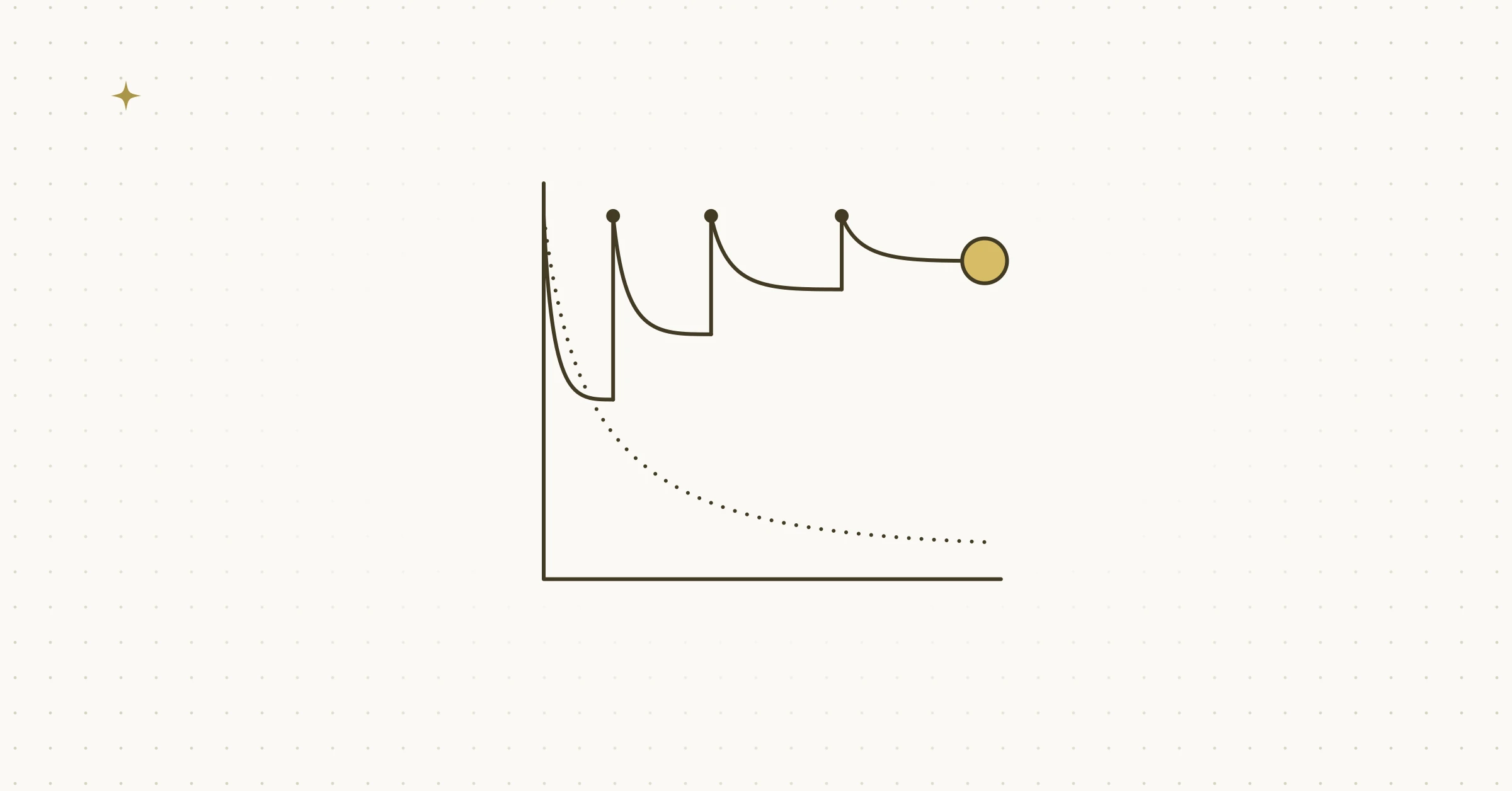
The third chapter adds three ways of arranging practice. The first is spacing, which means leaving time between practice sessions so that some forgetting happens before you return. Spacing is the oldest and best-tested finding in the book, and What Is Spaced Repetition? explains how it works and how long the gaps should be.
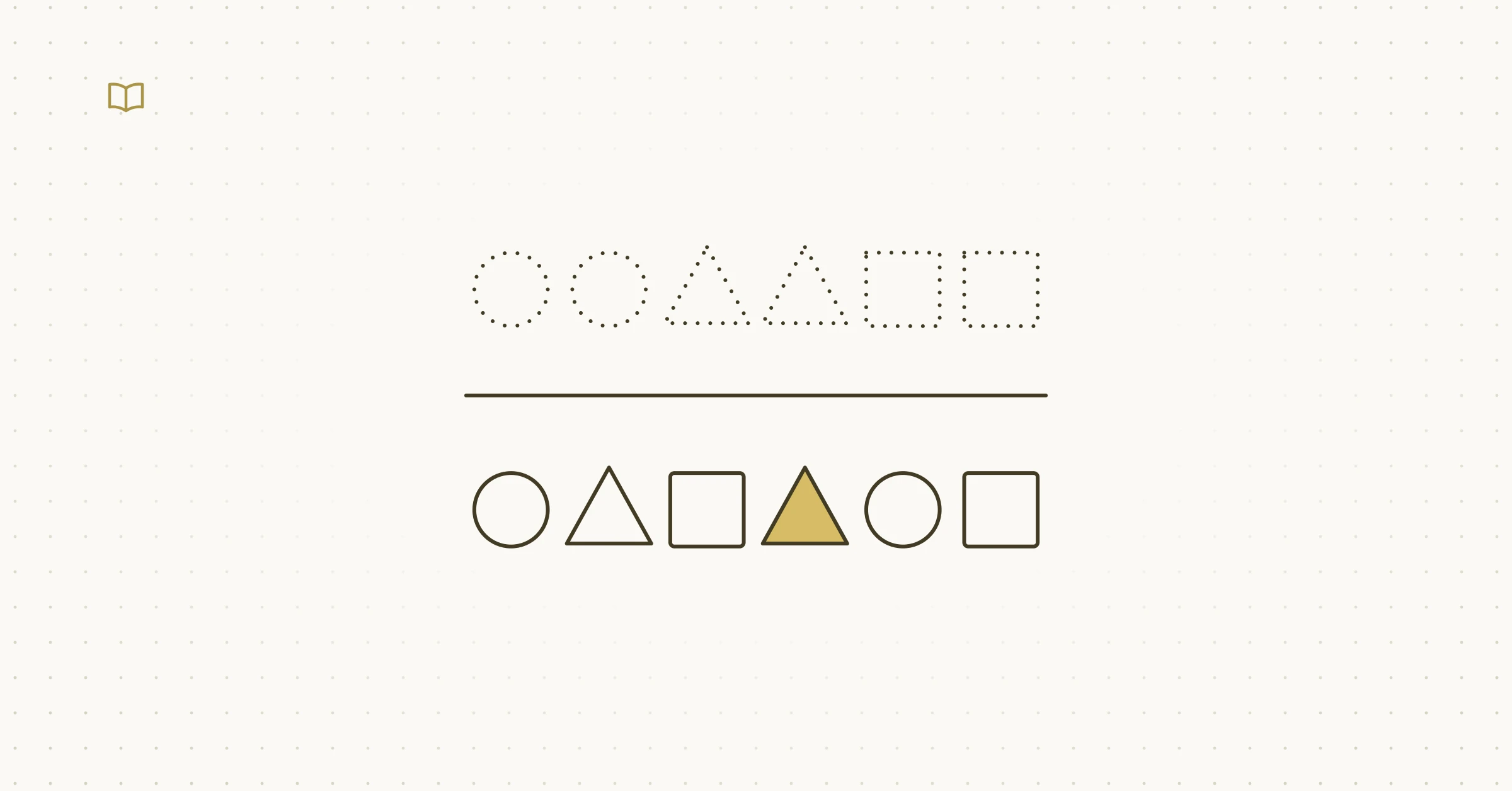
The second is interleaving, which means mixing different kinds of problems in one session instead of practising one kind until it is mastered. In a study by Doug Rohrer and Kelli Taylor that the book draws on, students learned to calculate the volumes of four unusual solids. Students who practised the problems in blocks scored 89 percent during practice, and those who practised them mixed scored only 60 percent. One week later the result was reversed: the mixed group solved 63 percent of the test problems and the blocked group 20 percent. What Is Interleaved Practice? explains why mixing works and for which materials it does not.
The authors explain that mixing forces you to recognise which kind of problem you face, which is exactly what a test or real life demands. The same idea appears in studies in which people learned to tell the styles of painters or the kinds of birds apart.
The third is variation. In a study of children throwing beanbags at a target three feet away, the children who had practised from two and four feet hit it better than those who had practised only from three feet. Varied practice seems to teach the relation between a movement and its result, not just one movement.
Learning that feels hard is often learning that works (“desirable difficulties”)
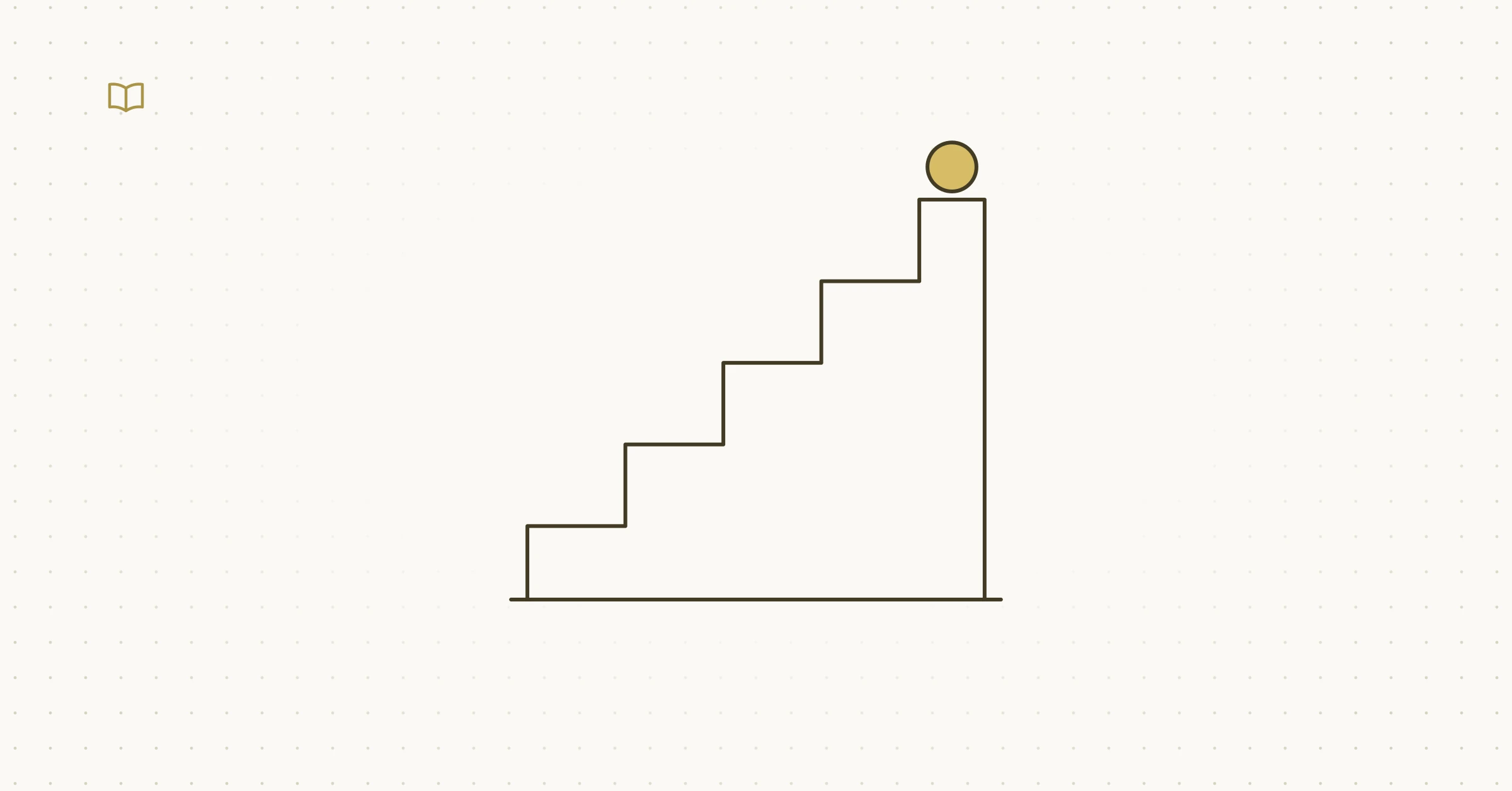
The fourth chapter gives the theory behind the earlier ones. It borrows the term desirable difficulties from the psychologist Robert Bjork, who coined it in 1994. A desirable difficulty is any effort that slows learning down in the moment but makes it stronger later, such as recalling instead of rereading, waiting before you practise again, or mixing problem types.
The chapter adds two more such difficulties. The first is generation: the authors argue that trying to solve a problem before you are taught the solution leads to better learning, even when your attempt is wrong. The second is elaboration, which means explaining new material in your own words and connecting it to what you already know, as when you understand evaporation from the fact that sweat dries faster on a dry day. The authors also limit their own claim: a difficulty helps only if the learner can overcome it, and a task that is far too hard teaches nothing.
We misjudge what we know (“Avoid Illusions of Knowing”)
The fifth chapter explains why people keep choosing the wrong methods: they cannot see their own learning directly. The authors describe several illusions of knowing, cases in which our sense of what we know or remember is wrong. Pilots can be fooled by optical illusions in the air, and witnesses who saw a suspect’s photograph before a line-up can later “remember” that face at the crime. The chapter also discusses the finding of David Dunning and Justin Kruger that people with the least skill often overestimate themselves the most, because they lack the knowledge they would need to notice their errors.
The remedy the authors offer is the same as in chapter 2. Tests, quizzes and practice under realistic conditions show you what you really know, in the way training in a flight simulator shows a pilot whether he can really handle an emergency.
Learning styles are a myth, but people do differ (“Get Beyond Learning Styles”)
The sixth chapter attacks a belief that is still common in schools: that each person has a learning style, such as visual or auditory, and learns best when teaching matches it. McDaniel was one of the four authors of a 2008 review of this idea. They found very few studies that had tested it properly, and the well-designed ones contradicted it.
The chapter does not claim that everyone learns in the same way. It describes differences that do matter, such as how well a person can pick out the main ideas of new material and build them into a structure. It also presents Robert Sternberg’s view that intelligence has analytical, creative and practical sides. The authors’ advice is to use all your abilities, and to teach in the way the subject requires, not in the way a student’s supposed style suggests.
Ability can grow (“Increase Your Abilities”)
The seventh chapter argues that intelligence is not fixed at birth. The authors describe how the brain changes through learning and cite evidence that IQ scores can rise, for example in children who receive early education. They then present three ways to build ability. The first is Carol Dweck’s growth mindset, the belief that ability grows with effort. The second is deliberate practice, the focused practice on weaknesses that the psychologist Anders Ericsson studied in experts. The third is memory aids, from acronyms to “memory palaces”, in which you place items along a route you know well. The final chapter turns all of this into concrete advice for each group of readers.
How it differs from other books on learning
Make It Stick stands out because two of the researchers who produced the evidence also wrote it. Three neighbours show its place.
- Benedict Carey’s How We Learn (2014), by a science reporter for The New York Times, covers much of the same research and gives more room to topics such as sleep, distraction and the place where you study. Carey writes as a journalist exploring the field, while Make It Stick argues for a small set of methods from inside it.
- Daniel Willingham’s Why Don’t Students Like School? (2009) is written for teachers and explains how the mind works more broadly, including attention, background knowledge and motivation. Make It Stick is narrower and more practical for the learner.
- Anders Ericsson and Robert Pool’s Peak (2016) is about how experts reach the top of a field over many years. Make It Stick touches deliberate practice in one chapter; Peak gives it a whole book. For a story-driven view of the same long road, read our review of “Mastery” by Robert Greene.
Where it falls short
The book’s weaknesses lie at its edges, not at its centre. The research on retrieval practice and spacing has held up well, and a large review of study methods by John Dunlosky and colleagues in 2013 rated exactly these two as the most useful. Three other points need more caution.
The first is mixed practice. A 2019 review by Matthias Brunmair and Tobias Richter combined 59 studies and found a moderate benefit overall, which was largest when people learned to tell similar paintings apart. For learning lists of words it did not help, and for texts the evidence was unclear. The book presents mixing as a general rule, while the research suggests it helps most when the hard part is telling similar things apart.
The second is chapter 7. The growth mindset was a new and popular idea in 2014, but a 2018 review of 43 studies by Victoria Sisk and colleagues found that mindset programmes had only weak effects on school results on average. The chapter also fits less well into the book than the others, a point Sheri Lynn Warren made in her review in Education Review.
The third concerns the classroom. In a critical essay from 2014, the retired teacher John Thompson argued that the book does not show that frequent testing works better than discussion and writing, and that examples from pilots and surgeons say little about a history lesson. The book recommends low-stakes quizzes as a way to learn, not tests for grading or ranking students, and readers who bring its ideas into schools should keep that difference in mind.
Which format to choose
The book argues mainly through stories and plain descriptions of experiments, so the unabridged audiobook, read by Qarie Marshall in about eight and a half hours, loses very little. The print or ebook edition is better if you want to use the last chapter as a checklist or follow the endnotes to the studies. Whichever format you choose, the book’s own advice applies to it: after each chapter, stop and try to recall its main points without looking.
Quiz
5 questions · up to 5 points
Open a question and pick one answer. Only your first answer counts: +1 if it is right, −1 if it is wrong.
According to Make It Stick, what does 'retrieval practice' mean, and why does it work?
Show answer
Recalling facts or ideas from memory, for example with a quiz, because each recall makes the memory stronger and slows forgetting. The authors call retrieval practice a more effective strategy than review by rereading, because recalling a memory strengthens it and interrupts forgetting.
A student must learn four formulas for the volumes of different solids. What does the book suggest?
Show answer
Mix the practice problems for all four solids, so that she must first work out which formula each problem needs. In the study by Rohrer and Taylor that the book draws on, mixed practice felt harder, but one week later the mixed group solved 63 percent of the test problems and the blocked group only 20 percent.
What do the authors mean by 'desirable difficulties'?
Show answer
Kinds of effort, such as recalling, spacing or trying before you are taught, that slow learning down now but make it last, as long as the learner can overcome them. The term comes from the psychologist Robert Bjork. The book stresses that a difficulty helps only when the learner can overcome it with effort.
What does the book conclude about learning styles, such as being a 'visual' or an 'auditory' learner?
Show answer
There is no good evidence that people learn better when teaching matches their preferred style. A 2008 review, written by McDaniel with three colleagues, found almost no studies that tested this properly and found that the good ones contradicted it.
What does this review suggest about using the advice in Make It Stick?
Show answer
Trust its advice on self-testing and spacing most, and use mixed practice mainly when you must learn to tell similar things apart. Retrieval practice and spacing have the strongest evidence. A 2019 review found that mixing helps most with categories that are hard to tell apart and not with word lists.
Your points are saved only in this browser for now. Accounts that keep them for good are on the way.
Continue learning: What Is Spaced Repetition? →The takeaway
Make It Stick by Peter Brown, Henry Roediger and Mark McDaniel argues that learning lasts when it takes effort, and its central method is 'retrieval practice': recalling what you have learned instead of reading it again. Its other main ideas are spaced and mixed practice, trying a problem before you are taught the answer, and testing yourself because your feeling of knowing is unreliable. Its weakness is that it presents mixed practice and the growth mindset as more general than the evidence allows. Read it to change how you study, then test yourself instead of rereading.
Key quotes
“Learning is deeper and more durable when it's effortful. Learning that's easy is like writing in sand, here today and gone tomorrow.”
“Retrieval strengthens the memory and interrupts forgetting.”
“We are poor judges of when we are learning well and when we're not.”
Should you read it?
Read it if
- You study by reading your notes again and highlighting, and you want to know what works better in the same time.
- You teach or train other people and want to use quizzes, spacing and mixed practice in your lessons.
- You prefer research explained through stories about real learners, such as pilots, surgeons and students.
Skip it if
- You already know the research on retrieval practice and spacing; the book will mostly repeat it with stories.
- You want a short list of techniques; the book spends many stories and studies on a handful of methods.
- You want a book on deep understanding or creative work; the evidence here is strongest for facts, concepts and well-defined skills.
As an Amazon Associate, mentua.org earns from qualifying purchases. It costs you nothing and never shapes the verdict.
Ideas from this book
- Spaced repetitionSpaced repetition is a way of learning in which you review the same material several times, with gaps of days or weeks between the reviews. Each review comes when you have started to forget, and the gaps grow as the memory gets stronger. With the same total study time, you remember much more and for much longer than after cramming.
- Testing effectThe testing effect is the finding that trying to recall what you have learned makes you remember it longer than studying it again for the same time. A test is not only a way to measure memory but a way to strengthen it. The method that uses this is called retrieval practice: closing the book and trying to recall the content, then checking.
- Interleaved practiceInterleaved practice means mixing different kinds of problems or examples in one practice session, instead of practising one kind until you have mastered it and then moving on. It feels slower and causes more mistakes, but it often leads to better results later, because it trains you to recognise which kind of problem you face and which method it needs.
References
- Make It Stick: about the book and excerpt from chapter 1. Peter C. Brown, Henry L. Roediger III and Mark A. McDaniel
The authors' site, with the book's own list of its principal claims from chapter 1.
- Review of Make It Stick: The Science of Successful Learning. Sheri Lynn Warren, Education Review, 2016
An academic review by a special education teacher, with a summary of the chapters and the origin of the research in the preface.
- Similarity Matters: A Meta-Analysis of Interleaved Learning and Its Moderators. Matthias Brunmair and Tobias Richter, Psychological Bulletin, 2019
The review of 59 studies that shows where mixed practice helps and where it does not.
- Learning Styles: Concepts and Evidence. Harold Pashler, Mark McDaniel, Doug Rohrer and Robert Bjork, Psychological Science in the Public Interest, 2008
The review behind the book's chapter on learning styles, co-written by one of its authors.