What Is Interleaved Practice?
5 min read≈ 1,190 words3 questions · up to 3 points
What this is about
In one experiment, students who practised maths problems in the usual textbook order scored 89 percent during practice and 20 percent on the test a week later. You learn what the other group did differently, why their practice felt worse and worked better, and for which kinds of material the method helps and for which it does not.
In a nutshell· skip ahead
Interleaved practice means mixing different kinds of problems or examples in one practice session, instead of practising one kind until you have mastered it and then moving on. It feels slower and causes more mistakes, but it often leads to better results later, because it trains you to recognise which kind of problem you face and which method it needs.
Most maths textbooks end a lesson with practice problems on that lesson only, such as twelve problems on the volume of a cone after the chapter on cones. Students get most of them right and feel ready, but then the test mixes cones with cylinders and spheres, and many of them no longer know where to start. Why does practice that goes so well prepare people so badly?
What is interleaved practice?
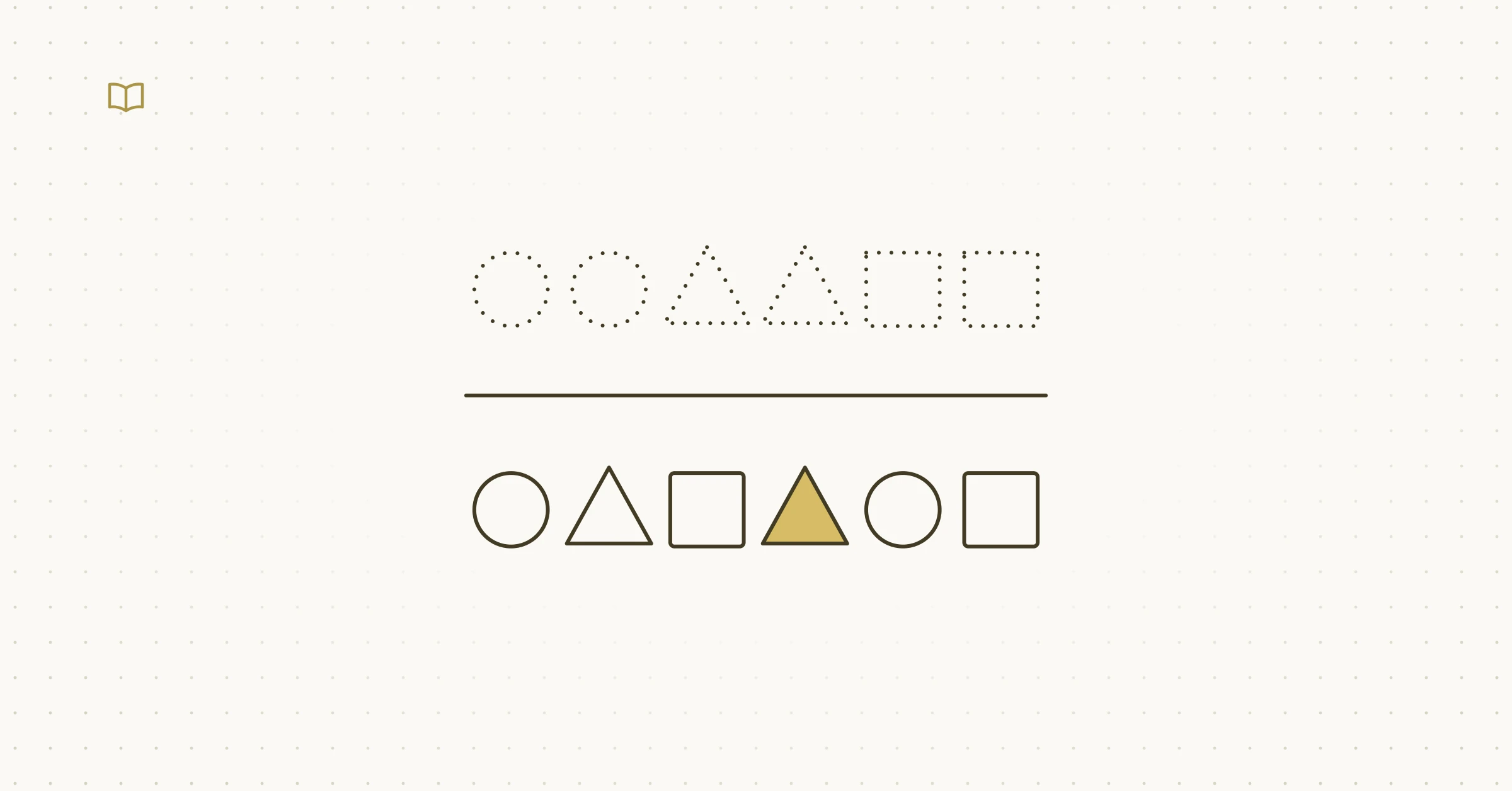
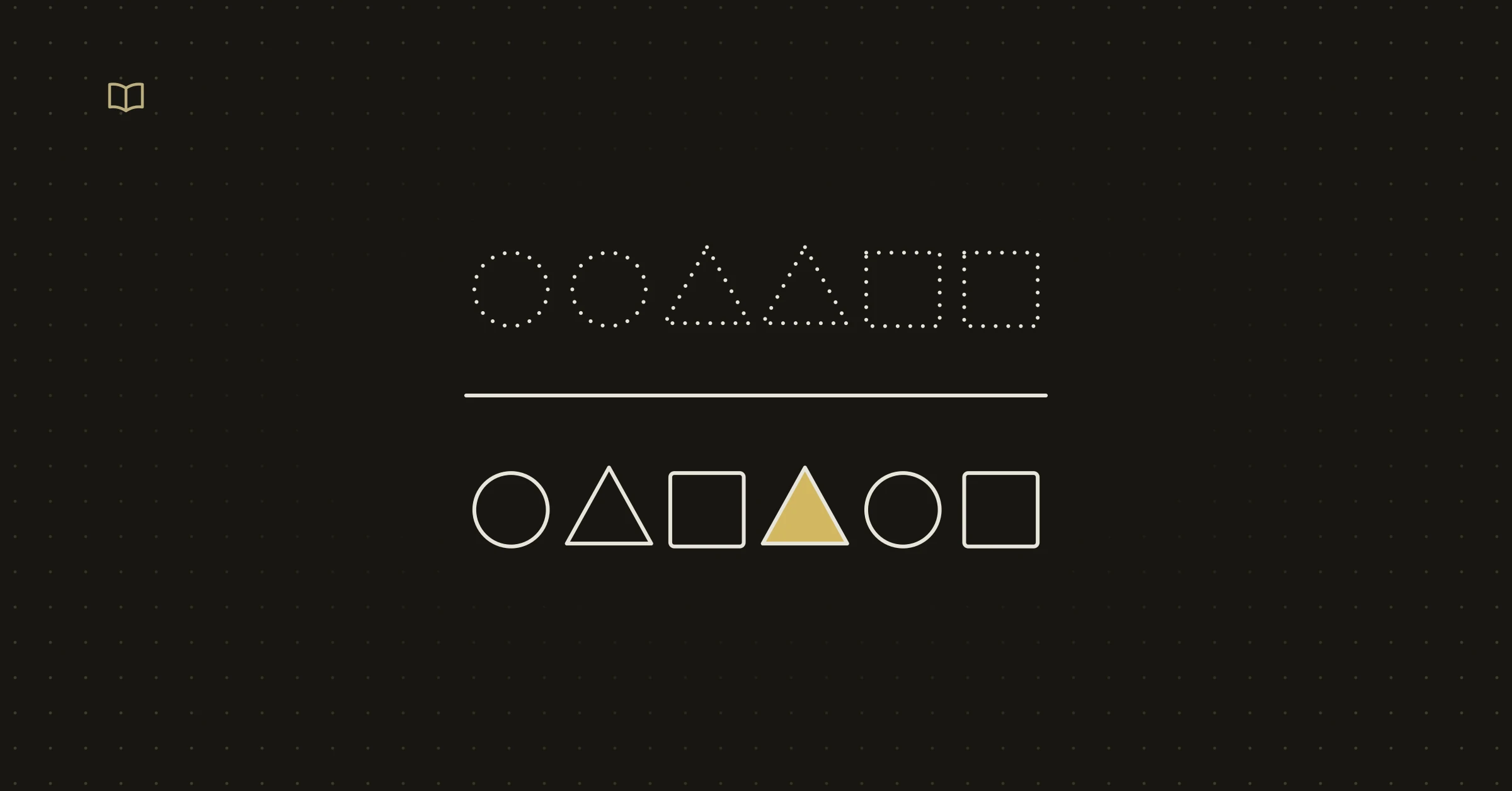
Interleaved practice means mixing different kinds of problems or examples in one practice session, instead of finishing one kind before you start the next. The usual alternative, practising one kind at a time, is called blocked practice. With the same problems and the same time, interleaving often leads to better results days or weeks later, although it feels slower and causes more mistakes while you practise.
Interleaving answers a different question from two related ideas. What Is Spaced Repetition? is about when you review, and What Is the Testing Effect? is about how you review, by recalling instead of rereading. Interleaving is about in what order you practise different kinds of material, and it can be combined with both.
What happened when students mixed their maths problems?
The clearest demonstration is a 2007 study by Doug Rohrer and Kelli Taylor at the University of South Florida. In their second experiment, 18 students learned to calculate the volume of four solids they had never met: a wedge, a spherical cone, a spheroid and a half cone.
- The practice. Students came to two practice sessions a week apart. Each session had four short tutorials, one per solid, and 16 practice problems, each followed by the correct solution.
- Blocked or mixed. The blocked group read the wedge tutorial, solved four wedge problems and then moved on to the next solid. The mixed group read all four tutorials first and then solved the same 16 problems in a shuffled order.
- Scores during practice. The blocked group did much better, with 89 percent correct against 60 percent.
- The test. One week after the second session, everyone solved eight new problems, two per solid, in random order. Now the mixed group solved 63 percent and the blocked group 20 percent.
Why did the order matter so much? The researchers looked at the wrong answers and found that students who wrote down the right formula almost always got the right answer. The blocked group had learned how to use each formula, but not which formula a problem needed, because in blocked practice the answer to that question was always “the same as the last problem”. On a mixed test, that choice is most of the difficulty.
students in this condition were required to know not only how to solve each kind of problem but also which procedure (i.e., formula) was appropriate for each kind of problem
The same pattern appears where there is no formula at all. In 2008 Nate Kornell and Robert Bjork showed 120 students six landscapes by each of twelve painters they did not know. Students later recognised the painter of new paintings 61 percent of the time when that painter’s works had been mixed with others, and 35 percent when they had come in a block. Yet although 78 percent of the students did better with mixing, 78 percent said blocking had worked as well or better.
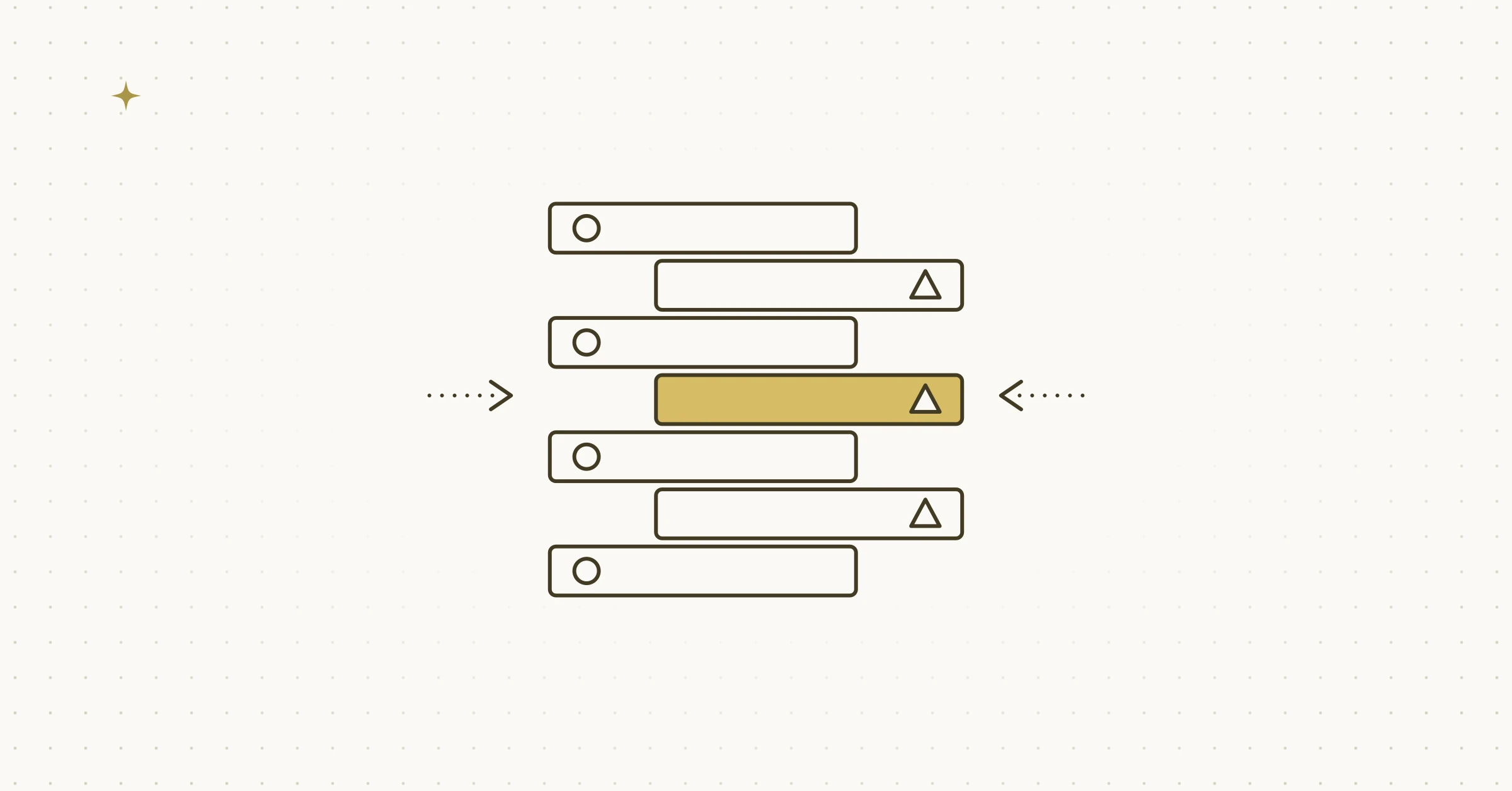
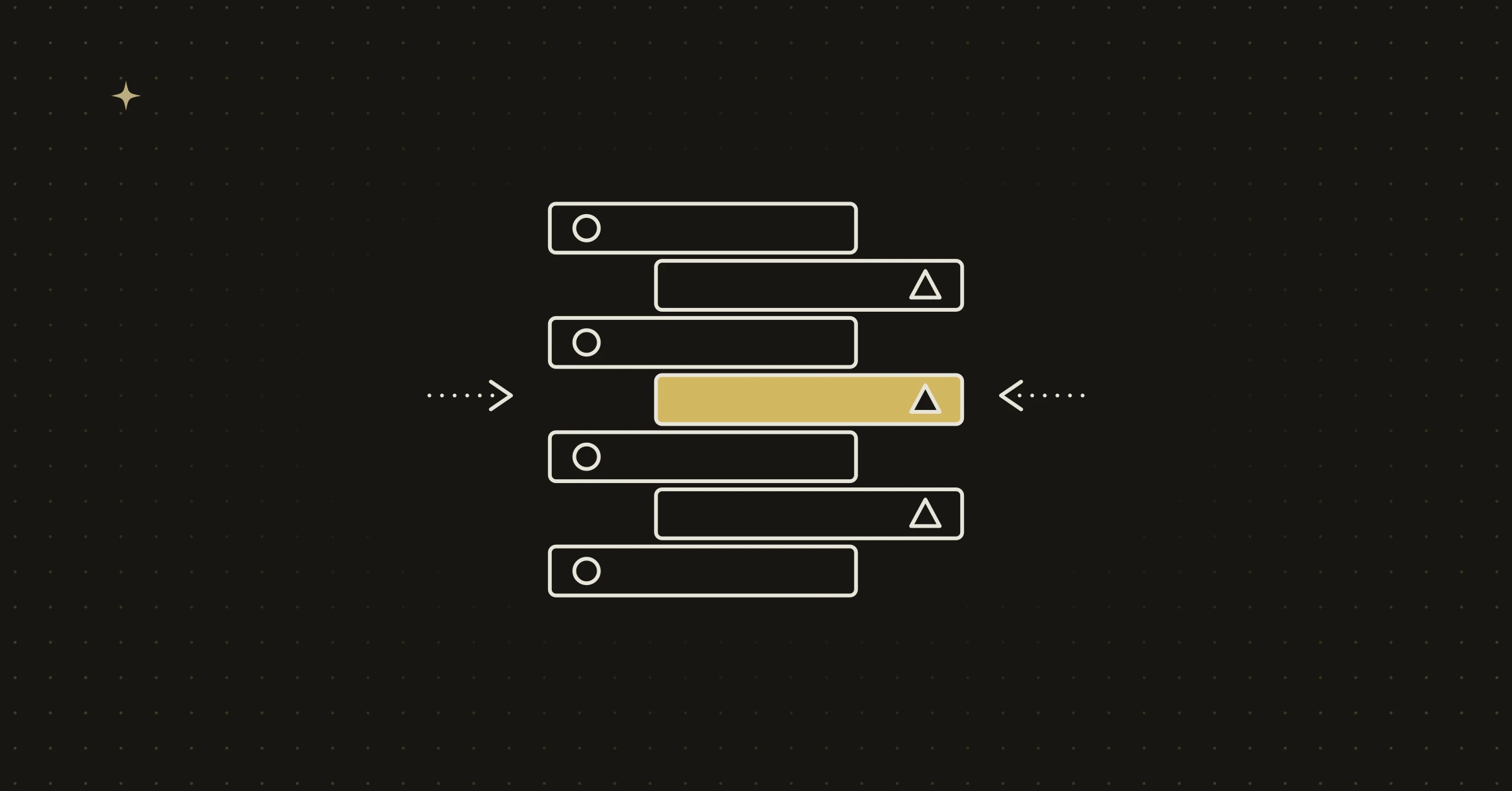
The explanation is the same in both studies. Mixing puts different kinds side by side, so you notice what tells them apart and learn to choose, while blocking only shows you what the examples of one kind have in common.
What interleaved practice teaches you
The general lesson is that practice should contain the decisions the real situation will ask of you. If the test, the job or the game will not tell you what kind of problem you face, your practice should not tell you either. Kornell and Bjork’s students also show that the feeling of easy progress is a poor guide to what you will remember.
- Exams. Collect problems from several chapters on one sheet, hide the chapter titles, and decide for each problem which method it needs before you solve it.
- Telling cases apart. Medical students reading X-rays and birdwatchers sort new cases into similar categories, the task where mixing helped most in the research.
- Sport and music. In a 1979 study, people who practised three arm movements in random order improved more slowly than people who practised them in blocks, but performed them better ten days later. A tennis player can mix forehands, backhands and volleys in one drill.
Blocked practice lets students succeed by relying on the order of the problems, a clue that the test removes. A statistical model that learns from accidental patterns in its training data fails on new data for a similar reason, as What Is Overfitting? explains.
When does mixing not help?
The most common mistake is to think that any mixing helps. In 2019 Matthias Brunmair and Tobias Richter combined 59 studies and found a moderate average benefit, but it depended strongly on the material. Interleaving helped most with paintings and other visual material and less with maths problems; for texts the result was unclear, and with word-learning tasks blocked practice did better. It also helped most when the kinds were similar and therefore easy to confuse, so there is little reason to expect a benefit from mixing statistics with French vocabulary, which nobody confuses.
The strongest objection is that interleaving is spacing in disguise. When four kinds are mixed, each kind automatically returns after a gap, and gaps help memory on their own. Rohrer’s finding about the choice of formula speaks against this as the whole explanation, and later work by Sean Kang and Harold Pashler suggested that the painting benefit came mostly from seeing different painters side by side. Researchers still debate how much each factor contributes.
Two more limits matter. Some famous experiments were small, with 18 students in Rohrer and Taylor’s second study, although a classroom trial in Florida with 787 seventh-graders later found the same direction, 62 against 38 percent on a test several weeks later. And in Rohrer’s studies, students first learned each method from a tutorial or a lesson, so interleaving belongs in practice and does not replace a first explanation.
Learn more
Interleaving has no single discoverer. In the 1960s and 1970s the psychologist William Battig found that learning was harder but lasted longer when the items interfered with each other. In 1979 John Shea and Robert Morgan showed the same effect for movement skills, where it is called contextual interference. Robert Bjork later counted interleaving among his “desirable difficulties”, and Rohrer brought the idea into mathematics teaching with the experiments described here.
The book that brings spacing, recall and mixing together, with the volume experiment among its examples, is reviewed in “Make It Stick” by Peter Brown, Henry Roediger and Mark McDaniel: Summary and Review.
Quiz
3 questions · up to 3 points
Open a question and pick one answer. Only your first answer counts: +1 if it is right, −1 if it is wrong.
In Rohrer and Taylor's 2007 experiment, how did blocked and mixed practice compare?
Show answer
Blocked practice gave better scores during practice, and mixed practice gave much better scores on the test a week later. The blocked group scored 89 percent during practice and 20 percent on the test, the mixed group 60 percent during practice and 63 percent on the test.
A student has a statistics exam with problems that need one of four different tests. Which way of practising uses interleaving best?
Show answer
Take problems from all four chapters, mix them on one sheet without chapter titles, and decide for each which test it needs. The exam will not say which test a problem needs. A mixed sheet without titles trains exactly that decision, which blocked practice skips.
What did Brunmair and Richter's 2019 meta-analysis of 59 studies find about interleaving?
Show answer
It helped on average, most with paintings and other visual material, less with maths, and not with word lists. The average effect was moderate. With word-learning tasks, practising each kind in a block did better, and for texts the result was unclear.
Your points are saved only in this browser for now. Accounts that keep them for good are on the way.
Continue learning: What Is Spaced Repetition? →The takeaway
Interleaved practice means mixing different kinds of problems in one session instead of practising them in blocks, so you must decide each time which method a problem needs. In a 2007 study, students who mixed four kinds of volume problems scored lower in practice but 63 percent on a test a week later, against 20 percent after blocked practice. It helps most when the kinds are easy to confuse and did not help with learning word lists. When you prepare for a test, mix problems from different chapters and hide the chapter titles.
References
- The Shuffling of Mathematics Problems Improves Learning. Doug Rohrer and Kelli Taylor, Instructional Science, 2007
The two experiments behind the worked example: spacing in the first, the four solids and blocked against mixed practice in the second.
- Learning Concepts and Categories: Is Spacing the "Enemy of Induction"?. Nate Kornell and Robert A. Bjork, Psychological Science, 2008
The painting experiments, with the result that most students still preferred blocking after their own test scores had shown the opposite.
- Similarity Matters: A Meta-Analysis of Interleaved Learning and Its Moderators. Matthias Brunmair and Tobias Richter, Psychological Bulletin, 2019
The review of 59 studies that shows for which materials interleaving helps, for which it does not, and why similarity between the kinds matters.
- A Randomized Controlled Trial of Interleaved Mathematics Practice. Doug Rohrer, Robert F. Dedrick, Marissa K. Hartwig and Chi-Ngai Cheung, Journal of Educational Psychology, 2020
The US What Works Clearinghouse summary of the classroom trial with 787 seventh-graders, including the test scores of both groups.