What Is Moral Foundations Theory?
5 min read≈ 1,150 words3 questions · up to 3 points
What this is about
In 1989 the US Supreme Court split five to four over a man who had burned the American flag, although no one disputed what he had done. You learn why people can judge the same act by different moral rules, how psychologists measure those rules, and why each political side misjudges the other. You also learn where the evidence for the theory is weak.
In a nutshell· skip ahead
Moral foundations theory says that moral judgments grow from a small set of fast, intuitive concerns that all people share: care, fairness, loyalty, authority and sanctity, with liberty and a split of fairness added later. Cultures and individuals weight these concerns differently, so people can look at the same act and see different moral problems.
In August 1984, at the end of a protest outside the Republican National Convention in Dallas, a man named Gregory Lee Johnson set fire to an American flag. No one was hurt, but several witnesses said they had been deeply offended, and Texas convicted him of “desecration of a venerated object”. When the US Supreme Court decided the case in 1989, five justices saw protected free speech and four saw an attack on something that deserved protection. How can careful people look at the same act and disagree about whether anything wrong happened at all?
What does moral foundations theory say?
Moral foundations theory is an answer from psychology. It says that our moral judgments grow from a small number of fast, intuitive concerns that all humans share, and that cultures, groups and individuals give these concerns different weights. A moral foundation is one such concern: a readiness to feel, quickly and without reasoning, that something is right or wrong. In the form that the psychologists Jonathan Haidt and Jesse Graham set out in 2007, there are five:
- Care/harm: concern about suffering and cruelty.
- Fairness/cheating: concern that people keep deals and get what they deserve.
- Loyalty/betrayal: concern for one’s group, team or nation.
- Authority/subversion: respect for legitimate rules, roles and traditions.
- Sanctity/degradation: the sense that some things are pure or sacred and can be soiled.
Now we run the flag case through all five. On care, the Court’s opinion notes that no one was physically injured, so this foundation stays quiet. On fairness, the flag had been taken from a flagpole by another protester, but Johnson was not charged with theft, so cheating was not the issue either. Loyalty, authority and sanctity are different, because the flag stands for the nation, burning it defies the state in public, and the Texas law itself used the language of the sacred.
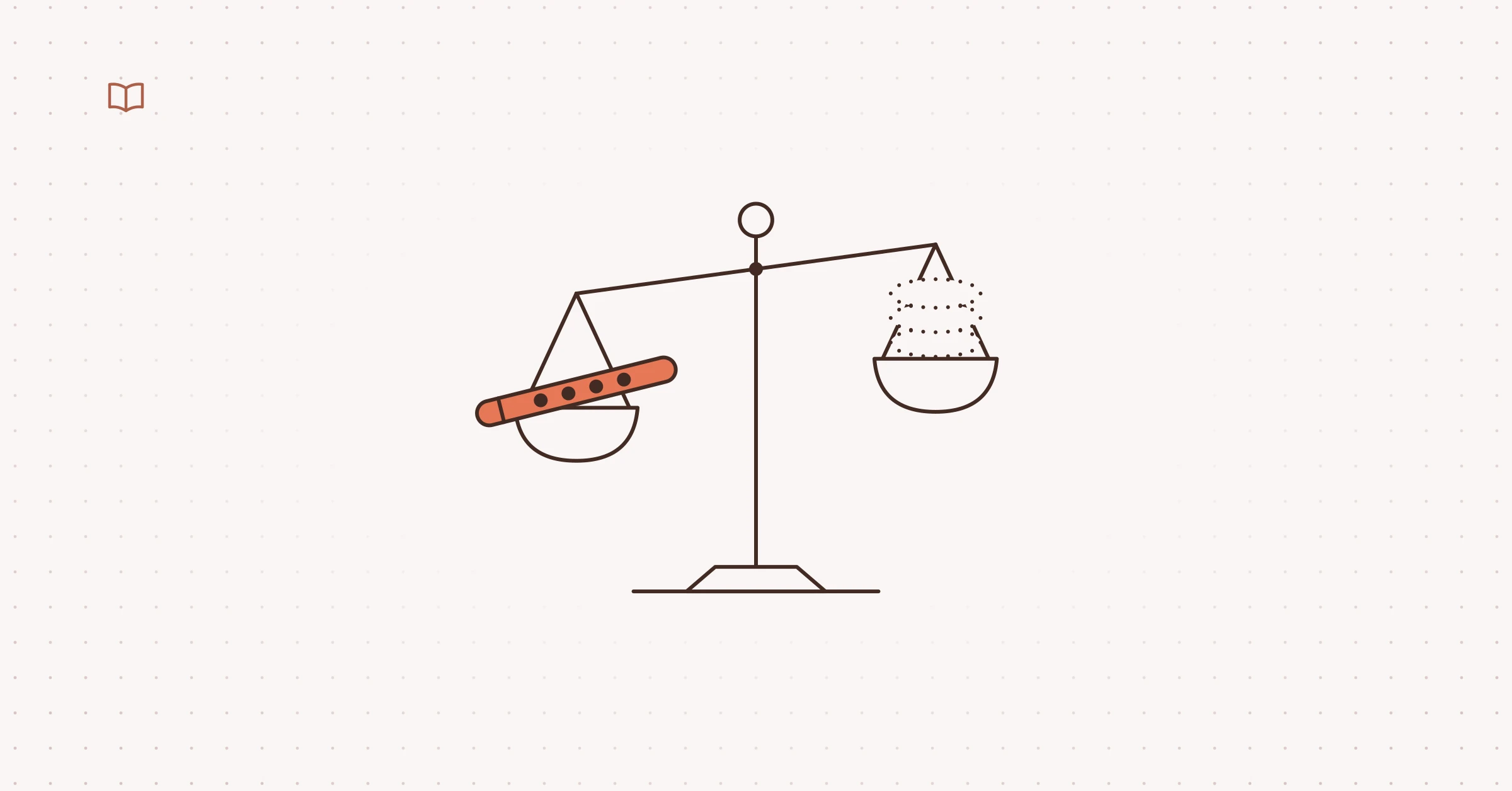
So a person who weights mainly care and fairness sees a harmless if ugly protest, while a person who also weights the other three sees desecration. Neither is missing a fact; they weigh the same facts with different foundations. In his dissent, Justice John Paul Stevens wrote that “the value of the flag as a symbol cannot be measured”.
Psychologists measure these weights with the Moral Foundations Questionnaire, which asks how relevant considerations such as “whether or not someone suffered emotionally” are when you decide whether something is right or wrong. In a 2011 study of 34,476 adults, mostly American, liberals rated care and fairness higher than conservatives did, while conservatives rated loyalty, authority and sanctity much higher. On a scale from 0 to 5, sanctity averaged 1.27 among liberals and 2.89 among conservatives.
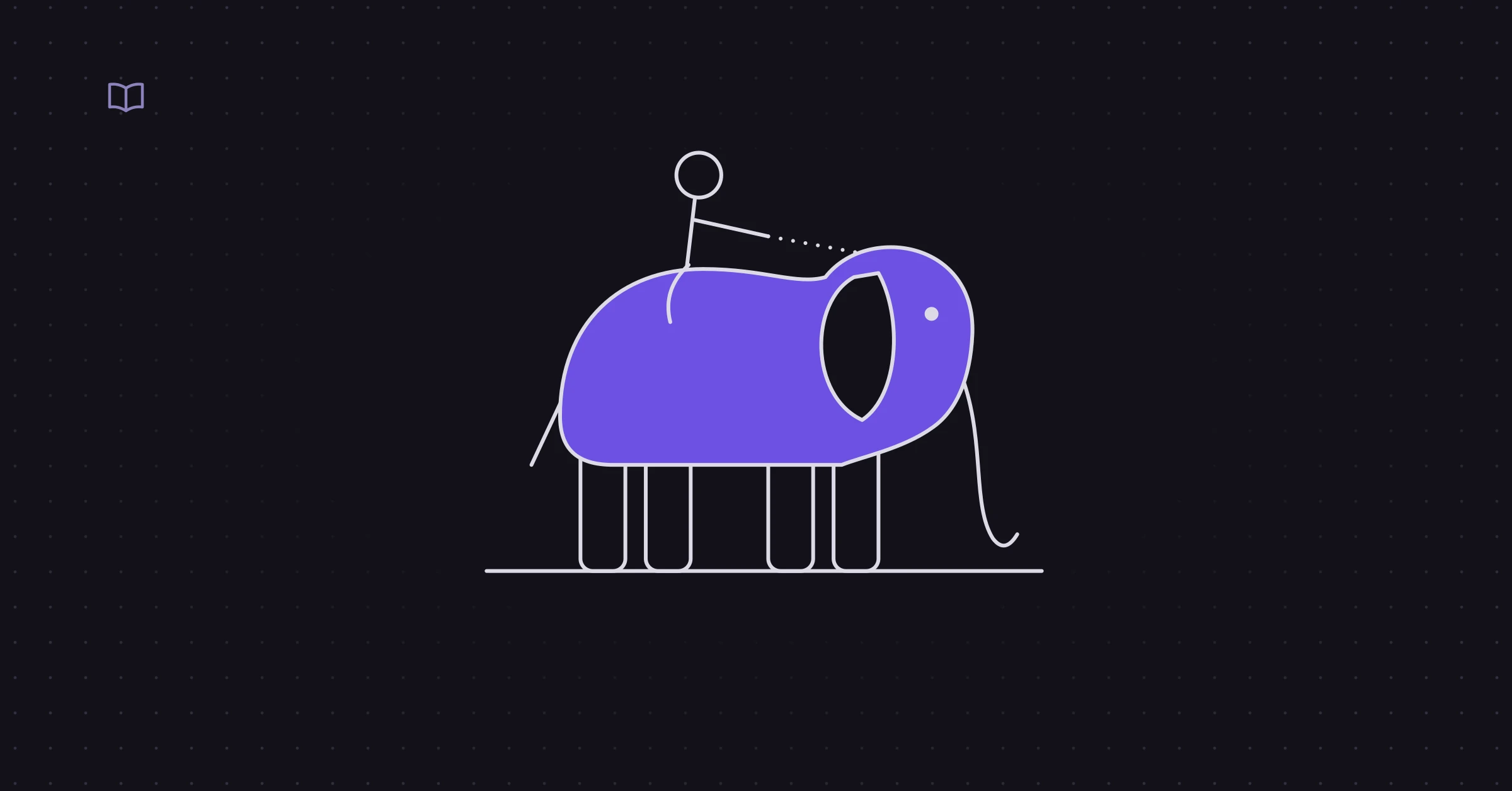
Haidt compares the moral mind to a tongue with a few taste receptors: every cuisine uses the same tongue, but each culture builds different dishes on it. The analogy fails in one respect, because nobody has found the foundations as fixed parts of the brain, and their number has changed more than once.
What moral foundations theory teaches you
When an argument about right and wrong goes in circles, ask which foundation the other person is using, because a reply that speaks only to your own foundation will not reach them.
- Politics and the news. In 2012 Graham, Brian Nosek and Haidt asked more than 2,000 Americans to fill in the questionnaire as a typical liberal or a typical conservative would. Both sides exaggerated the differences, and the surprising result was that liberals were the least accurate: they underestimated most how much conservatives care about harm and fairness.
- Persuasion. In 2015 Matthew Feinberg and Robb Willer reported six studies on issues such as same-sex marriage and military spending. Arguments were usually more persuasive when they were framed in the moral values of the audience instead of the speaker’s own.
- Work and family. A manager upset by a broken rule and an employee who says “nobody got hurt” are often weighting authority against care. Naming that difference turns a quarrel about character into a question about priorities.
Each side also tends to believe that it sees the facts as they are, a tendency that What Is Naive Realism? explains in detail.
Where does the theory run into trouble?
The most common misreading is that the theory ranks people. It does not say that a person who weights five foundations is more moral than one who weights two. It describes how people judge. Whether loyalty or sanctity should count morally is a question for ethics, and “Justice: What’s the Right Thing to Do?” by Michael J. Sandel: Summary and Review shows how a philosopher argues it through cases.
The measurement is the weakest point. In 2020 Kathryn Iurino and Gerard Saucier tested the short questionnaire in 27 countries and found that the five-factor model did not fit well across them. A 2019 study of 30 societies by Burak Doğruyol and colleagues, by contrast, found the five factors stable. The early samples came from volunteers on research websites, mostly in the United States. The list itself has also changed. Haidt and colleagues proposed liberty as a sixth foundation in 2012, and in 2023 Mohammad Atari, Haidt, Graham and colleagues published a new questionnaire, tested in 25 populations, that splits fairness into equality (everyone gets the same) and proportionality (rewards match contributions).
The map we have offered is surely incomplete.
The strongest objection comes from Chelsea Schein and Kurt Gray, whose 2018 theory of dyadic morality holds that all moral judgment comes from one template, the perception that someone harms someone else. On this view, people condemn the flag burner because they perceive a victim, such as the nation or the offended witnesses, and no separate sanctity foundation is needed. The debate is open, and the safest reading is that the foundations are a useful map of moral concerns, not proven parts of the mind.
Learn more
There is no single inventor. The theory began in 2004 with a paper by the psychologist Jonathan Haidt and the cultural psychologist Craig Joseph. It named four intuitive patterns, suffering, hierarchy, reciprocity and purity, and called in-group loyalty the best candidate for a fifth. They built on the anthropologist Richard Shweder’s three ethics of autonomy, community and divinity and on Alan Fiske’s models of social relationships. Jesse Graham, Brian Nosek, Ravi Iyer, Spassena Koleva, Peter Ditto and others turned the idea into the questionnaire and the large online surveys published from 2009 on.
Haidt explains the theory for general readers in his 2012 book, together with his view that intuition comes before reasoning. “The Righteous Mind” by Jonathan Haidt: Summary and Review covers its ideas and how they have held up. To see why people defend the judgment their foundations give them, read What Is Confirmation Bias?.
Quiz
3 questions · up to 3 points
Open a question and pick one answer. Only your first answer counts: +1 if it is right, −1 if it is wrong.
Which list gives the five original foundations of moral foundations theory?
Show answer
Care, fairness, loyalty, authority and sanctity. These five appear in the 2007 and 2011 work of Haidt, Graham and colleagues. Liberty was added later, and the 2023 questionnaire splits fairness into equality and proportionality.
A new employee ignores the dress code, harms no one and works well, but an older colleague is upset. In the terms of the theory, what is the most likely explanation of the disagreement?
Show answer
The colleague gives more weight to authority, the respect for rules and roles, than the new employee does. No one is hurt or cheated, so care and fairness are quiet. The colleague's concern fits authority, which people weight to very different degrees.
Which statement about moral foundations theory is correct?
Show answer
It describes how people judge, and it does not claim that weighting more foundations makes someone more moral. The theory is descriptive. It maps which concerns people use and does not rank conservatives above liberals or the other way round.
Your points are saved only in this browser for now. Accounts that keep them for good are on the way.
Continue learning: "The Righteous Mind" by Jonathan Haidt: Summary and Review →The takeaway
Moral foundations theory says that people judge right and wrong with a few shared intuitive concerns, such as care, fairness, loyalty, authority and sanctity, and that cultures and political groups weight them differently. In the 1989 flag burning case, some saw harmless protest while others saw the desecration of a sacred symbol. The questionnaire behind the theory fits some countries poorly, its list of foundations keeps changing, and critics argue that harm explains most of it. When a moral argument gets nowhere, ask which concern the other person is weighting.
Key quotes
“The map we have offered is surely incomplete.”
References
- Intuitive Ethics: How Innately Prepared Intuitions Generate Culturally Variable Virtues. Jonathan Haidt and Craig Joseph, Daedalus 133 (4), 55–66, 2004
The first statement of the idea, with four intuitive patterns (suffering, hierarchy, reciprocity, purity) and in-group loyalty named as a likely fifth.
- Mapping the Moral Domain. Jesse Graham, Brian A. Nosek, Jonathan Haidt, Ravi Iyer, Spassena Koleva and Peter H. Ditto, Journal of Personality and Social Psychology 101 (2), 366–385, 2011
How the Moral Foundations Questionnaire was built and tested on more than 34,000 people, with the liberal and conservative scores and the authors' own list of limits.
- The Moral Stereotypes of Liberals and Conservatives: Exaggeration of Differences across the Political Spectrum. Jesse Graham, Brian A. Nosek and Jonathan Haidt, PLOS ONE 7 (12), e50092, 2012
The study in which people answered the questionnaire as a typical liberal and a typical conservative, and both sides exaggerated how different the two groups are.
- Morality beyond the WEIRD: How the nomological network of morality varies across cultures. Mohammad Atari, Jonathan Haidt, Jesse Graham, Sena Koleva, Sean T. Stevens and Morteza Dehghani, Journal of Personality and Social Psychology 125 (5), 1157–1188, 2023
The revised questionnaire (MFQ-2), tested in 25 populations, which splits fairness into equality and proportionality.