Taoist Parables: Six Old Stories and What They Teach

6 min read≈ 1,240 words
What this is about
Why do the old Taoist stories leave out the moral that fables usually end with? You meet six of them, from a lost horse to a talking oak tree and a frog in a well, retold from the oldest sources. You also learn what they have in common and where their lesson stops being useful.
Most fables end by telling you what to think: the slow tortoise wins, so keep going. Taoist parables rarely do that. A man loses his horse and refuses to say whether it is bad luck, a tree survives because it is useless, and a philosopher wakes up unsure whether he is a man or a butterfly. Where do these stories come from, and is there one lesson behind them, or only a collection of strange tales?
Where do the Taoist parables come from?
Most of them come from two old Chinese books. The first is the Zhuangzi, named after the thinker Zhuang Zhou, who lived in the 4th century BCE. Scholars think its first seven chapters are closest to Zhuangzi himself, while later chapters were added by his followers. The second is the Huainanzi, a large book of philosophy put together at the court of Liu An, king of Huainan, and presented to the Han emperor in 139 BCE. Both belong to Taoism, the Chinese tradition built around the Tao, “the way” in which all things move by themselves.
Some stories sold online as Taoist parables have no such source. The “parable of the old man and the hammer” appears in neither book, and no older Chinese source for it can be found, so it is left out here. The six stories below all come from the old books.
What do the six stories say?
- The lost horse, from chapter 18 of the Huainanzi. An old man near the northern frontier loses his horse and asks his neighbours how they know this is not good fortune. The horse returns with a second horse, his son falls from it and breaks his leg, and when war comes, the injury keeps the son alive. What Is the Parable of the Chinese Farmer? tells it in full.
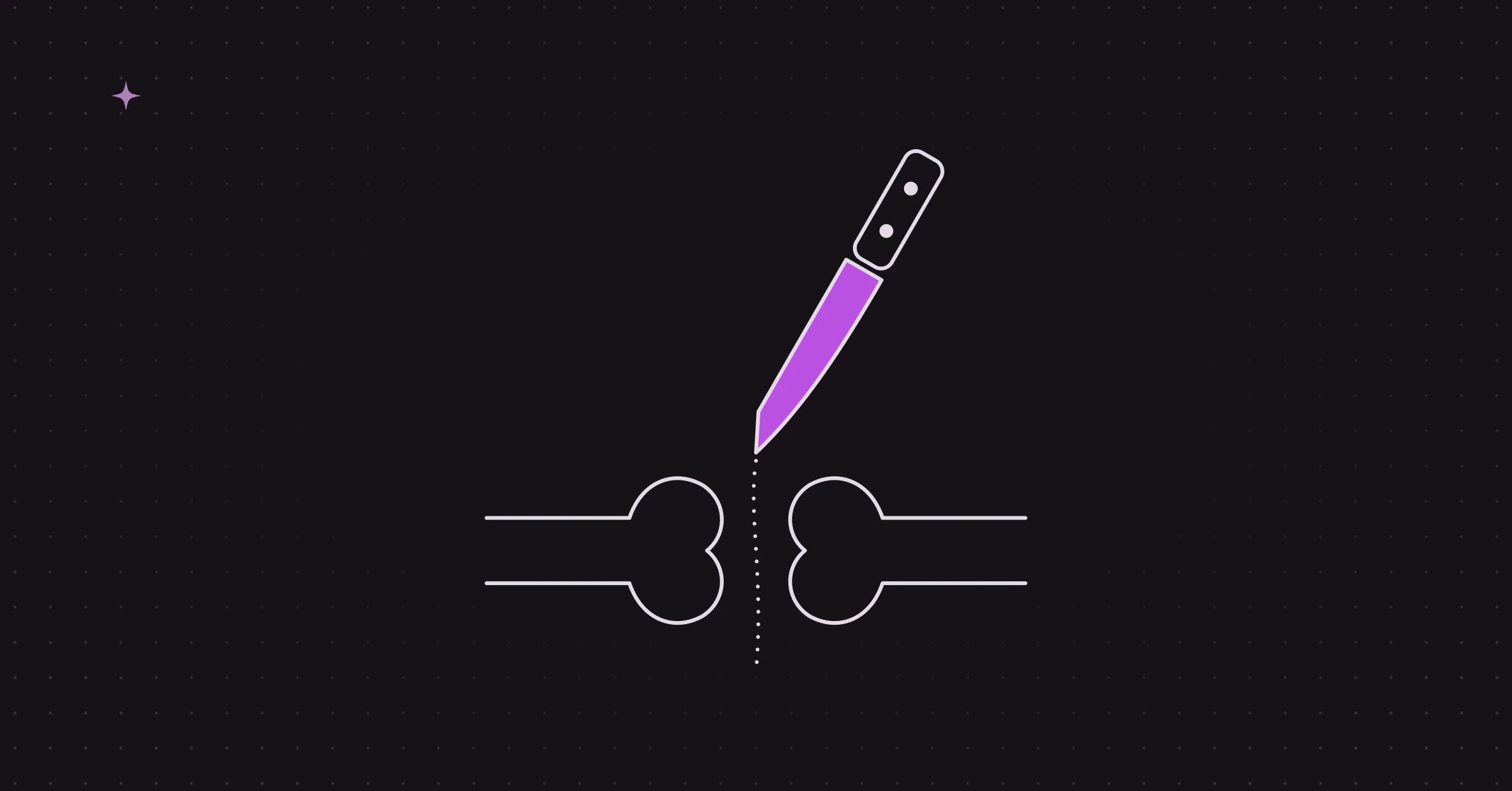
- Cook Ding, from chapter 3 of the Zhuangzi. A cook carves an ox so smoothly that it looks like a dance, and his knife has lasted nineteen years because he cuts through the gaps between the joints. What Is the Tao? explains this story step by step.
- The useless tree, from chapter 4. A master carpenter named Shi passes a huge oak that serves as an altar for the spirits of the land. He does not even look at it, because its wood is good for nothing: boats made from it would sink and coffins would rot. That night the oak appears to him in a dream and explains that trees with good fruit or timber are cut down early, and that its uselessness is the reason it has grown so old.
- The butterfly dream, from chapter 2. Zhuangzi dreams that he is a happy butterfly and has no idea that he is Zhuangzi. Then he wakes up and is not sure which one is the real case.
- The frog in the well, from chapter 17. A frog in an old, broken well boasts to a great turtle from the Eastern Sea about its home. The turtle gets stuck at the edge of the well and then describes the sea, which no flood makes higher and no drought makes lower, and the frog is speechless.
- The happiness of fish, also from chapter 17. Zhuangzi and his friend Huizi, a logician, stand on a bridge over the river Hao. Zhuangzi says the fish are swimming about happily, and Huizi asks how he can know that when he is not a fish.
In James Legge’s public-domain translation of 1891, where Zhuangzi is called “Kâu”, the butterfly dream ends like this:
I did not know whether it had formerly been Kâu dreaming that he was a butterfly, or it was now a butterfly dreaming that it was Kâu.
What do the stories have in common?
At first the six stories seem to teach different things, such as patience, skill and modesty, but I think they share one move. Each story starts from a point of view that the listener takes for granted, and then it takes that point of view away.
In the lost horse, the fixed point is the moment of judgment, because the neighbours decide too early what an event means. In the useless tree, it is the carpenter’s idea of “useful”: good for boats and coffins is only one kind of useful, and for the tree the most useful thing was to be left alone. The frog judges the world by the size of its well, and the same chapter says it directly in Legge’s translation: “A frog in a well cannot be talked with about the sea.” The butterfly dream goes furthest, because it takes away even the certainty about who is judging.
Cook Ding seems different, because he is a man of practice and not a puzzle, but his skill comes from the same change of view. He says that after three years he no longer saw the ox as a whole, only the lines where it would come apart. Taoists call this wu wei, usually translated as “non-action”, which means acting without forcing, by working with the way things already move. It does not mean doing nothing, since the cook still carves every ox.
Why do the stories not state their moral?
The stories leave out the moral on purpose, because a stated moral would be one more fixed point of view. If the lost horse ended with “every misfortune is a hidden blessing”, it would only replace the neighbours’ early judgment with another early judgment. The old man waits until he can see more, which is the better answer.
The happiness of fish shows this best. Huizi argues logically that Zhuangzi is not a fish and so cannot know what a fish feels. Zhuangzi first replies that Huizi is not Zhuangzi either, so how can he know what Zhuangzi knows? In the end he says that Huizi’s question already took his knowledge for granted, and that he knows the fish’s happiness from where he stands, on the bridge over the Hao. The most useful reading is that both men are right: Huizi about the limits of knowledge, and Zhuangzi about the fact that we always understand other beings from where we stand.
Where does the lesson stop being useful?
The stories have a real limit, and Huizi would point to it first. If every point of view can be taken away, it becomes hard to say that anything is better or worse. A doctor cannot wait to see whether a broken leg is good fortune, and read as a rule for everything, the parables become an excuse for passivity, which is the opposite of what Cook Ding does.
The stronger reading treats them as a correction, not as a rule. They warn you about the moment when one way of measuring starts to feel like the only way. Alan Watts gave the same warning in modern form, which The Wiggliness of the World: Alan Watts on Straight Lines and a Curved Reality explains. The short book behind all these ideas is reviewed in “Tao Te Ching” by Laozi: Summary and Review.
The next time you are sure that something is a disaster or a waste of time, ask the question these stories keep asking: bad or useless from whose point of view, and judged at what moment? Often the honest answer is “mine, and too early”, and that is a good reason to look again before you act.
Think about it
There is no right answer here. Take a minute before you move on.
- 1.Which of the six stories describes a situation you are in right now, and what would change if you saw it from the other side?
- 2.Think of something you once judged useless, in yourself or in someone else. Was it really useless, or only useless for one purpose?