What Is the Learning Styles Myth?

5 min read≈ 1,190 words3 questions · up to 3 points
What this is about
Around nine in ten teachers say students learn better when lessons match their learning style, and many students know whether they are 'visual' or 'auditory'. You learn which experiment can show whether this matching works, what happened when researchers ran it, and why the belief stays so popular although the results point the other way.
In a nutshell· skip ahead
The learning styles myth is the belief that each person learns best through one preferred channel, such as seeing, hearing or doing, so that teaching matched to that channel improves learning. People do have preferences, but experiments find that matching lessons to them does not make anyone learn more. The best way to present something depends mostly on the material.
Many people remember a questionnaire from school that asked whether they would rather look at a map, listen to directions or just start walking, and that ended with a label such as “visual learner”. Surveys find that most teachers in many countries believe lessons matched to such labels help students learn more. Do they?
What is the learning styles myth?
The learning styles myth is the belief that each person learns best through one preferred channel, so that lessons presented in that channel make them learn more. The most popular version is VARK, a questionnaire by the New Zealand educator Neil Fleming that sorts people into visual, aural, read/write and kinesthetic (learning by doing) learners. The claim that matching teaching to such a type improves learning has its own name, the meshing hypothesis, and it is this claim, not the existence of preferences, that careful research has failed to support.
Most people do prefer some formats to others, and a questionnaire can record that preference. The myth is the further step from “I like pictures” to “I learn more when I get pictures and less when I get text”.
How would you test whether matching helps?
In 2008 four memory researchers, Harold Pashler, Mark McDaniel, Doug Rohrer and Robert Bjork, reviewed the research and described the experiment that could decide the question. It has four steps.
- Sort the learners. A questionnaire divides people into a visual group and an auditory group.
- Divide each group at random. Half of each group gets the lesson as text or pictures, the other half hears the same lesson spoken.
- Test everyone the same way. All four groups take the same test on the same content.
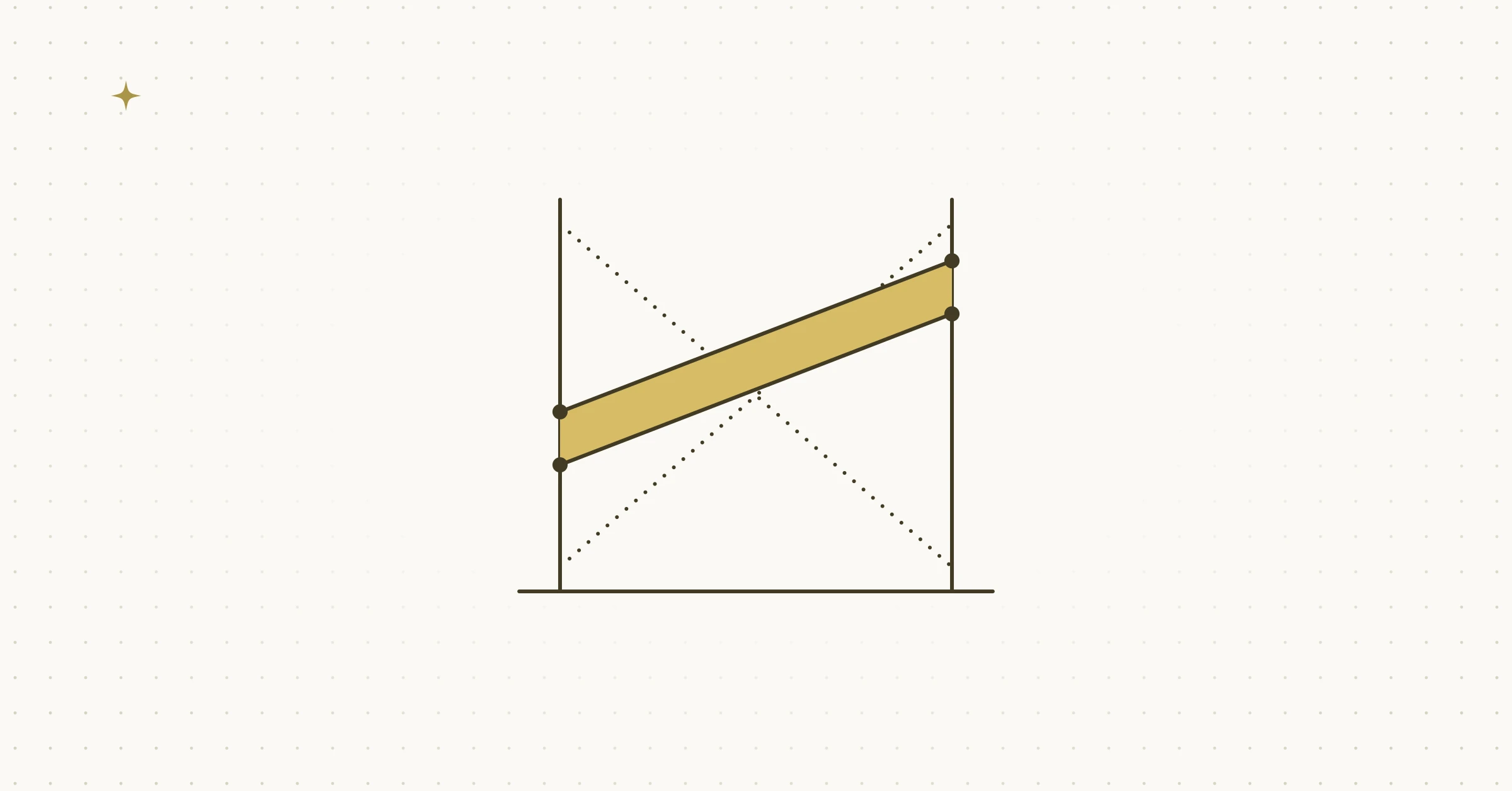
- Look for the crossover. The meshing hypothesis predicts that visual learners do better with the visual lesson and auditory learners do better with the spoken one. Drawn as a graph, the two lines cross.
The fourth step is where most supposed evidence fails. If both groups learn more from the visual lesson, the visual lesson is the better method for this material, and the learners’ styles made no difference. Pashler’s team found that very few studies had used the crossover design at all, and that the few which did mostly found no crossover.
there is no adequate evidence base to justify incorporating learning-styles assessments into general educational practice
Later studies ran the test directly. In 2015 Beth Rogowsky, Barbara Calhoun and Paula Tallal measured whether college-educated adults preferred to learn by listening or by reading. They then gave them the same nonfiction text either as an audiobook or as an e-text and tested their understanding at once and two weeks later. The predicted crossover did not appear at either test, and in 2020 the same team found the same result with fifth-graders.
The most surprising result comes from a 2017 study by Abby Knoll and colleagues. Fifty-two students first answered a questionnaire on whether they preferred words or pictures, and then learned pairs of words and pairs of pictures. Everyone remembered the pictures better, whatever their preference, but right after studying, students felt more confident about the pairs in their preferred format. The style changed how learning felt, not how much was learned.
Why do so many people still believe it?
The belief survives for four reasons, and none of them requires anyone to be foolish. The first is that preferences are real and easy to feel, as Knoll’s students showed, so the idea matches daily experience. The second is that the best format really does differ between materials: a map is best seen and a foreign pronunciation best heard, and it is easy to mistake this difference in material for a difference in people. The third is that the idea sounds respectful, because it promises to treat every student as an individual. Finally, a large industry of tests and training courses has grown around the idea, with dozens of competing models.
What the learning styles myth teaches you
The useful question is not “What type of learner am I?” but “What form does this material need, and how will I check that I have learned it?”. A second lesson reaches beyond school: the feeling that a method suits you is a weak guide to whether it works.
- Studying. Learn the bones of the hand from labelled diagrams and a language’s sounds from recordings, whatever your label. Then test yourself, the method explained in What Is the Testing Effect?, because recalling works for everyone.
- Limiting yourself. “I can’t learn from books, I’m a visual learner” can stop people from using the format that a subject needs. In a study of 426 anatomy students, most did not study in line with their VARK result, and those who did got no better grades.
- Judging any “matched” product. Diets for your type, ads for your personality, courses for your brain: a claim that something works better for a certain kind of person needs the same crossover evidence, and a satisfied customer is not that evidence.
Doctors use the same test when they call a drug suited to one group of patients: it must help that group more than others. Asking which result would really prove a claim also protects you against the error described in What Is Confirmation Bias?.
Where does the critique reach its limits?
The common mistake on the other side is to conclude that everybody learns in the same way. People differ in what they already know, in their interests and in abilities such as spatial reasoning, and those differences can matter for teaching. The research shows only that sorting people by preferred channel, and teaching each channel separately, adds nothing.
The strongest objection is that absence of evidence is not proof. Pashler’s team said themselves that many style models had never been tested properly, so not every version has been ruled out, and matching might still raise motivation without raising test scores. Still, the studies that have used the right design point the same way, and the burden of proof lies with those who sell the tests.
Learn more
The idea of learning styles has no single originator. Dozens of models appeared from the 1970s onwards, among them those of David Kolb and of Rita and Kenneth Dunn. VARK came from Neil Fleming at Lincoln University in New Zealand and was published with Colleen Mills in 1992 as a prompt for students to reflect on how they learn. In 2004 a British review led by Frank Coffield counted 71 models and advised against teaching based on any one of them alone. The 2008 review by Pashler and his colleagues then made the crossover test the standard.
McDaniel later wrote about learning styles and what to do instead in a book reviewed in “Make It Stick” by Peter Brown, Henry Roediger and Mark McDaniel: Summary and Review. For methods that do help every learner, read What Is Spaced Repetition? and What Is Interleaved Practice?.
Quiz
3 questions · up to 3 points
Open a question and pick one answer. Only your first answer counts: +1 if it is right, −1 if it is wrong.
According to Pashler and his colleagues, which result would support teaching people in their learning style?
Show answer
Visual learners do better with visual teaching, and auditory learners do better with auditory teaching, in the same experiment. Only this crossover pattern shows that the best method depends on the learner. Pashler's review found almost no studies with this result.
A student who calls herself an auditory learner has an anatomy exam on the bones of the hand. Which plan fits the research best?
Show answer
Study labelled diagrams of the hand, because the material is visual, and test herself by naming the bones from memory. The best format depends on the material, and the bones of the hand are a spatial thing to see. Testing herself helps whatever her preference.
Which conclusion goes further than the evidence against learning styles allows?
Show answer
That all people learn in the same way and differ in nothing that matters for teaching. People differ in prior knowledge, interests and abilities such as spatial skill. The research only shows that matching teaching to a preferred style does not help.
Your points are saved only in this browser for now. Accounts that keep them for good are on the way.
Continue learning: "Make It Stick" by Peter Brown, Henry Roediger and Mark McDaniel: Summary and Review →The takeaway
The learning styles myth is the belief that people learn more when teaching matches their preferred style, such as visual or auditory, an idea researchers call the meshing hypothesis. Testing it needs a crossover experiment in which each group of learners does better with its own method, and studies with this design, such as a 2015 audiobook and e-text study with adults, found no such benefit. People still differ in knowledge and abilities, so the evidence does not say that everyone learns alike. When you study, choose the format that suits the material and test yourself.
References
- Learning Styles: Concepts and Evidence. Harold Pashler, Mark McDaniel, Doug Rohrer and Robert Bjork, Psychological Science in the Public Interest, 2008
The review that defined the meshing hypothesis, described the crossover experiment needed to test it, and found almost no evidence for it.
- Providing Instruction Based on Students' Learning Style Preferences Does Not Improve Learning. Beth A. Rogowsky, Barbara M. Calhoun and Paula Tallal, Frontiers in Psychology, 2020
The fifth-grade follow-up to the 2015 audiobook and e-text study with adults, open to read, with a clear summary of the earlier experiments.
- How Common Is Belief in the Learning Styles Neuromyth, and Does It Matter? A Pragmatic Systematic Review. Philip M. Newton and Atharva Salvi, Frontiers in Education, 2020
Surveys of educators from 18 countries combined: on average 89 percent said they believe in matching teaching to learning styles.
- Learning Style, Judgements of Learning, and Learning of Verbal and Visual Information. Abby R. Knoll, Hajime Otani, Reid L. Skeel and K. Roger Van Horn, British Journal of Psychology, 2017
The experiment in which preferred style changed how confident students felt, but not what they remembered.