What Is the Block Universe?
5 min read≈ 1,200 words3 questions · up to 3 points
What this is about
You sit on a park bench at night while a friend walks past, and according to relativity your two ideas of what is happening right now in the Andromeda galaxy differ by about four days. You learn how this small fact became an argument that the future is already as real as the past, which hidden assumption the argument needs, and what it does and does not mean for free will.
In a nutshell· skip ahead
The block universe, also called eternalism, is the view that the past, the present and the future all exist equally, as parts of one four-dimensional spacetime. 'Now' is then like 'here': it marks where you are, not a special moment of reality. The view draws its main support from special relativity, which gives no single, shared present.
You sit on a park bench on a clear autumn night, and a friend strolls past you at walking pace. Above you, you can see a faint smudge, the Andromeda galaxy, 2.5 million light years away. Relativity says that at the moment your friend passes you, the two of you disagree about what is happening in Andromeda “now” by about four days. Some physicists and philosophers have concluded from this that tomorrow is already there.
What is the block universe?
The block universe is the view that all events, past, present and future, exist equally as parts of one four-dimensional spacetime, the combination of three dimensions of space and one of time. Philosophers call this view eternalism. On this picture, “now” works like “here”: it tells you where you are in the block, but it does not mark the edge of reality. The dinosaurs, your breakfast this morning and the people who will live in your town in the year 3000 all have their places in spacetime, just as Paris and Tokyo have their places on a map.
The main rival is presentism, the view that only the present exists: the past is gone, and the future is not yet real. Presentism is close to how most of us feel about time, and the reason to give it up comes from physics. In 1908 the mathematician Hermann Minkowski showed that Einstein’s special relativity becomes a simple geometry once space and time are treated as one whole.
Henceforth, space for itself, and time for itself shall completely reduce to a mere shadow, and only some sort of union of the two shall preserve independence.
In this geometry, the history of every object is a line through spacetime, called its world line. Your world line and that of a star in Andromeda run side by side, very far apart.
Why would relativity make the future real?
In 1966 and 1967 the physicist Wim Rietdijk and the philosopher Hilary Putnam published versions of one argument that the future exists. Here it is with the bench and the friend.
- The present is real. This is the presentist’s own starting point: whatever is happening now, for you, exists.
- Your friend is real. She is right beside you, at the same place and time, so she belongs to your present.
- Your friend’s present is different from yours. Relativity says that observers who move differently slice spacetime into different sets of “simultaneous” events. The slices tilt slightly toward each other, as What Is the Relativity of Simultaneity? shows with Einstein’s train. The offset is about the speed times the distance, divided by the square of the speed of light. At 5 kilometres per hour and 2.5 million light years, that is about 4.2 days, so if she walks toward Andromeda, events there that are four days in your future are part of her present.
- No observer is special. Relativity gives no reason to treat your slice as the true one and hers as a mistake.
- So the future is real. If what is present for a real observer is real, the events four days ahead in Andromeda are real, although they still lie in your future. With other speeds, distances and chains of observers, the same reasoning reaches any future event.
Neither of you can see those events for 2.5 million years, but the argument is about what exists, not what anyone can observe.
What the block universe teaches you
The block universe shows how a strong conclusion can follow from a small, measured fact combined with one quiet assumption, here that “simultaneous with something real” means “real”. Ask of any bold argument: which step is measured, and which step is a definition someone chose?
- Reading about science. Headlines such as “physics proves that time is an illusion” mix a tested result, the relativity of simultaneity, with an interpretation, eternalism. Once you know where the measurement ends and the interpretation begins, you can judge how much of the headline physics really supports.
- Free will and responsibility. Many people fear that a future which already exists makes their decisions pointless, but the block view does not say that. Your decisions are events in the block, and the future you will live in exists partly because of what you decide.
- Arguments in general. The Rietdijk-Putnam argument is valid, so anyone who rejects its conclusion must reject a premise. Looking for the weakest premise, instead of fighting the conclusion, helps in any disagreement, from politics to a dispute at work.
Does the argument really prove that the future exists?
It does not, although it makes presentism harder to defend. The most common misreading is that in a block universe everything happens “at once” or that the future is fixed by fate. “At once” is exactly the idea relativity takes away, and whether the laws of physics determine the future is a separate question from whether future events exist.
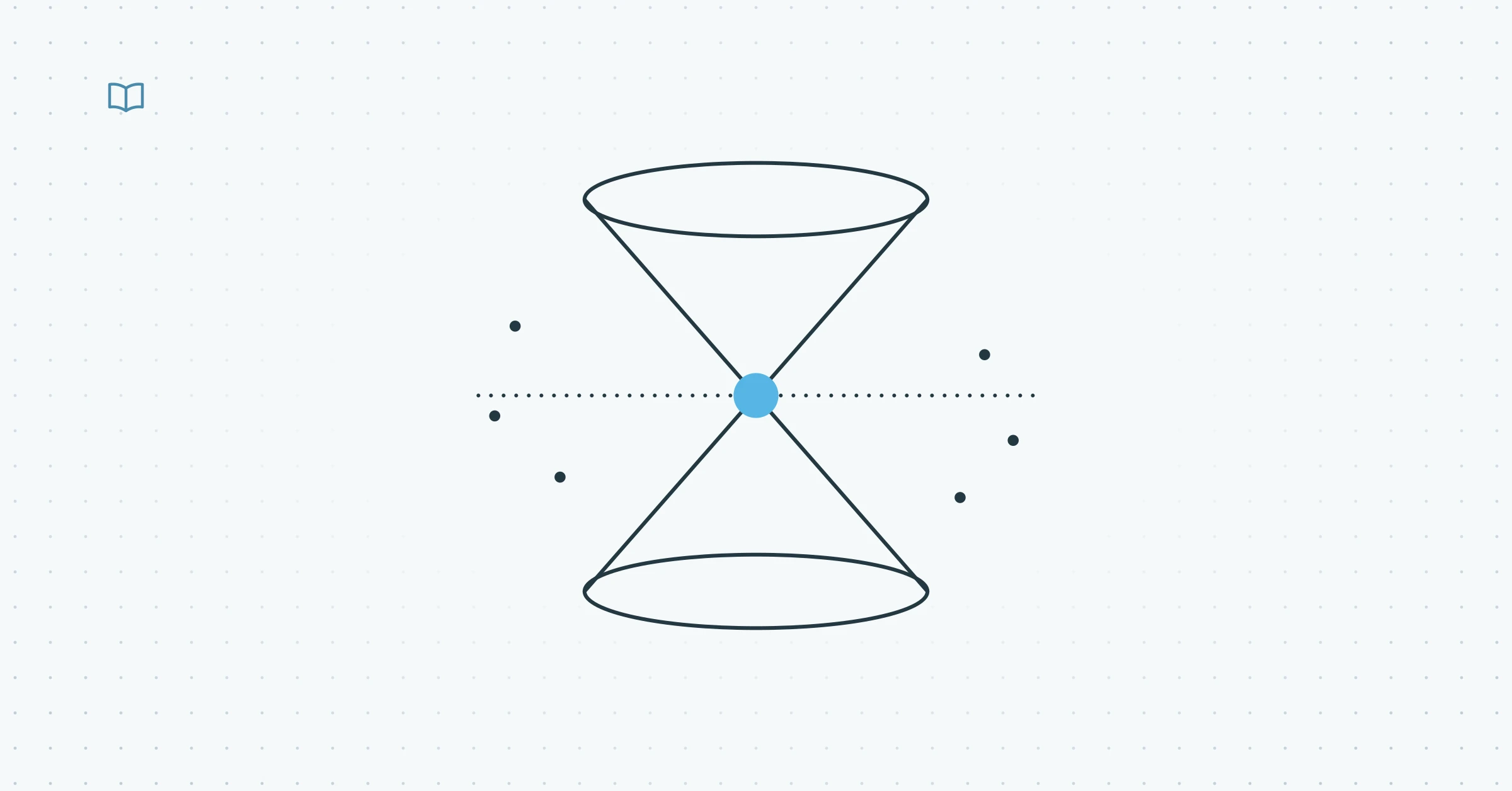
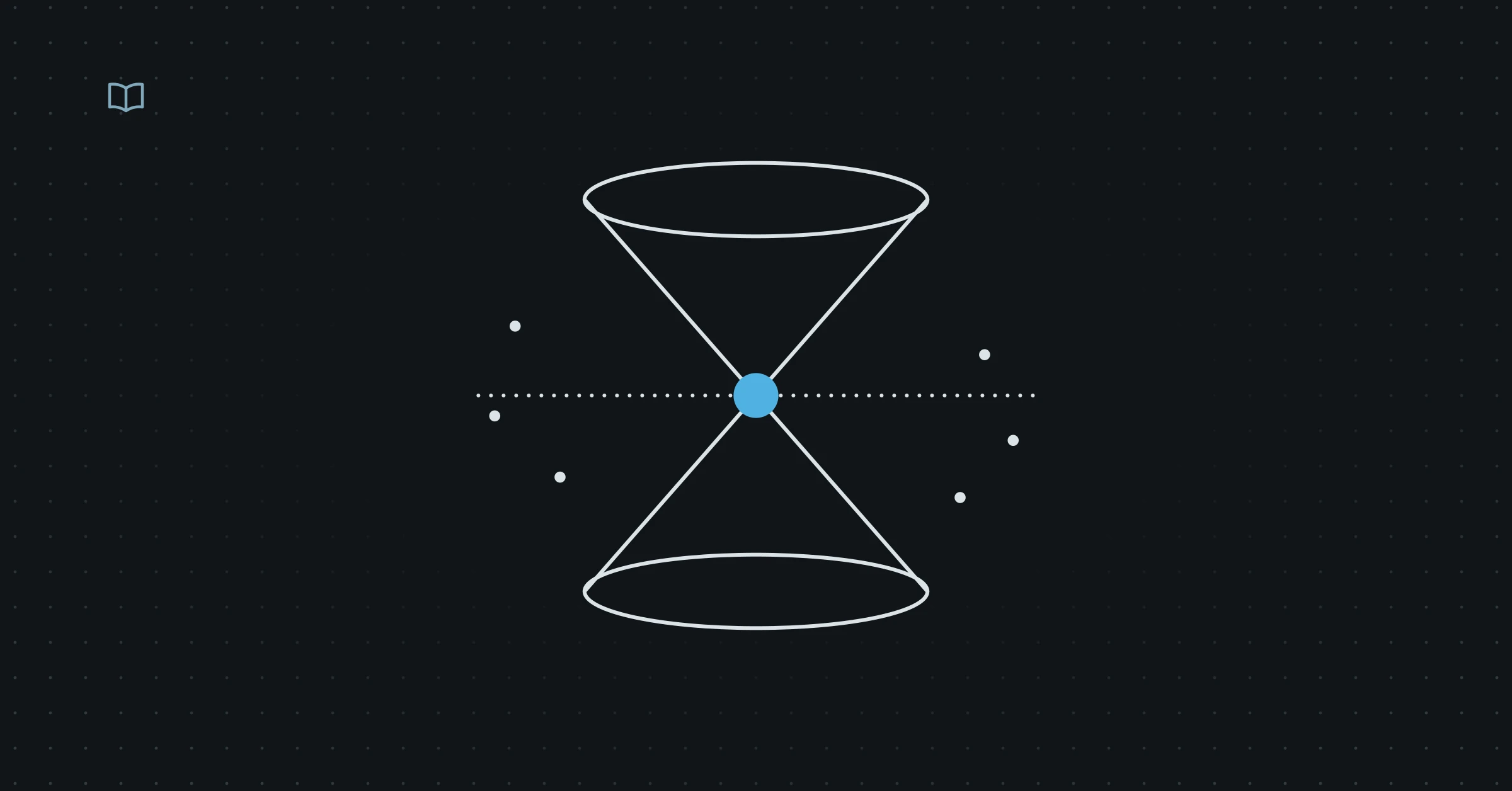
The strongest objection targets step 5. In 1968 the philosopher of science Howard Stein argued that the right relation in relativity is not simultaneity but the past light cone, the set of events that could already have sent a signal to you. On his reading, an event has “become” for you once it lies in your past light cone, and nothing outside it needs to be settled yet.
Presentists have a second reply: perhaps there is a preferred slice that experiments cannot detect, such as the frame in which the leftover radiation from the Big Bang looks the same in every direction. The price of this reply is a true present that no experiment can find and no equation of relativity uses.
Quantum physics adds a third doubt. The cosmologist George Ellis and the physicist Tony Rothman proposed a “crystallizing block universe”, in which the past is fixed but the future stays open until quantum events become definite. A reader will also ask why, if nothing flows in the block, we remember the past and not the future. Physics explains that asymmetry with entropy, which was very low in the early universe and has grown ever since, as What Is Entropy? explains. The block universe is therefore a strong interpretation of relativity, not a result of it.
Learn more
The block universe has no single originator. Minkowski supplied the four-dimensional geometry in a lecture in Cologne on 21 September 1908, less than four months before he died. Rietdijk (1966) and Putnam (1967) turned it into an argument about what exists, and Stein replied in 1968. Roger Penrose made the argument famous in The Emperor’s New Mind (1989) with two people walking past each other and a space fleet in Andromeda.
The physicist Carlo Rovelli rejects both presentism and the block universe as a world without change, and argues for a world of events in partial order, which “The Order of Time” by Carlo Rovelli: Summary and Review sets out. For how moving clocks measure different lengths along their world lines, read What Is Time Dilation?.
Quiz
3 questions · up to 3 points
Open a question and pick one answer. Only your first answer counts: +1 if it is right, −1 if it is wrong.
What does the block universe view, or eternalism, say about the future?
Show answer
Future events exist just as past and present events do, as parts of one four-dimensional spacetime. That is the core claim. 'Now' is treated like 'here', a mark of where an observer is, not a boundary of what exists.
You sit still while a friend walks past you toward the Andromeda galaxy, 2.5 million light years away. How do your 'nows' in Andromeda compare?
Show answer
Her 'now' in Andromeda is a few days later than yours, because simultaneity depends on how each of you moves. The offset is roughly her speed times the distance, divided by the square of the speed of light. At 5 kilometres per hour it comes to about 4.2 days.
Does the block universe mean that your choices make no difference?
Show answer
No, because your choices are themselves events in the block and help cause the events that follow them. If the future exists, it exists partly because of what you decide. Whether a block universe leaves room for free will is debated, but it does not make choices idle.
Your points are saved only in this browser for now. Accounts that keep them for good are on the way.
Continue learning: What Is the Relativity of Simultaneity? →The takeaway
The block universe, or eternalism, says that past, present and future events all exist as parts of one four-dimensional spacetime, so 'now' only marks your position, like 'here'. The Rietdijk-Putnam argument supports it with relativity: a friend walking past you at 5 kilometres per hour has a 'now' in the Andromeda galaxy about four days ahead of yours. The argument needs the premise that whatever is simultaneous with a real observer is real, and critics reject that premise. Use it to separate what physics measures from what an interpretation adds.
Key quotes
“Henceforth, space for itself, and time for itself shall completely reduce to a mere shadow, and only some sort of union of the two shall preserve independence.”
References
- Being and Becoming in Modern Physics. Steven Savitt, Stanford Encyclopedia of Philosophy, 2021
The best overview of the debate: the Rietdijk-Putnam argument, Penrose's walkers and Andromeda, Stein's reply based on light cones and Gödel's view of time.
- Time and Physical Geometry. Hilary Putnam, The Journal of Philosophy 64 (8): 240-247, 1967
Putnam's short paper arguing that special relativity leaves no room for a present that alone is real. Access may require a library login.
- Space and Time. Hermann Minkowski, translated by Meghnad Saha, Wikisource, from The Principle of Relativity (University of Calcutta, 1920), 1908
The 1908 lecture in Cologne that turned special relativity into the geometry of a four-dimensional spacetime, with its famous opening.
- Time and Spacetime: The Crystallizing Block Universe. George F. R. Ellis and Tony Rothman, International Journal of Theoretical Physics 49: 988-1003, 2010
A physicist's alternative to the fixed block, in which the present is the place where the open quantum future becomes a definite past.