What Is Time Dilation?

6 min read≈ 1,250 words3 questions · up to 3 points
What this is about
Every GPS satellite carries an atomic clock that engineers set to tick slightly too slowly before launch, on purpose. You learn why two perfect clocks stop agreeing when one moves fast or sits higher above the Earth, and how airliners, particles from space and lab clocks have measured it. You also learn what the twin paradox really says about ageing.
In a nutshell· skip ahead
Time dilation is the fact, predicted by Einstein's relativity, that time passes at different rates for different clocks. A clock that moves fast relative to you runs slow, and a clock lower down in a gravitational field runs slow compared with one higher up. The effect is real, measured with atomic clocks, and GPS corrects for it every day.
Before a GPS satellite is launched, engineers set its atomic clock to tick slightly too slowly. Atomic clocks are among the most precise instruments people have built, and GPS works only if the satellite clocks agree with clocks on the ground to within a few billionths of a second. So why would anyone build a deliberately wrong clock and send it into orbit?
How can two perfect clocks disagree?
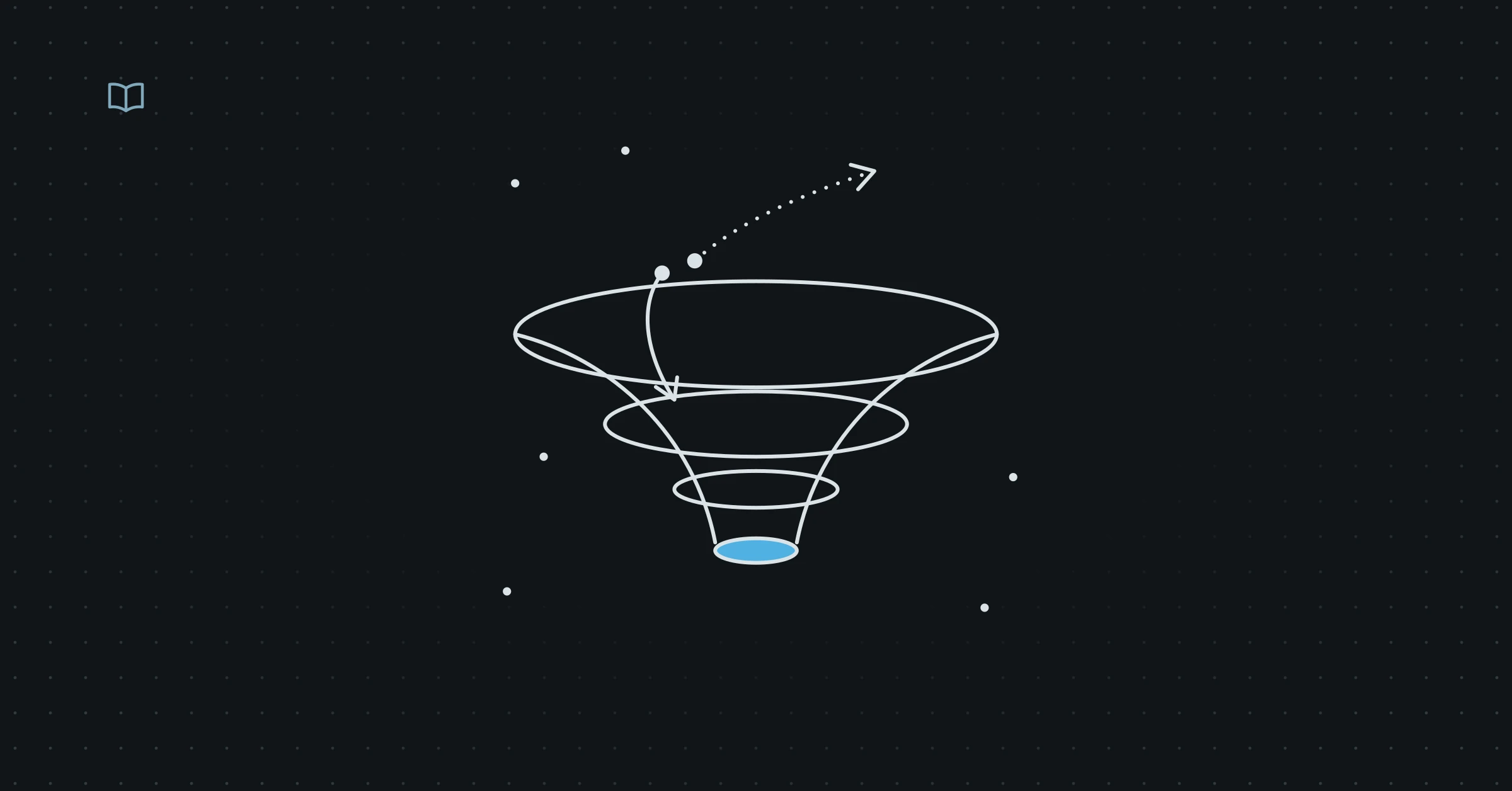
Time dilation is the fact that time passes at different rates for different clocks, depending on how they move and where they are. Einstein’s special relativity of 1905 says that a clock moving relative to you runs slow. His general relativity, the theory of gravity he completed in 1915, says that a clock deeper in a gravitational field runs slow compared with one higher up. Both effects are tiny at everyday speeds and heights, but GPS makes them matter, because both act on the same satellite.
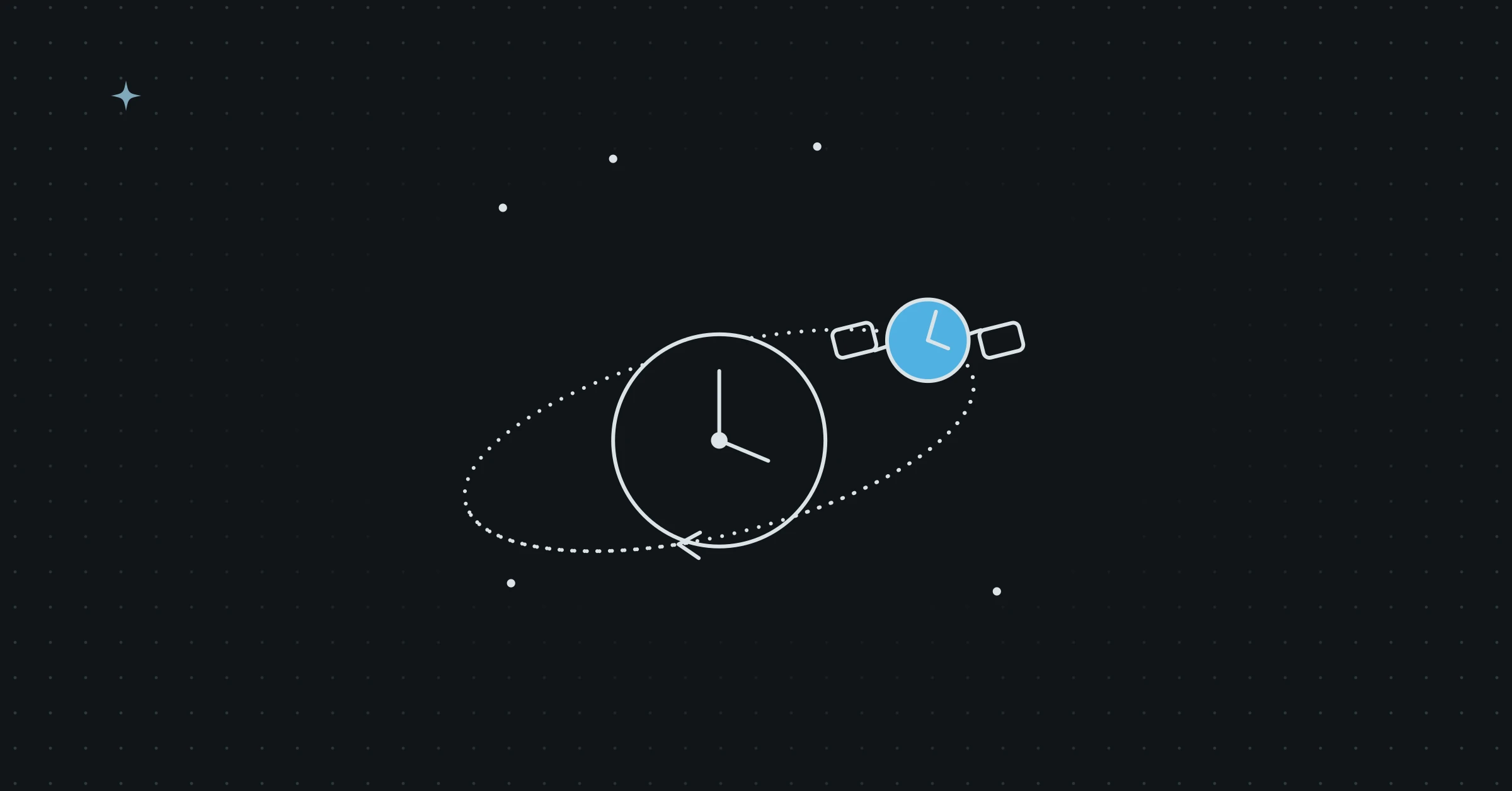
- The orbit. Each GPS satellite circles the Earth about 20,200 kilometres above the ground, at about 3.9 kilometres per second, or 14,000 kilometres per hour.
- The speed effect. At that speed, special relativity says the satellite clock should fall behind a clock on the ground by about 7 microseconds (millionths of a second) per day.
- The gravity effect. Up there gravity is much weaker, so general relativity says the same clock should run ahead by about 45 microseconds per day.
- The balance. The two effects work against each other, and gravity wins: the satellite clock gains about 38 microseconds every day.
- The fix. Engineers lower the clock’s frequency on the ground before launch, from 10.23 million ticks per second to 10.22999999543 million, so that once in orbit it keeps step with the clocks below.
Thirty-eight microseconds sounds like nothing, but your phone finds its position from how long the signals from several satellites take to arrive. Light travels more than 11 kilometres in 38 microseconds, so without the correction the satellites’ time signals would be off by that much distance after a single day.
Is the slowing real, or does the clock only look slow?
Clocks brought back together after a trip still disagree, so the slowing is real and not a trick of seeing. In October 1971 Joseph Hafele and Richard Keating flew four atomic clocks around the world on airliners, once eastward and once westward, and compared them with clocks that had stayed at the U.S. Naval Observatory. The eastbound clocks had lost about 59 nanoseconds (billionths of a second) and the westbound clocks had gained about 273, in line with a predicted loss of about 40 and gain of about 275. The direction matters because the Earth turns eastward, so seen from the Earth’s centre an eastbound plane moves faster than the ground below it, and a westbound one slower.
Later tests worked on a much smaller scale. In 2010 a team at the US National Institute of Standards and Technology raised one optical clock by 33 centimetres and found that it ran faster than its partner below. Over a 79-year life, the difference would add up to about 90 billionths of a second.
Nature runs the same test with muons, unstable particles made when cosmic rays hit the upper air. At rest a muon lives about 2.2 microseconds on average, too short for most of them to reach the ground. Yet in 1962 David Frisch and James Smith counted muons on Mount Washington in New Hampshire and at sea level, and far more survived the descent than that lifetime allows, because their speed slowed their clocks.
What time dilation teaches you
There is no single time that ticks for the whole universe. Time is what each clock measures along its own path, so when two careful measurements of “the same” duration disagree, first ask whether they were really taken along the same path.
- Technology you use daily. Phone navigation, the time stamps of financial trading networks and the synchronisation of power grids depend on satellite time, so relativity is built into ordinary life.
- Reading claims about time. Popular books often move from “clocks disagree” to “time is an illusion”. “The Order of Time” by Carlo Rovelli: Summary and Review shows which of Rovelli’s claims about time are measured and which are his own hypotheses.
- Science at the frontier. Near a black hole time dilation becomes enormous, and when physicists add quantum theory there, they find that black holes should glow faintly, as What Is Hawking Radiation? explains. Geodesists, who measure the shape of the Earth, have begun to compare heights with portable optical clocks.
Where does the usual picture of time dilation go wrong?
The most common mistake concerns the twin paradox. One twin flies to a distant star and back at nearly the speed of light, and returns younger than the twin who stayed home. Since each twin sees the other moving, why is the result not symmetric? Part of the answer is that the twins also disagree about which distant events happen at the same time, as What Is the Relativity of Simultaneity? explains. Many explanations say that the acceleration at the turnaround slows the traveller’s clock, and that is only half right. The turnaround makes the two trips different, because the traveller changes course while the twin at home never does.
The size of the age gap, however, is set by speed and duration, through each twin’s proper time, the time a clock measures along its own path. In 1977 physicists at CERN sent muons around a ring 14 metres across at 99.94 percent of the speed of light, under enormous sideways acceleration. Their lifetime stretched from 2.2 to 64.4 microseconds, exactly as their speed alone predicts.
The second limit concerns Einstein himself. In his 1905 paper he drew a confident conclusion from special relativity.
Thence we conclude that a balance-clock at the equator must go more slowly, by a very small amount, than a precisely similar clock situated at one of the poles under otherwise identical conditions.
A clock at the equator does move faster than one at the pole, but Einstein had not yet included gravity, and the Earth bulges at the equator, so a clock there sits farther from the centre. At sea level the two effects cancel exactly, and the physics behind GPS says that ideal clocks standing still at sea level all run at the same rate. The lesson is that both kinds of time dilation always have to be counted together.
Learn more
Time dilation has no single discoverer. Its mathematics appeared a few years before Einstein, in the work of Joseph Larmor and Hendrik Lorentz, who treated it as an effect on moving matter. Einstein’s 1905 paper was the first to read it as a property of time itself, and in 1907 he argued that clocks lower in a gravitational field must run slower too. Bruno Rossi and David Hall measured the stretched lives of cosmic-ray muons in 1941, and Robert Pound and Glen Rebka detected the gravity effect in a 22.5-metre tower at Harvard in 1960.
For how relativity joins space and time into one space-time, read “A Brief History of Time” by Stephen Hawking: Summary and Review. For the direction of time, which relativity alone does not explain, continue with What Is Entropy?.
Quiz
3 questions · up to 3 points
Open a question and pick one answer. Only your first answer counts: +1 if it is right, −1 if it is wrong.
Why does an atomic clock on a GPS satellite run faster than an identical clock on the ground, overall?
Show answer
Its height in weaker gravity speeds it up by about 45 microseconds a day, more than its speed slows it down. Both effects act at once: the speed costs about 7 microseconds a day, the height adds about 45, so the satellite clock gains about 38.
Two identical optical clocks sit in the same laboratory, one on the floor and one on a shelf a metre higher. What does relativity predict?
Show answer
The clock on the shelf runs very slightly faster, because it sits higher in the Earth's gravity. Clocks higher up in a gravitational field run faster. In 2010 a difference of only 33 centimetres was enough to measure this.
In the twin paradox, one twin flies to a star and back at high speed and returns younger. What sets how much younger?
Show answer
How fast and how long the travelling twin moved, because that decides how much time passed along their path. Each clock measures the time along its own path through space and time. The turnaround makes the two paths different, but speed and duration set the size of the gap.
Your points are saved only in this browser for now. Accounts that keep them for good are on the way.
Continue learning: "The Order of Time" by Carlo Rovelli: Summary and Review →The takeaway
Time dilation means that clocks measure different amounts of time depending on how fast they move and how deep they sit in gravity, as Einstein's special and general relativity predict. GPS satellite clocks lose about 7 microseconds a day from their speed and gain about 45 from their height, so engineers slow them before launch. The effect is real, not an illusion, and in the twin paradox speed and duration, not acceleration as such, set the age gap. Treat time as something each clock measures along its own path.
Key quotes
“Thence we conclude that a balance-clock at the equator must go more slowly, by a very small amount, than a precisely similar clock situated at one of the poles under otherwise identical conditions.”
References
- Relativity in the Global Positioning System. Neil Ashby, Living Reviews in Relativity 6, 1, 2003
The standard account by a physicist who worked on GPS: how speed and gravity change the satellite clocks and how the system corrects for both.
- On the Electrodynamics of Moving Bodies. Albert Einstein, translated by W. Perrett and G. B. Jeffery, Annalen der Physik 17 (1905); English edition 1923, web text by Fourmilab, 1905
The paper that founded special relativity. Section 4 derives the slowing of moving clocks and contains the remark about clocks at the equator.
- USNO Marks 50 Year Anniversary of Breakthrough Relativity Experiment. U.S. Naval Observatory, DVIDS, 2021
The story of the 1971 flights by Hafele and Keating, with the predicted and measured gains and losses of their four clocks.
- NIST Pair of Aluminum Atomic Clocks Reveal Einstein's Relativity at a Personal Scale. National Institute of Standards and Technology, NIST News, 2010
How optical clocks measured the faster ticking of a clock raised by 33 centimetres, and the slowing of a clock moving at a few metres per second.
- Real-World Relativity: The GPS Navigation System. Richard W. Pogge, The Ohio State University, Department of Astronomy
A short course page that works out the two GPS effects in round numbers and what would happen without the correction.