"The Order of Time" by Carlo Rovelli: Summary and Review
11 min read≈ 2,360 words5 questions · up to 5 points
What this is about
A clock on a mountain runs faster than a clock on the beach, and physics cannot say what is happening on a distant planet right now. You learn the nine ideas Carlo Rovelli uses to take apart our everyday picture of time and then rebuild it from heat, ignorance and memory. You also learn which of his claims are standard physics and which are his own hypotheses.
The book in three sentences· skip ahead
The Order of Time argues that the time we experience, one universal flow from a fixed past to an open future, is not a basic feature of the world. Rovelli first shows how relativity, thermodynamics and quantum theory each remove one layer of that picture, and then describes a world of events without a time variable. He ends by arguing that our sense of time comes from entropy, from our blurred view of the world and from memory.
The Order of Time
- Author
- Carlo Rovelli
- Published
- 2017
- Publisher
- Penguin paperback (2019), translated from the Italian by Erica Segre and Simon Carnell
- Length
- 224 pages
- Audiobook
- 4h 18m, read by Benedict Cumberbatch
- Best for
- Curious readers who want to know what physics really says about time, and who enjoy a physicist who mixes equations in words with philosophy and poetry.
Time passes faster in the mountains than at sea level, and Carlo Rovelli begins his book with this simple, measurable fact because it already breaks the picture of time most of us carry around. The Order of Time appeared in Italian as L’ordine del tempo in 2017 and in English in 2018, translated by Erica Segre and Simon Carnell. Rovelli is a theoretical physicist and one of the founders of loop quantum gravity, an attempt to combine Einstein’s theory of gravity with quantum mechanics. His earlier Seven Brief Lessons on Physics had been a surprise bestseller, and this book takes one of its themes, the nature of time, much further.
What kind of book this is
The book is short, about 220 pages in paperback, and Rovelli divides it into three unequal parts. In the prologue he describes the plan himself. The first part, “The Crumbling of Time”, shows how modern physics removed one feature of everyday time after another. The second, “The World without Time”, describes what is left. The third, “The Sources of Time”, goes back to explain where our familiar time comes from. He compares the last part to Sophocles’ Oedipus Rex, the Greek tragedy in which the investigator turns out to be the guilty man. The mystery of time, he suggests, may be more about us than about the cosmos.
We inhabit time as fish live in water.
Each chapter opens with lines from the Roman poet Horace, and Rovelli quotes philosophers from Aristotle to Heidegger along the way. This review follows his argument in nine ideas.
Time passes at different speeds in different places (“loss of unity”)
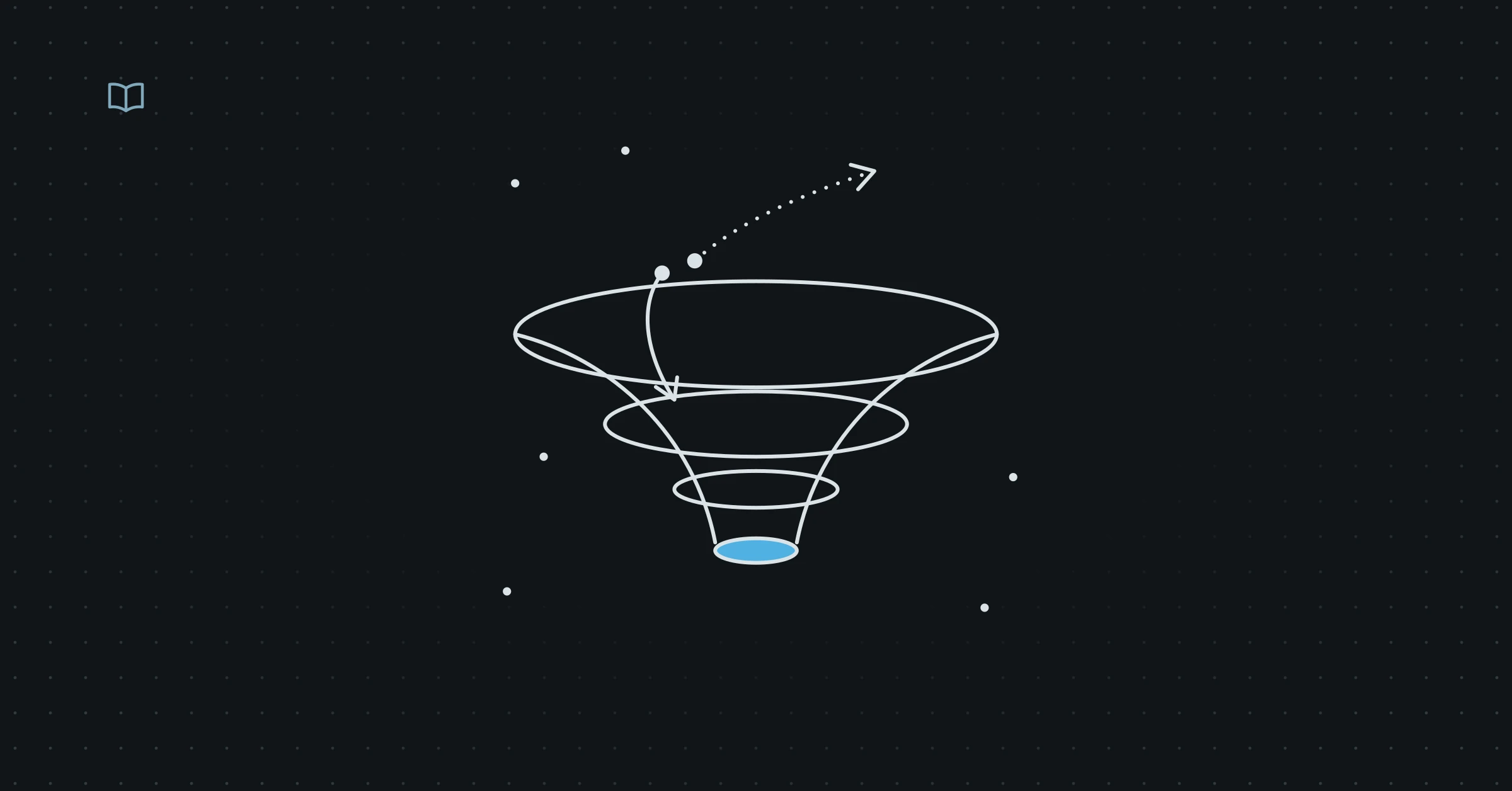
The first chapter states the idea that sets everything else in motion: there is no single time that ticks at the same rate everywhere. Einstein’s general relativity predicts that time passes more slowly close to a large mass, such as the Earth. A clock on the floor therefore runs slower than a clock on the table, and in 2010 physicists at the US National Institute of Standards and Technology measured this with two atomic clocks only 33 centimetres apart in height. The effect is called time dilation, and What Is Time Dilation? shows how GPS satellites correct for it every day.
Rovelli draws a strong conclusion from this. If every place has its own time, then “time” is not one thing that the universe shares. There are many local times, each measured by a local clock, and they only agree approximately at our scale. For Rovelli, this is the first layer of everyday time to fall away.
The difference between past and future comes from heat (“loss of direction”)
The second chapter asks why time seems to run in one direction, and Rovelli’s answer is entropy. The basic equations of Newton, Maxwell and Einstein work the same forward and backward. In Rovelli’s account, the only law of basic physics that knows the difference between past and future is the second law of thermodynamics, which says that the entropy of an isolated system almost never decreases. Heat flows from hot to cold and never the other way, and Rovelli concludes that every time the past differs from the future, something is heating up.
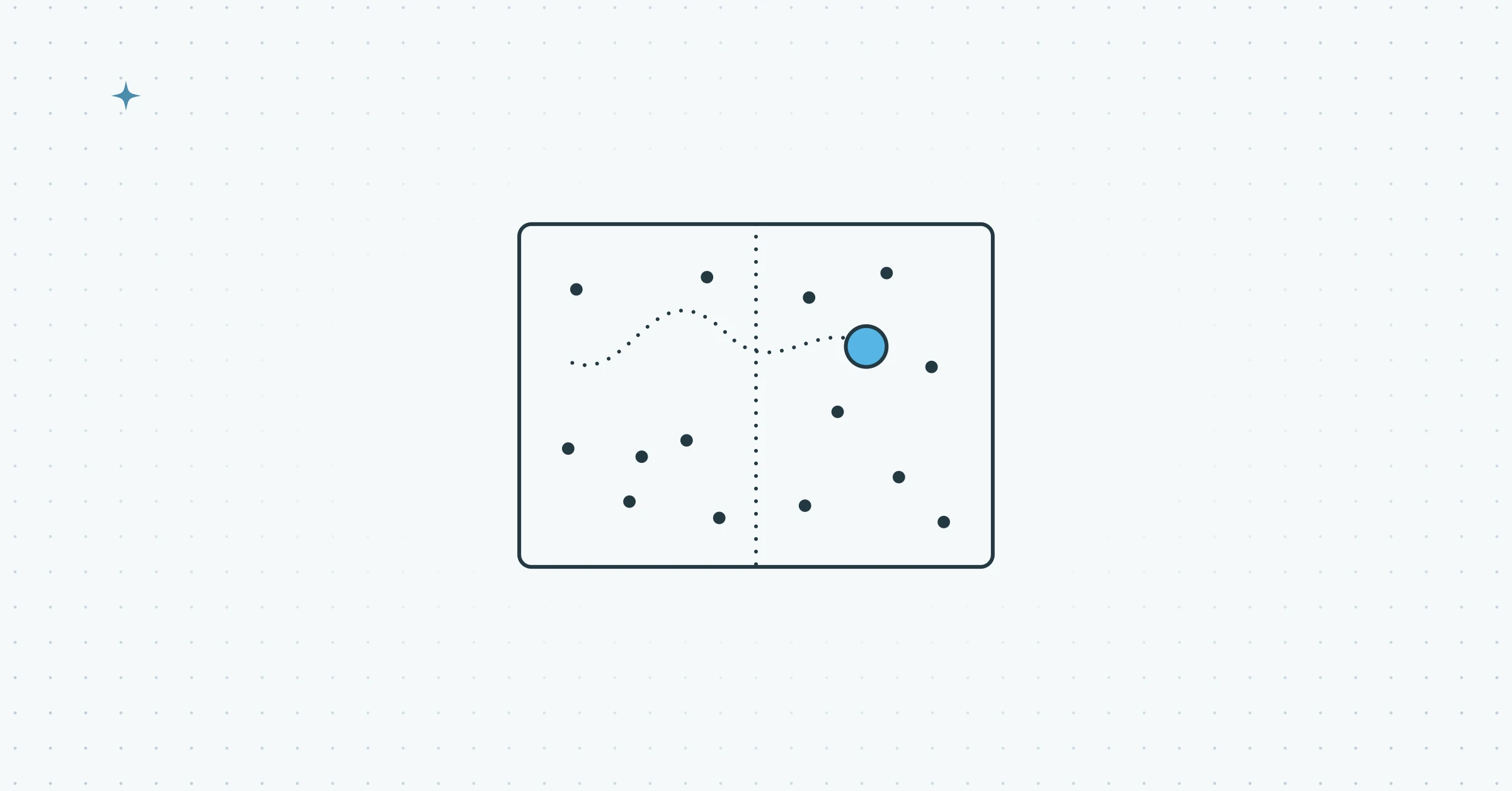
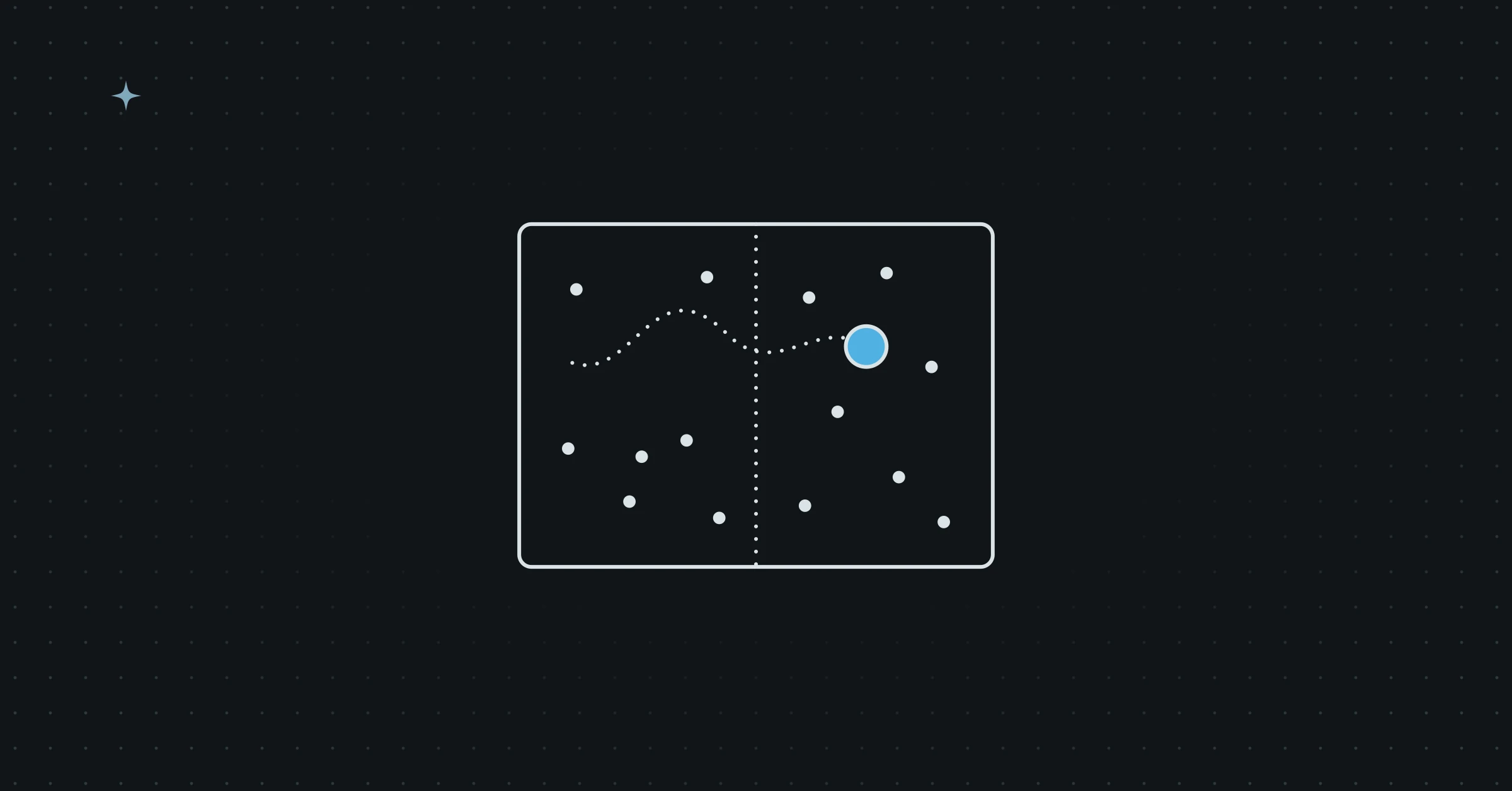
Rovelli explains entropy as the nineteenth-century physicist Ludwig Boltzmann did. Entropy counts how many microscopic arrangements fit what we see from outside, and it grows because spread-out states have far more arrangements than ordered ones, as What Is Entropy? explains with molecules in a box. Rovelli then adds the step that runs through the whole book. Entropy depends on our blurred, approximate view of the world, because it counts arrangements that we cannot tell apart. If we could see every molecule, he argues, the difference between past and future would disappear.
There is no shared present across the universe (“the end of the present”)
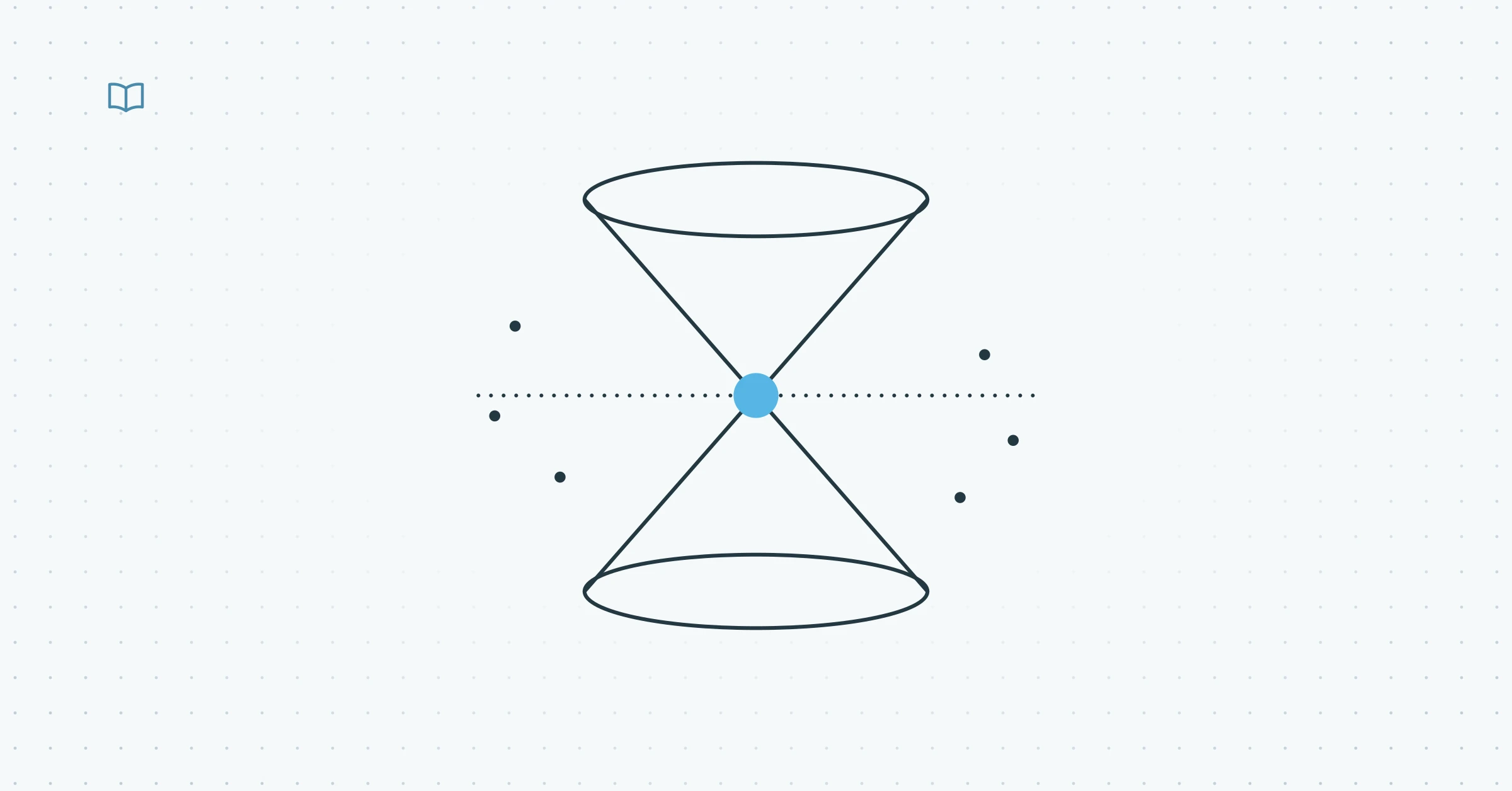
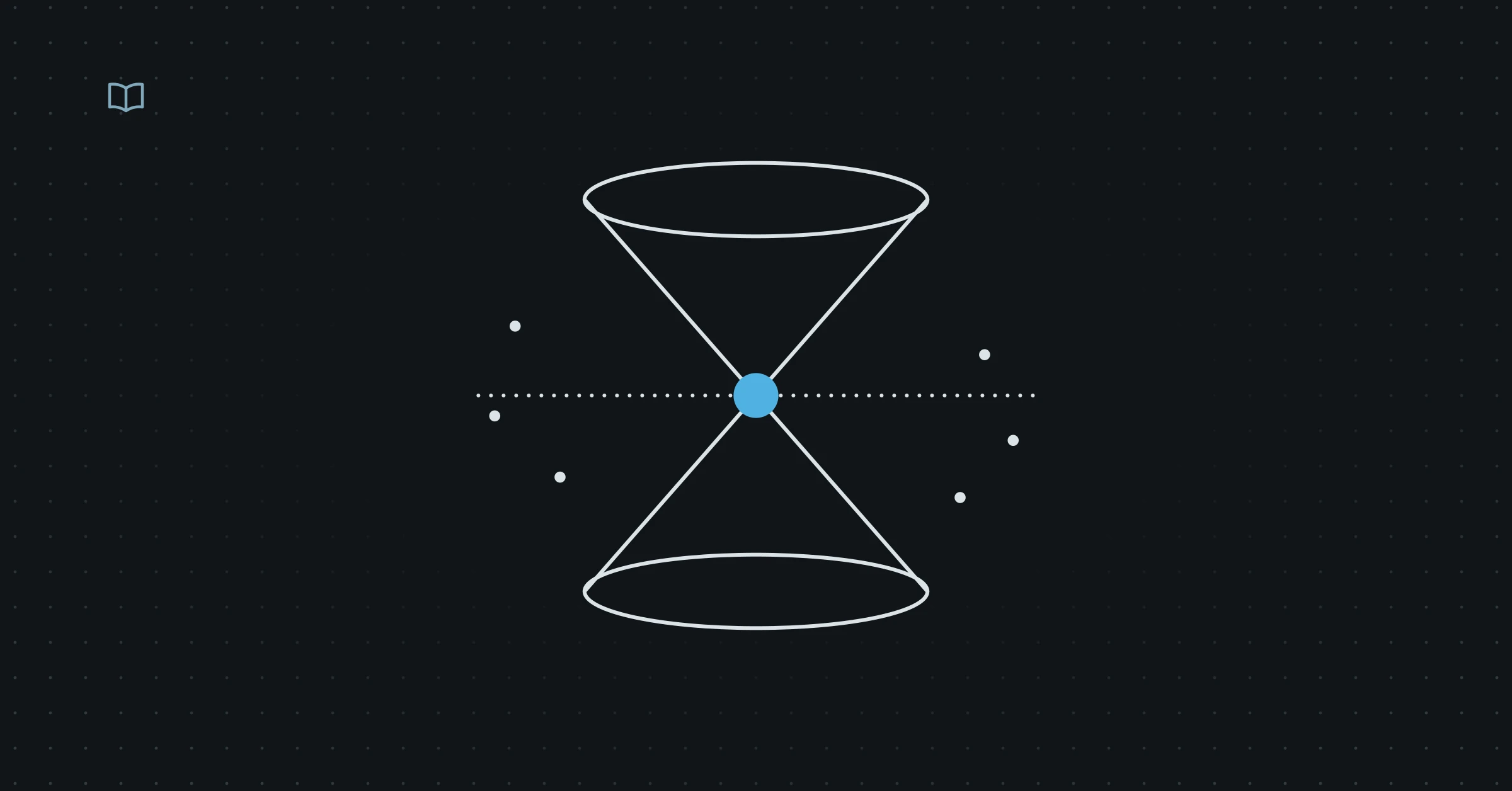
The third chapter removes the present, and Rovelli treats this as the most surprising result of all of modern physics. Because no signal can travel faster than light, there is a set of events in your past that could have affected you, and a set in your future that you could still affect. Between them, for any distant place, lies a whole interval of events that are neither past nor future for you. For a planet four light years away, that interval lasts about eight years.
So the question “What is happening on that planet now?” has no answer. Rovelli does not mean only that light is slow, a delay that Why Is the Night Sky Dark? Olbers’ Paradox, Explained uses to show that the universe had a beginning. He means that even after you correct for the delay, physics singles out no moment over there as “now”. Einstein’s train and lightning example, which shows why, is worked through with numbers in What Is the Relativity of Simultaneity?. Rovelli compares the resulting order of events to a family tree, in which some people are ancestors of others while many are neither, so time orders the world only partly.
Time is part of the gravitational field, and it may come in grains
Chapters 4 and 5 remove two more features. Aristotle thought time was only a measure of change, while Newton believed in an absolute time that flows even if nothing happens. Rovelli argues that Einstein combined the two views: time is a real thing, as Newton thought, but it is not independent, because it is one aspect of the gravitational field, which bends and stretches like everything else.
Quantum mechanics then adds three further changes, which Rovelli calls granularity, indeterminacy and relationality. Time may come in tiny minimal units, the gap between two events may be in a quantum superposition of different values, and time exists only in relation to physical systems. The first of these is a prediction of Rovelli’s own theory, not established physics, a point the reviews below return to.
The world is made of events, not things
With time stripped of its usual features, the second part asks what is left, and Rovelli’s answer is a world of events, things that happen, rather than objects that last. A stone looks like a thing, but on a long enough timescale it is a slow process of forming and wearing away. A storm, in contrast, is plainly a series of happenings, and Rovelli argues that the stone is no different in principle.
Not of being, but of becoming.
This also places him in the old philosophical debate between presentism, the view that only the present is real, and eternalism, the view that past, present and future exist together in a fixed “block universe”. Rovelli rejects presentism, because physics provides no shared present to support it. He also refuses the block universe, because he thinks the loss of a universal time leaves change everywhere, not a motionless world.
The deepest equations may contain no time at all
Chapter 8 is the most technical in the book. Rovelli explains that some equations of quantum gravity, such as the Wheeler-DeWitt equation, which describes the quantum state of the whole universe, contain no time variable. In loop quantum gravity, he argues, physics no longer describes how things change in time. It describes how physical quantities change relative to each other, so that any clock is just one more physical quantity, with no special status.
In an interview with Physics Today in 2019, Rovelli summed up what this means for the book: “The main point of the book is that there isn’t a single notion of time that is either true or false.” Time, for him, is a layered concept whose layers hold only at certain scales, and at the most basic level none of them may hold.
Our time comes from what we do not know (“time is ignorance”)
The third part goes back to explain how the familiar flow of time appears in a world without it, and chapter 9 gives Rovelli’s central proposal, the thermal time hypothesis, which he developed with the French mathematician Alain Connes. When you describe a system only statistically, by temperature and pressure rather than by every particle, that blurred description itself picks out one variable that behaves like time. Rovelli’s short version is that time is ignorance: it appears because we cannot see the world in full detail.
This is the idea from the second chapter, now applied to time itself. Rovelli is clear that it is a hypothesis, and these chapters are where the book is hardest to follow.
The low entropy of the past may depend on our point of view
If time’s direction comes from the growth of entropy, the universe must have started with very low entropy, and physicists usually treat that as a special fact about the early universe. In chapters 10 and 11 Rovelli proposes another explanation, which he had first set out in a 2015 paper called “Is Time’s Arrow Perspectival?”. Entropy depends on which features of the world you can distinguish, so the past may look ordered only from the point of view of systems like us, which interact with the rest of the world through a few variables. In a very complex universe, almost any state contains some such systems, and living beings could only arise in them.
From this asymmetry Rovelli then derives the things that make time feel real to us. Traces of the past exist and traces of the future do not, because leaving a trace increases entropy. Memory, causes and the feeling that we can act on the future all follow from the same difference.
Memory holds the self together, so we are processes in time
The last chapters move from physics to people. Rovelli argues that what we call our self is held together by memory, so that we are a process extended in time rather than an object at one moment. He draws on Proust’s famous madeleine, the cake whose scent brings back a childhood, and on philosophers such as Husserl and William James, who studied how consciousness holds on to the recent past and expects the near future. The flow of time we feel, he argues, is the way a brain built on memory and anticipation experiences an entropy gradient.
The book ends with an epilogue about death, “The Sister of Sleep”. Here Rovelli turns to his own mortality and writes about it calmly, as part of the same process of change that the rest of the book describes.
How it differs from other books on time
The Order of Time is unusual because it is an argument, not a survey, and the author is one of the people making the argument in physics.
- Stephen Hawking’s A Brief History of Time (1988) also links the direction of time to growing disorder, as the review of A Brief History of Time shows. Hawking writes about cosmology and black holes, while Rovelli writes about time alone and goes much further into philosophy and human experience.
- Sean Carroll’s From Eternity to Here (2010) treats the same arrow of time with more physics. Carroll takes the opposite view on its source, because he sees the low entropy of the early universe as a real fact about cosmology, not a matter of perspective.
- Rovelli’s own Reality Is Not What It Seems (English 2016) explains loop quantum gravity step by step. If chapter 8 leaves you puzzled, that book fills the gap.
The style is what readers remember. Rovelli writes like an essayist who happens to be a physicist, and the translation keeps his warm, lyrical voice. His tone towards opponents is generous; in a note he says of the physicists Lee Smolin and George Ellis, who defend a real present, that the people dearest to us are often those we disagree with most.
Where it falls short
The book has three weaknesses. The first is that it does not always mark where established physics ends and Rovelli’s own views begin. The slowing of clocks, the missing present and Boltzmann’s account of entropy are standard. Grains of time, a fundamental world without time and thermal time depend on loop quantum gravity, which has no experimental support yet and competes with other approaches such as string theory. In Nature, the cosmologist Andrew Jaffe praised the writing but was not sure he accepted Rovelli’s ideas about loop quantum gravity or thermal time. He added that the book alone does not give a general reader enough to judge them.
The second weakness is that “time does not exist” is easy to misread. The philosopher Matias Slavov argued in 2019 that the book never shows that the world is timeless. Relativity keeps a fixed order of before and after for events that can influence each other, and a world made of events is full of change, which most philosophers since Aristotle have treated as the core of time. The cosmologist Anthony Aguirre, in Physics Today, was “intrigued but unconvinced” by the claim that the low entropy of the past depends on our perspective, and noted that Rovelli himself treats it as a desperate measure.
The third weakness is style. The writing sometimes becomes vague exactly where the argument is hardest. In the chapters on thermal time and perspective, a reader without physics often gets the feeling of an explanation more than the explanation itself.
Which edition and format to choose
The translation by Segre and Carnell is the standard English edition, and the current Penguin paperback is the easiest one to find. Print or ebook is the better choice for a first reading, because the endnotes contain some of Rovelli’s sharpest comments and the chapters on quantum gravity are easier to follow when you can go back a page. The unabridged audiobook, read by Benedict Cumberbatch, lasts about four and a quarter hours. It suits the prologue, the chapters on the self and the epilogue very well, because Rovelli’s prose works when read aloud, but listen to the chapters on thermal time and perspective twice or read them on paper.
Quiz
5 questions · up to 5 points
Open a question and pick one answer. Only your first answer counts: +1 if it is right, −1 if it is wrong.
According to the first chapter, why does a clock on a mountain run faster than a clock at sea level?
Show answer
Time passes more slowly closer to a large mass, such as the Earth, because mass slows time down. This is Einstein's general relativity, and precise atomic clocks have measured it even for a height difference of a few dozen centimetres.
Where does Rovelli say the difference between past and future comes from?
Show answer
From the growth of entropy, which we see because we describe the world only in a blurred, approximate way. Rovelli follows Ludwig Boltzmann: the basic laws of motion work the same in both directions of time, and only the second law of thermodynamics adds a direction.
What does Rovelli mean when he says that the present of the universe does not exist?
Show answer
For a distant place, there is a whole interval of events that are neither in our past nor in our future, so there is no single 'now' there. Because no signal travels faster than light, events far away that cannot affect us and that we cannot affect have no fixed time order relative to us.
What is the 'thermal time hypothesis' that Rovelli developed with the mathematician Alain Connes?
Show answer
The idea that the flow of time is defined by a system's thermal state, the statistical description we use because we cannot see every detail. In a world without a basic time variable, a blurred, statistical description of a system singles out one variable that behaves like time. Rovelli calls this time 'ignorance'.
What does this review suggest about how to read the book?
Show answer
Read it as one physicist's argument: the first part is established physics, the later parts are Rovelli's own hypotheses. The review separates the layers that physics has really removed from the claims that depend on loop quantum gravity and on Rovelli's thermal time and perspective ideas.
Your points are saved only in this browser for now. Accounts that keep them for good are on the way.
Continue learning: "A Brief History of Time" by Stephen Hawking: Summary and Review →The takeaway
The Order of Time by Carlo Rovelli argues that time is a stack of layers, and that physics removes them one by one: one universal rate, a shared present, a basic direction. In his own theory, loop quantum gravity, the deepest equations have no time at all, and our time appears because we see the world only blurred, so entropy grows. The first part is solid physics, the last part is Rovelli's hypothesis. Read it as a short, well-written argument, and check which layer of time any claim about time is really about.
Key quotes
“Perhaps, as in the first and greatest of all detective novels, Sophocles' Oedipus Rex, the culprit turns out to be the detective.”
“Science is like affection: those who are dearest to us are those with whom we have the liveliest disagreements.”
Should you read it?
Read it if
- You want to understand why physicists say there is no universal 'now' and why clocks at different heights disagree.
- You want to see how entropy, the growth of disorder, could explain why we remember the past and not the future.
- You enjoy short books that move from physics to philosophy and to questions about memory, the self and death.
Skip it if
- You want a neutral survey of the physics of time; Rovelli argues for his own theory and his own hypotheses.
- You want a step-by-step explanation of loop quantum gravity; his earlier book Reality Is Not What It Seems does that better.
- You dislike lyrical writing and quotations from poets in a science book.
As an Amazon Associate, mentua.org earns from qualifying purchases. It costs you nothing and never shapes the verdict.
Ideas from this book
- entropyEntropy measures how many ways the tiny parts of a system, such as its molecules, can be arranged without changing what we see from outside. The second law of thermodynamics says that the entropy of an isolated system almost never decreases. Things spread out and heat flows from hot to cold because spread-out states can happen in vastly more ways.
- time dilationTime dilation is the fact, predicted by Einstein's relativity, that time passes at different rates for different clocks. A clock that moves fast relative to you runs slow, and a clock lower down in a gravitational field runs slow compared with one higher up. The effect is real, measured with atomic clocks, and GPS corrects for it every day.
- relativity of simultaneityThe relativity of simultaneity is the result of Einstein's special relativity that two events at different places can happen at the same time for one observer and at different times for another who moves relative to the first. Neither view is wrong, because there is no single, universal 'now'. Only events that no signal could connect can change their order.
- block universeThe block universe, also called eternalism, is the view that the past, the present and the future all exist equally, as parts of one four-dimensional spacetime. 'Now' is then like 'here': it marks where you are, not a special moment of reality. The view draws its main support from special relativity, which gives no single, shared present.
References
- The Order of Time. Carlo Rovelli, Penguin
The publisher's page for the paperback edition described in this review.
- Stop all the clocks. Andrew Jaffe, Nature 556, 2018
A cosmologist's review that praises the writing but doubts loop quantum gravity and the thermal time hypothesis.
- Is the future as real as the present?. Anthony Aguirre, Physics Today 72 (2), 2019
A favourable review that remains unconvinced by Rovelli's claim that the low entropy of the past depends on our perspective.
- Carlo Rovelli, The Order of Time (book review). Matias Slavov, European Journal of Analytic Philosophy 15 (1), 2019
A philosopher's review arguing that the book does not show that the world is timeless.
- Is Time's Arrow Perspectival?. Carlo Rovelli, 2015
The technical paper behind the book's chapters on perspective and the low entropy of the past.